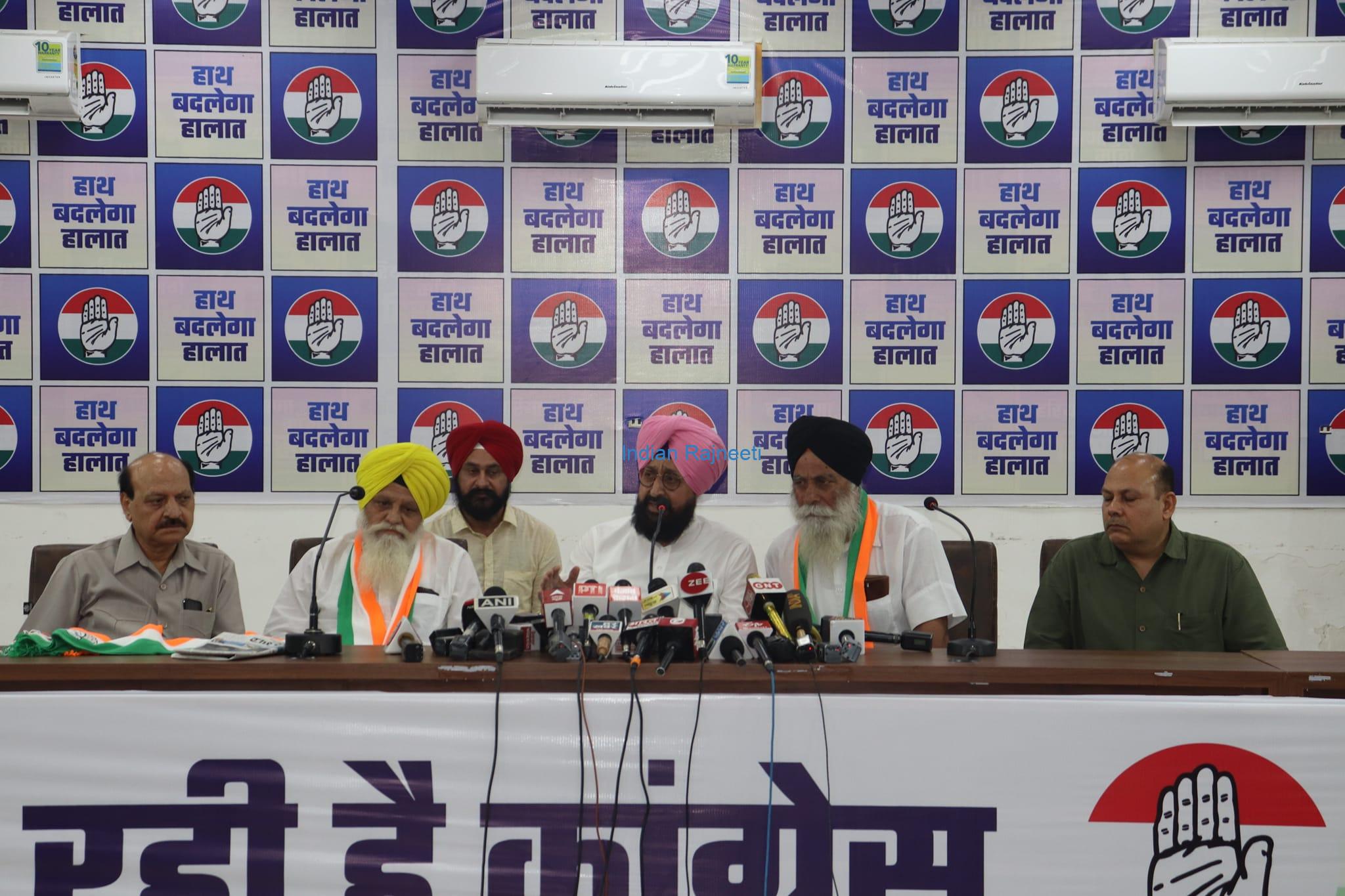
India’s economic trajectory has been significantly shaped by the policies of its two dominant political parties—the Bharatiya Janata Party (BJP) and the Indian National Congress (INC). Both parties have adopted different economic strategies over the years, influencing growth, employment, and overall economic stability. While the BJP follows a market-driven approach with an emphasis on self-reliance, the Congress has historically focused on welfare-driven policies with a mix of liberalization.
In this blog, we compare the economic policies of these two parties to understand their impact on India’s development. By the end, you’ll have a clearer perspective on how each party’s approach shapes the nation’s economy.
Both the BJP and Congress have contributed to India’s economic growth through different approaches. The BJP leans towards market-driven policies, privatization, and infrastructure expansion, whereas Congress focuses on social welfare, rural development, and balanced economic liberalization. While BJP policies aim for long-term structural changes, Congress emphasizes immediate relief through welfare schemes.
Ultimately, the effectiveness of these policies depends on their execution and impact on the ground. As a voter and an observer of India’s economic landscape, understanding these differences can help you make informed opinions about the country’s future direction.
What do you think about the economic policies of BJP and Congress? Which approach do you believe works better for India’s growth? Share your thoughts in the comments!
Kolkata: On Friday, January 10, 2026, Bharatiya Janata Yuva Morcha members demonstrated against West Bengal Chief Minister Mamata Banerjee for her actions after the ED raids at the I-PAC office and its chief Pratik Jain's home. | In relation to an alleged coal smuggling case that stretches back a few years, the Enforcement Directorate (ED) searched the Indian Political Action Committee (I-PAC) office and Pratik Jain's home on Loudon Street in Kolkata on Thursday, January 8, 2025. West Bengal Chief Minister Mamata Banerjee launched a protest against the ED raids on I-PAC after the raid set off a political storm in the state. Why is a chief minister endorsing Pratik Jain, and who is he? Pratik Jain, a political strategist and co-founder of I-PAC, is a graduate of IIT Bombay. He is credited with helping I-PAC grow into one of the most significant political consulting organizations in India. I-PAC was established in 2015 and offers services like data-driven campaign management, support for governance, and voter outreach initiatives. It has collaborated with a number of Indian political groups throughout the years, notably West Bengal's Trinamool Congress (TMC). I-PAC reportedly collaborates closely with Abhishek Banerjee, the national general secretary of the Trinamool Congress, and his office. The company oversees the IT and media division of the Mamata Banerjee-led TMC and is in charge of creating its election campaigns. Mr. Jain was in charge of the Trinamool Congress's IT cell, according to Ms. Banerjee. According to his LinkedIn page, Jain, an engineering graduate from IIT Bombay, started his career as an analyst at the consulting firm Deloitte. He was one of the first members of Citizens of Accountable Governance, which later evolved into I-PAC. Arvind Kejriwal, M.K. Stalin, Jaganmohan Reddy, Uddhav Thackeray, Rahul Gandhi, and Nitish Kumar are just a few of the prominent figures with whom the political consultancy firm has collaborated.…
Says ‘I-PAC Attack Feels Like Rebirth: West Bengal CM leads Kolkata rally against ED raids…
Legislative Assembly elections are expected to be held in Assam in March–April 2026 to elect 126 members of the Assam Legislative Assembly.…
Chief Minister Home Affairs General Administration Cabinet Secretariat Vigilance Election Other departments not allotted to…
The Parliament passed the Waqf (Alteration) Bill, 2024 in the early hours of Friday after the…
The Waqf Bill Was a topic of major debate in India, Creating discussions about property…