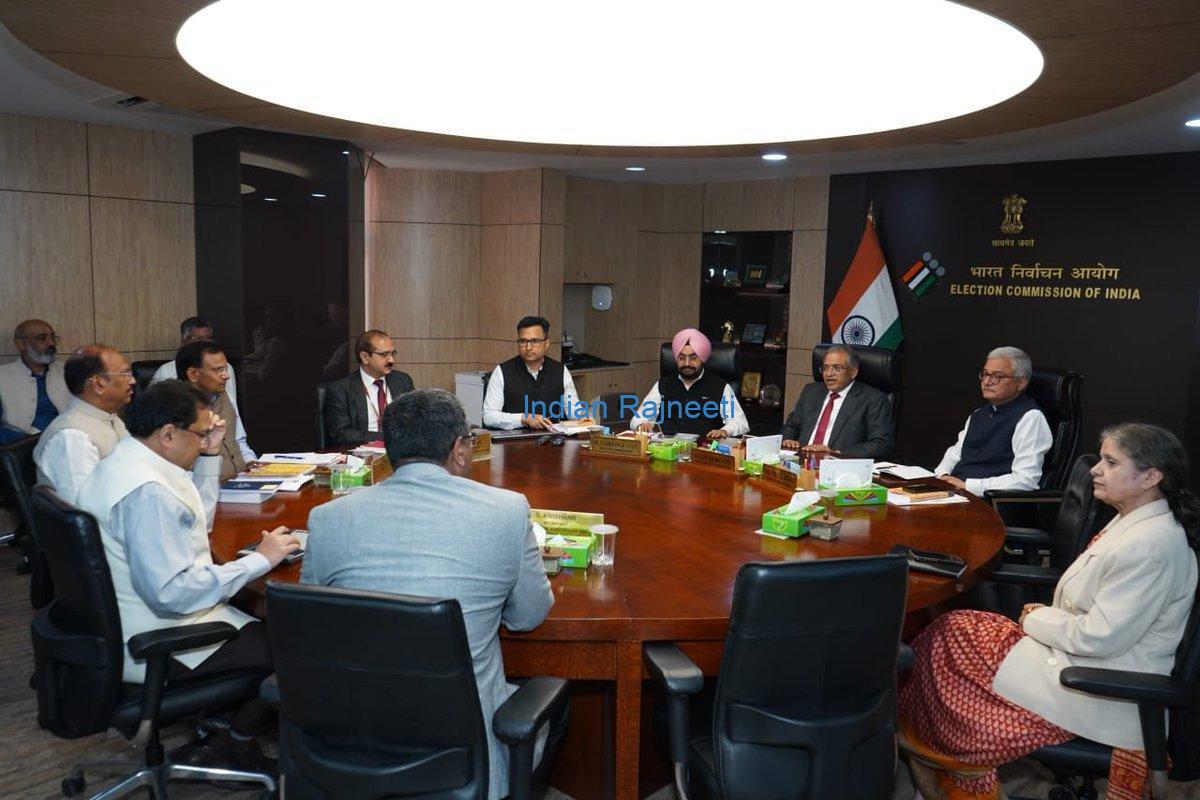
Election Commission of India Chief Election Commissioner Gyanesh Kumar during an official press conference.
The political dispute between the Election Commission of India (ECI) and opposition parties has intensified over the ongoing Special Intensive Revision (SIR) of electoral rolls. The exercise has become a major political issue, with the Congress and several opposition parties raising concerns about the revision process, voter documentation, deletion of names and the procedures being followed to verify electors.
The Special Intensive Revision (SIR) is an electoral-roll revision exercise aimed at reviewing and updating voter lists. The Election Commission has maintained that the process is intended to ensure that eligible voters remain on the electoral rolls while identifying and addressing entries that may no longer meet the requirements for inclusion. The Commission has also provided mechanisms through which voters can check electoral-roll information and respond to notices where required.
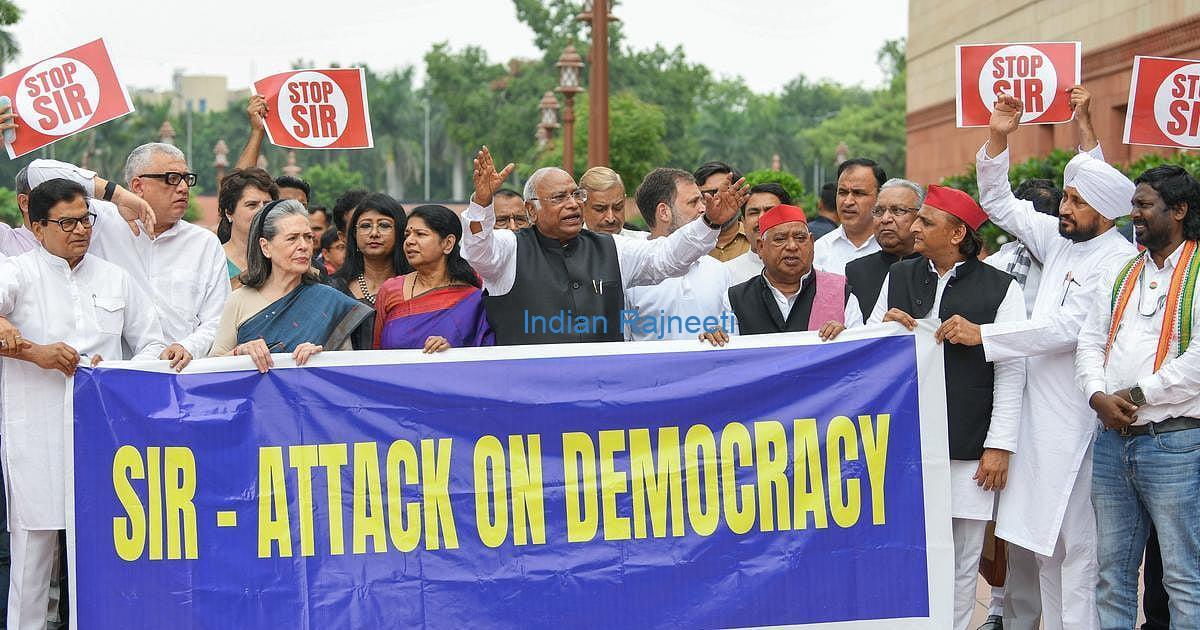
The Congress has stepped up its campaign against the Election Commission, particularly over concerns surrounding the implementation of SIR. Party leaders have alleged that the revision process could create difficulties for genuine voters if they are required to provide documents or if their names are removed from the electoral rolls. The opposition has demanded greater transparency and safeguards to ensure that no eligible voter is excluded from the democratic process.
Congress leaders have also announced district-level protests against the Election Commission and the SIR exercise. The party has argued that electoral-roll revision should not result in the exclusion of legitimate voters and has called for greater clarity regarding the documents and procedures being used during the verification process.
The controversy has also brought Chief Election Commissioner Gyanesh Kumar into the centre of the political debate. Opposition leaders have criticised the Election Commission’s handling of SIR and have demanded greater accountability regarding the revision of electoral rolls. These statements represent the position of opposition parties, while the Election Commission has defended the electoral-roll revision process and its administrative procedures.
The issue has extended beyond the Congress, with several INDIA bloc parties discussing a coordinated response. Opposition parties are expected to discuss the SIR controversy, the Election Commission and electoral-roll issues at a proposed INDIA bloc meeting on September 30. The meeting could provide a platform for opposition parties to coordinate their political response and decide on further actions.
The BJP and its leaders have defended the Election Commission, arguing that electoral rolls need to be regularly reviewed to maintain accurate voter lists. Supporters of the revision process have pointed to the need to identify duplicate, shifted, deceased or otherwise ineligible entries while ensuring that legitimate voters are not removed.
At the centre of the dispute is therefore a broader question about electoral-roll accuracy and voter inclusion. Opposition parties are focusing on the possibility of eligible voters facing difficulties during the verification process, while the Election Commission’s position is centred on maintaining updated and reliable electoral rolls.
The controversy is particularly significant because electoral rolls form the foundation of the voting process. Any large-scale revision can have political and administrative consequences, making transparency, verification procedures and opportunities for affected voters to raise objections important parts of the debate.
The Election Commission provides voters with facilities to check their names in electoral rolls, access voter-related services and submit applications or claims where applicable. Voters affected by the revision process can therefore use the official mechanisms provided by election authorities to verify their electoral status.
As the political debate continues, the SIR electoral-roll revision is expected to remain an important issue for opposition parties, the BJP and the Election Commission. The upcoming September 30 INDIA bloc meeting will be closely watched for indications of the opposition’s next course of action, while further developments in the implementation of SIR could determine how the political dispute evolves.
The debate ultimately centres on balancing two objectives: maintaining accurate and updated electoral rolls while protecting the right of every eligible citizen to remain registered and participate in elections. Further clarification from election authorities and political parties will be important as the revision process continues.
The Jammu and Kashmir Legislative Assembly passed a resolution on September 28, 2026, seeking the…
The Biju Janata Dal (BJD) staged a major protest in Bhubaneswar on September 28 against…
The Karnataka Congress is set to begin an 84-day statewide foot march on September 30,…
Political debate in Uttar Pradesh has intensified over the Election Commission of India (ECI) and…
The Maharashtra government has declared drought conditions in 265 of the state’s 358 talukas, covering…
The Tamil Nadu government led by Chief Minister C. Joseph Vijay has revoked an order…