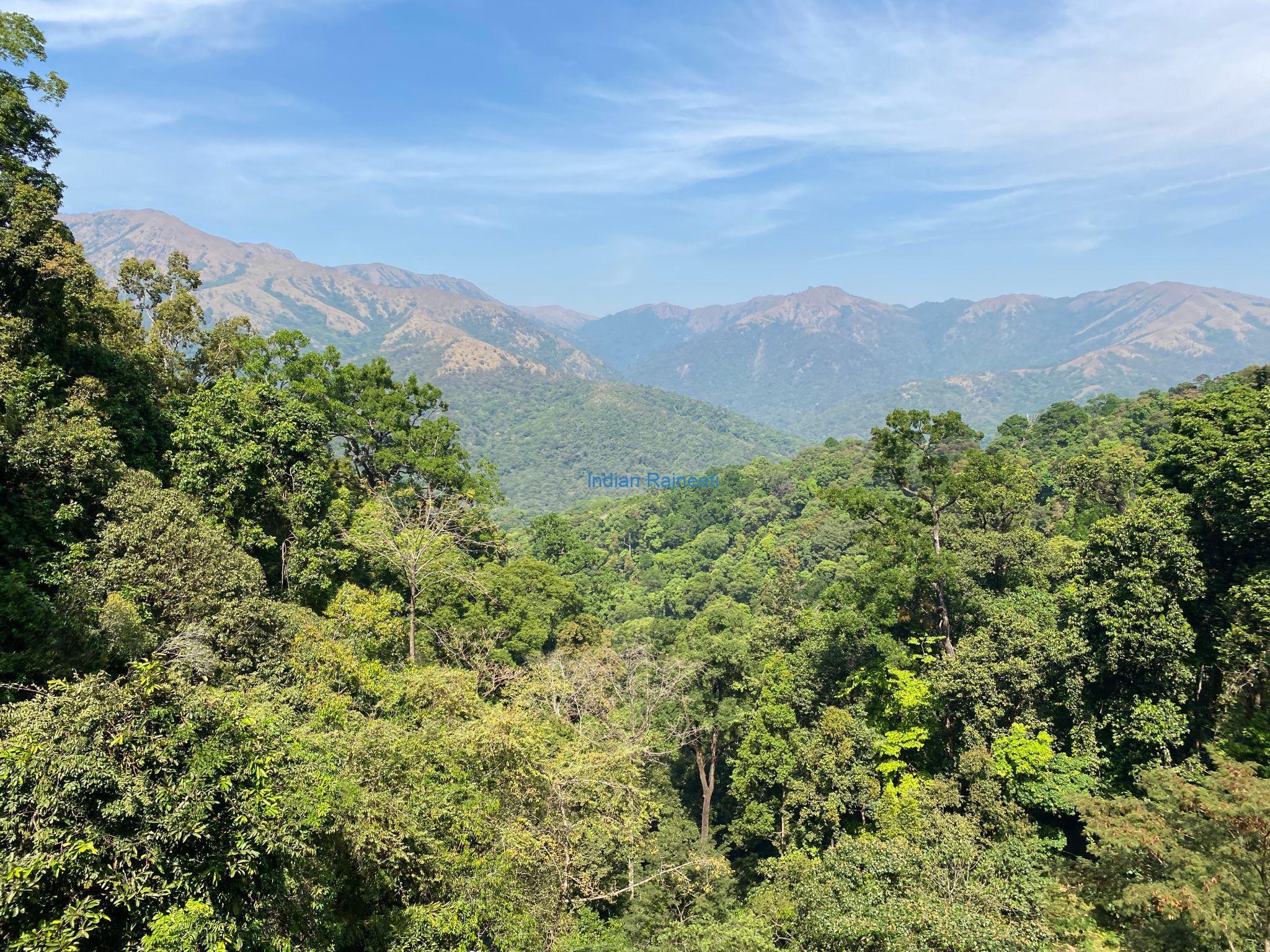
The Western Ghats in Karnataka are at the centre of discussions over the Kasturirangan report and proposed ecological protections.
Bengaluru, September 22, 2026: The Kasturirangan Committee report on the Western Ghats has become a major point of discussion in the Karnataka Legislature, with the ruling Congress and opposition BJP differing over the report’s implementation, the role of successive governments and the approach Karnataka should take in responding to the Centre’s latest draft notification.
The Karnataka Legislature is holding a three-day special session from September 21 to 23 to discuss the Kasturirangan report and the state’s drought situation. The government has indicated that Karnataka will oppose implementation of the report in its present form, while also seeking views from legislators, farmers and people living in the affected regions. Karnataka has to communicate its response to the Centre by September 27, 2026.
The Kasturirangan Committee was constituted in 2012 under the chairmanship of former ISRO chairman K. Kasturirangan to review the recommendations of the Madhav Gadgil-led Western Ghats Ecology Expert Panel.
The Kasturirangan committee submitted its report in 2013. It identified approximately 37% of the Western Ghats across six states as ecologically sensitive, with Karnataka containing the largest proposed area among the states covered.
The Western Ghats extend across several states and are recognised for their biodiversity, forests, rivers and ecological importance. The debate over the report has continued for years because of the need to balance environmental protection with the livelihoods and development requirements of communities living in the region.
The Union Ministry of Environment, Forest and Climate Change issued the seventh draft notification concerning the Western Ghats Ecologically Sensitive Area in July 2026.
The latest draft proposes an ESA covering 20,668 square kilometres across 10 Karnataka districts, according to reports. The affected region includes numerous villages and areas where agriculture, plantations and other economic activities take place.
Karnataka has been asked to submit its views on the latest notification by September 27. The deadline has prompted the state government to convene the special legislative session and formulate its response.
The Congress-led Karnataka government has stated that it does not support implementation of the Kasturirangan recommendations in their present form.
Chief Minister D.K. Shivakumar has said that the government wants to consider the views of farmers, residents, legislators and other stakeholders before finalising Karnataka’s response.
The government has also raised concerns that satellite-based mapping may not sufficiently distinguish natural forests from agricultural land, plantations and other areas where people live and work.
Shivakumar has proposed drone-based LiDAR and plot-level mapping to establish ground-level boundaries and distinguish forests from farmland. The government has also discussed mechanisms such as ecosystem-service payments and greater participation of local and tribal communities in conservation.
Congress leaders have argued that environmental protection and protection of local livelihoods need to be considered together.
The BJP has also opposed implementation of the report in its current form, particularly over concerns about its possible effects on farmers, residents and development projects in the Western Ghats.
Leader of Opposition R. Ashoka has called for a physical survey of the areas identified under the ESA proposal and suggested that Karnataka examine the approach adopted by Kerala.
Ashoka has also called for a specialised legal team to represent Karnataka’s interests and has argued that the state should obtain detailed ground-level information before accepting the proposed boundaries.
BJP state president B.Y. Vijayendra has called for the special session to go beyond a resolution and said the state should prepare a legal strategy to protect the interests of people in the affected areas.
He has also questioned whether a three-day session would be sufficient for a detailed discussion and has sought an extension of the session.
The political dispute has also focused on which government is responsible for the current situation.
BJP leaders have pointed to the fact that the Gadgil and Kasturirangan committees were constituted during the earlier Congress-led UPA period. BJP leaders have argued that the current Congress government should not use the issue solely to criticise the Union government.
Congress leaders, meanwhile, have argued that the Centre has continued issuing draft notifications despite Karnataka repeatedly expressing reservations about the recommendations.
The two sides therefore agree on opposition to implementation in its present form but differ over the political history of the issue and the appropriate response to the Centre.
One of the central concerns in the debate is the possible effect of an Ecologically Sensitive Area notification on people living in the Western Ghats.
Residents and farmers in districts such as Kodagu, Hassan, Chikkamagaluru, Shivamogga and Uttara Kannada have expressed concerns about restrictions affecting land use, infrastructure and development activities.
The proposed ESA framework includes restrictions on activities such as new mining, quarrying and certain highly polluting industries. Residents have questioned how such restrictions could affect roads, housing, drinking-water infrastructure and other public works.
At the same time, environmental groups and conservation advocates argue that stronger protection of the Western Ghats is necessary because of its ecological importance and vulnerability to environmental degradation.
The Kasturirangan debate involves two major policy concerns.
The first is the need to protect the Western Ghats from activities that could cause long-term environmental damage, including excessive mining, quarrying, deforestation and unplanned development.
The second is the need to protect the rights and livelihoods of farmers, plantation owners, forest-dependent communities and residents who have lived in the region for generations.
The Karnataka government has therefore indicated that it wants a system that can distinguish natural forest areas from agricultural and inhabited areas before final boundaries are determined.
Environmental groups, meanwhile, have argued that ecological protection should not be weakened because of development pressures. The debate continues over how the final ESA boundaries should be determined and what restrictions should apply.
During the special session, several possible approaches have been discussed, including:
The BJP has argued that the three-day special session may not provide sufficient time to examine the Kasturirangan issue, drought and related concerns in detail.
B.Y. Vijayendra and R. Ashoka have sought a longer session, with the BJP proposing that the sitting be extended to a week.
The government has defended the three-day session, saying that it was convened to gather views from legislators and stakeholders and formulate a comprehensive response to the Centre.
A key immediate development is the September 27 deadline for Karnataka to communicate its position on the latest draft notification.
The state government has indicated that it intends to oppose implementation of the Kasturirangan recommendations in their current form while exploring alternatives such as physical surveys and revised mapping.
The outcome of the legislative discussion and the state’s formal response will therefore be important in determining Karnataka’s next steps.
The Kasturirangan report is part of a much larger debate over how the Western Ghats should be managed.
The region is an important ecological zone supporting forests, wildlife, rivers and biodiversity. At the same time, millions of people depend directly or indirectly on agriculture, plantations, tourism and other economic activities in and around the Western Ghats.
The Karnataka debate reflects this broader challenge: determining how environmental safeguards can be implemented while accounting for existing settlements, agricultural land and the economic needs of local communities.
The Kasturirangan report has brought the Karnataka government’s environmental policy, farmers’ concerns and Centre-state relations into the spotlight during the September 2026 special legislative session.
Both the Congress government and the BJP have expressed opposition to implementing the report in its current form, although they have disagreed over responsibility for the issue and the appropriate way forward.
The immediate focus is now on the Karnataka Legislature’s discussions and the state’s response to the Centre before the September 27 deadline. The final approach could involve further surveys, revised mapping, legal measures and discussions with the Union government and affected communities.
Bikaner, September 22, 2026: The Congress has retained control of the Bikaner Municipal Corporation after…
Jaipur, September 22, 2026: Rajasthan's urban local-body elections have produced a closely watched contest between…
Bengaluru, September 22, 2026: A political and legal dispute over the rendition of Vande Mataram…
Srinagar, September 22, 2026: The autumn session of the Jammu and Kashmir Legislative Assembly began…
Bengaluru, September 18, 2026: A political dispute has emerged in Karnataka over a newly introduced…
Lucknow, September 18, 2026: Uttar Pradesh is preparing for its next Legislative Assembly election, which…