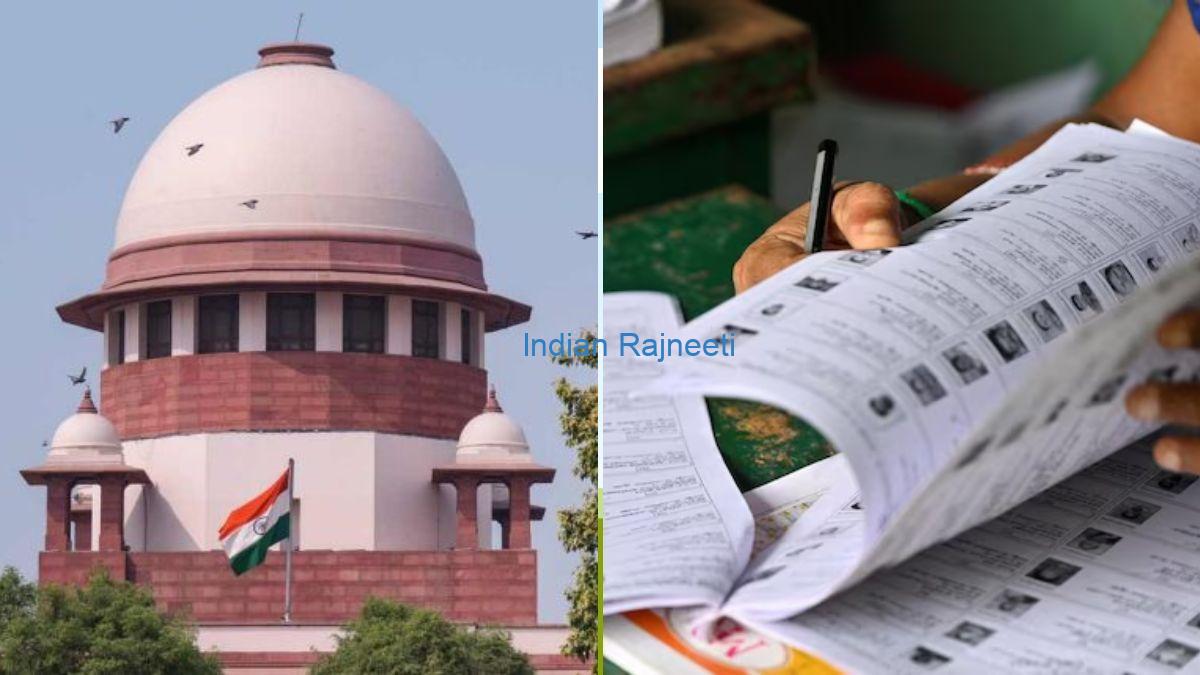
A Booth Level Officer verifies voter details during the Special Intensive Revision of electoral rolls.
The Special Intensive Revision (SIR) of electoral rolls has come under increased scrutiny amid questions over voter inclusion, deletion procedures and the timing of the Election Commission’s regular Special Summary Revision (SSR). The latest discussion centres on whether the delay in conducting the annual revision could affect the timely addition of citizens who become eligible to vote after turning 18 years of age.
Under India’s electoral-roll framework, citizens who are 18 years old and otherwise eligible can be registered as voters. The Election Commission has four qualifying dates for voter registration — January 1, April 1, July 1 and October 1. The ECI states that eligible citizens can submit advance applications through Form 6, with registration processed in the relevant quarter when they attain the qualifying age.
The annual Special Summary Revision (SSR) is different from the Special Intensive Revision (SIR). SSR is part of the regular process of updating electoral rolls, while SIR is a more intensive exercise involving enumeration, verification and revision of existing electoral records. The ECI says the broader objective of electoral-roll revision is to ensure that no eligible citizen is left out and no ineligible person is included.
According to reports published in September 2026, the annual SSR process has remained stalled after the 2024 cycle, while the Election Commission has been conducting SIR exercises in different states and Union Territories. The Economic Times reported that Election Commissioners Sukhbir Singh Sandhu and Vivek Joshi have supported resuming the annual revision, while a final decision on the exercise has remained pending.
The issue is particularly relevant for young first-time voters. A delay in the regular revision process can raise questions about how quickly newly eligible citizens are incorporated into the electoral rolls, even though the ECI’s rules provide mechanisms for advance applications and continuous updating. Therefore, the reported delay does not by itself mean that every newly eligible 18-year-old is unable to register, but it has generated questions about the timing and administration of voter-list updates.
The SIR process has also generated a wider debate over voter deletions and appeals. In West Bengal, the Election Commission recently informed the Supreme Court that 38.20 lakh appeals had been filed concerning inclusion and deletion of names during the SIR process, while only about 1.02 lakh appeals had been disposed of at the time of its affidavit. The figures have prompted further questions about the speed of the review and grievance-redressal process.
The Election Commission has maintained that SIR is intended to make electoral rolls accurate and up to date, while ensuring that eligible citizens are not excluded. The government’s public explanation of the exercise says that the process includes house-to-house enumeration, collection of forms, publication of draft rolls, claims and objections, verification and publication of the final electoral roll.
The controversy therefore involves two related but distinct issues. The first is the intensive verification of existing voters through SIR, including the identification of deceased, shifted, duplicate or otherwise questionable entries. The second is the regular addition of newly eligible voters through SSR and continuous updation. Keeping these processes operational is important for maintaining an electoral roll that reflects both legitimate deletions and new voter registrations.
The debate has also gained significance because of the reported differences within the Election Commission over the timing of the annual revision. The issue has been discussed alongside broader questions about institutional decision-making, voter-list transparency and safeguards against wrongful exclusion. These concerns remain contested, with the Election Commission maintaining that its revision procedures contain opportunities for claims, objections and appeals.
For citizens turning 18, the key practical point is that voter registration is not dependent solely on the annual SSR. The ECI’s published guidance allows eligible citizens to make advance applications using Form 6 in relation to the four qualifying dates. Applications are processed for the relevant quarter when the applicant reaches the qualifying age.
The continuing scrutiny of SIR therefore centres on how effectively the electoral system balances verification of existing voter records with the inclusion of new eligible voters. The outcome of the ongoing administrative and judicial scrutiny could influence how electoral-roll revisions, appeals and new voter registrations are handled in the coming election cycles.
As of September 24, 2026, the issue remains part of the wider national debate over SIR, voter-roll accuracy, first-time voter registration, electoral transparency and the functioning of the Election Commission. The reported delay in the annual revision has raised questions about the timely inclusion of young voters, while the ECI’s stated position remains that electoral rolls should be continuously updated and that eligible citizens should have mechanisms to register and seek correction or inclusion.
The political dialogue between Ladakh representatives and the Centre remains significant as the Union Territory…
The Supreme Court of India is currently dealing with several matters that have significant constitutional…
Reported differences within the three-member Election Commission of India (ECI) have emerged as a major…
Opposition parties have stepped up demands for action against Chief Election Commissioner Gyanesh Kumar following…
Political activity has intensified in West Bengal ahead of the upcoming Assembly bypolls in Nandigram…
The Election Commission of India (ECI) has announced the schedule for elections to 12 Rajya…