About the Sikkim Legislative Assembly
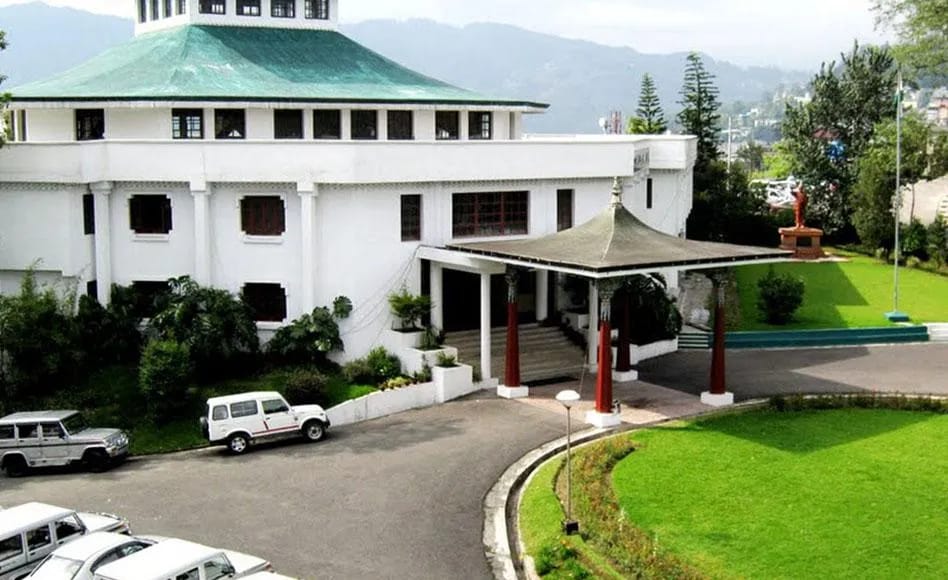
The Sikkim Legislative Assembly is the unicameral legislature of Sikkim, consisting of 32 elected seats. It is located in Gangtok, the state capital, and is responsible for making laws, approving the state budget, discussing public issues and holding the government accountable.
Sikkim became the 22nd state of India on 26 April 1975 through the Constitution (36th Amendment) Act, 1975. The Assembly operates under the special constitutional provisions provided for Sikkim under Article 371F.
Government and Leadership
The state government is led by Prem Singh Tamang (Golay), who serves as Chief Minister. His party, the Sikkim Krantikari Morcha (SKM), secured a major victory in the 2024 Assembly election, winning 31 of the 32 seats.
The Speaker of the Assembly is Mingma Norbu Sherpa, who was unanimously elected during the first session of the 11th Assembly in June 2024. Raj Kumari Thapa serves as Deputy Speaker
Legislative Responsibilities
The Sikkim Legislative Assembly performs several important constitutional and democratic functions:
Enacts laws on subjects under the State List and Concurrent List of the Constitution.
Discusses and approves the state government's annual budget.
Reviews government policies, expenditure and development programmes.
Raises public concerns through questions, debates and motions.
Holds the Council of Ministers accountable to the elected representatives.
Discusses issues relating to education, healthcare, tourism, infrastructure, agriculture and employment.
Political Significance
Sikkim has a distinctive political landscape in which regional parties have played a major role in state politics. The 2024 election strengthened the position of the Sikkim Krantikari Morcha, giving it 31 of the Assembly's 32 seats.
The Sikkim Democratic Front, which previously governed the state for several terms, won only one seat in 2024. This result marked a significant shift in the state's political balance and gave the SKM government a strong legislative majority.
History and Development
Sikkim was formerly a Himalayan kingdom ruled by a hereditary monarchy. It became a protectorate of India in 1950 before joining the Indian Union as a full-fledged state on 26 April 1975.
The Constitution (36th Amendment) Act, 1975, established Sikkim as India's 22nd state and provided for a Legislative Assembly with 32 members. Article 371F contains special constitutional provisions relating to the administration and governance of Sikkim.
Over the years, the Assembly has played an important role in shaping the state's political institutions, development priorities and democratic governance.
Term and Next Election
The current 11th Sikkim Legislative Assembly was constituted following the 2024 Assembly election. Its five-year term is expected to continue until 2029, unless dissolved earlier.
The next Sikkim Legislative Assembly election is expected to take place in 2029, when voters will elect representatives for all 32 constituencies.