Parliament
History of the Parliament of India
Introduction
The Parliament of India is the country's supreme legislative institution at the Union level. Under the Constitution, Parliament consists of the President of India, the Rajya Sabha, also known as the Council of States, and the Lok Sabha, also known as the House of the People. The parliamentary system makes the Union Council of Ministers collectively responsible to the Lok Sabha.
Parliament plays an important role in making laws, approving government expenditure, discussing national issues, examining the work of the executive and representing citizens and the states in the national legislature.
Early Development of Legislative Institutions
The development of India's parliamentary institutions began during British rule. The Indian Legislative Council debates are documented from 1854 onward. The Government of India Act, 1919 introduced a bicameral legislature at the central level, consisting of the Council of State and the Legislative Assembly.
The Council of State became the second chamber of the central legislature, while the Legislative Assembly functioned as the lower chamber. These institutions provided an early framework for legislative debate and representation, although participation was restricted under the colonial system.
The Government of India Act, 1935 proposed a federal structure and changes to the central legislature. However, the federal provisions of the Act were never fully implemented. The central legislative institutions created under the 1919 framework continued to function until independence.
Parliament House
The foundation stone of the original Parliament House was laid on 12 February 1921. The building, originally known as the Council House, was formally opened on 18 January 1927.
The Central Legislative Assembly held its first meeting in the building on 19 January 1927. The building later became an important location for the Constituent Assembly and, after independence, for the Parliament of India.
Constituent Assembly
The Constituent Assembly of India first met on 9 December 1946 in New Delhi. Its principal responsibility was to prepare the Constitution for independent India.
The Assembly debated constitutional principles, government institutions, fundamental rights, federal relations and other matters required for the functioning of a democratic republic. The Constitution was adopted on 26 November 1949 and came into force on 26 January 1950.
The Constituent Assembly took two years, eleven months and seventeen days to complete its work. Its debates form an important part of India's parliamentary and constitutional history.
Provisional Parliament
After the Constitution came into force in 1950, the Constituent Assembly functioned as the Provisional Parliament until the first general elections were held.
The records of the Provisional Parliament from 1950 to 1952 form an important part of India's legislative history.
First General Election
India conducted its first general election between 1951 and 1952. The election established the foundation of representative parliamentary democracy in independent India.
The first Lok Sabha was constituted on 17 April 1952, and its first session began on 13 May 1952. Members of the Lok Sabha were elected directly by the people through universal adult suffrage.
The first sitting of the two Houses of the Indian Parliament took place on 13 May 1952.
Rajya Sabha
Rajya Sabha is the Council of States and represents the states and Union territories at the Union level. The first sitting of the Council of States under the Constitution took place on 13 May 1952.
On 23 August 1954, the Council of States was officially referred to as the Rajya Sabha. The name reflects its role as the Upper House of India's Parliament.
Rajya Sabha is a continuing chamber and is not subject to dissolution. Its members are elected through the prescribed constitutional and statutory process, while a specified number of members may be nominated by the President for their special knowledge or practical experience in areas such as literature, science, art and social service.
Lok Sabha
Lok Sabha is the House of the People and represents citizens through directly elected Members of Parliament.
The first Lok Sabha was constituted in April 1952 following India's first general election. On 14 May 1954, the House of the People was officially referred to as the Lok Sabha.
Lok Sabha has a central role in legislation, financial matters and holding the Union executive accountable. The Council of Ministers is collectively responsible to the Lok Sabha.
Parliament and Law-Making
One of Parliament's principal functions is to make laws on subjects within the constitutional powers of the Union Parliament. Bills may be introduced and debated in Parliament before completing the constitutionally required legislative process.
Parliament also examines government policies and expenditure through questions, debates, motions and parliamentary committees.
Parliamentary records include Bills, debates, questions, committee reports, budget speeches, presidential addresses and other legislative documents.
Parliamentary Committees
Parliamentary committees examine legislation, government expenditure, policies and the functioning of ministries and departments in greater detail.
The parliamentary committee system has developed over several decades and includes financial committees, department-related standing committees and other committees. Parliamentary records contain thousands of committee reports dating from the early years of Parliament.
Parliamentary Debates
Parliamentary debates provide a historical record of discussions on national policies, legislation, budgets and public issues.
The Parliament Digital Library contains historical debates dating from the nineteenth century, including Indian Legislative Council debates, Legislative Assembly debates, Council of State debates, Constituent Assembly debates and Provisional Parliament debates.
The digital collection also contains Lok Sabha debates from the First Lok Sabha onward, allowing researchers and citizens to study the development of India's parliamentary system.
Parliament During Major Historical Periods
1950s and 1960s
The first decades of the Republic established parliamentary procedures, legislative practices and conventions. Parliament dealt with nation-building, economic planning, social legislation, administrative reforms and India's changing domestic and international circumstances.
1970s
The 1970s were an important period in India's parliamentary history. Parliament witnessed major political debates, constitutional amendments and significant changes in national politics.
The Emergency period from 1975 to 1977 was also an important constitutional and political episode in the history of independent India.
1980s and 1990s
Parliament during these decades saw significant political changes, coalition developments and debates concerning economic policy, social justice, federal relations and constitutional reforms.
The 1990s marked the beginning of an era in which coalition governments became an important feature of national politics.
2000s
During the 2000s, Parliament dealt with economic reforms, technology, education, welfare, infrastructure, national security and India's growing engagement with the global economy.
Parliamentary digitisation also expanded, making legislative information increasingly accessible through online platforms.
2010s
The 2010s witnessed major legislative debates and changes in India's political and economic landscape. Parliament considered legislation relating to taxation, economic policy, social welfare, governance and constitutional matters.
The Parliament website and digital repositories also expanded access to parliamentary records and information.
2020s
Parliament in the 2020s has continued to address legislation and national policy concerning the economy, technology, infrastructure, social welfare, education, national security and governance.
India also entered a new phase in parliamentary infrastructure with the development and use of the new Parliament building.
New Parliament Building
The foundation stone of the new Parliament building was laid on 10 December 2020. The new building was developed as part of the modernisation of India's parliamentary infrastructure.
The new Parliament building provides updated facilities for Members of Parliament and parliamentary proceedings while continuing India's legislative traditions.
Parliament and Democracy
Parliament is an important institution of India's representative democracy. Lok Sabha provides direct representation of citizens, while Rajya Sabha represents the states and Union territories within the federal structure.
Parliament also provides a constitutional forum for debate, legislation, financial oversight and accountability of the executive. Its functioning is governed by the Constitution, parliamentary rules, established procedures and conventions.
Digital Parliament
Parliamentary records have increasingly been made available through digital platforms. The Parliament Digital Library contains historical debates, parliamentary documents, committee reports, budget speeches and other publications.
The digitisation programme has made a large historical collection available to researchers, students, journalists and citizens.
Important Parliamentary Milestones
12 February 1921 — Foundation stone of the original Parliament House was laid.
18 January 1927 — Parliament House was formally opened.
19 January 1927 — Central Legislative Assembly held its first meeting in the building.
9 December 1946 — Constituent Assembly held its first sitting.
26 November 1949 — Constitution of India was adopted.
26 January 1950 — Constitution came into force and India became a republic.
17 April 1952 — First Lok Sabha was constituted.
13 May 1952 — First session of the First Lok Sabha began.
13 May 1952 — First sitting of the two Houses of the Indian Parliament took place.
14 May 1954 — House of the People was officially referred to as Lok Sabha.
23 August 1954 — Council of States was officially referred to as Rajya Sabha.
10 December 2020 — Foundation stone of the new Parliament building was laid.
Conclusion
The history of the Parliament of India reflects the development of India's constitutional and democratic institutions. From the legislative bodies of the colonial period to the Constituent Assembly and the modern Lok Sabha and Rajya Sabha, parliamentary institutions have evolved alongside the Republic.
Today, Parliament remains a central institution for legislation, representation, public debate, financial oversight and executive accountability within India's constitutional system.
Parliament News
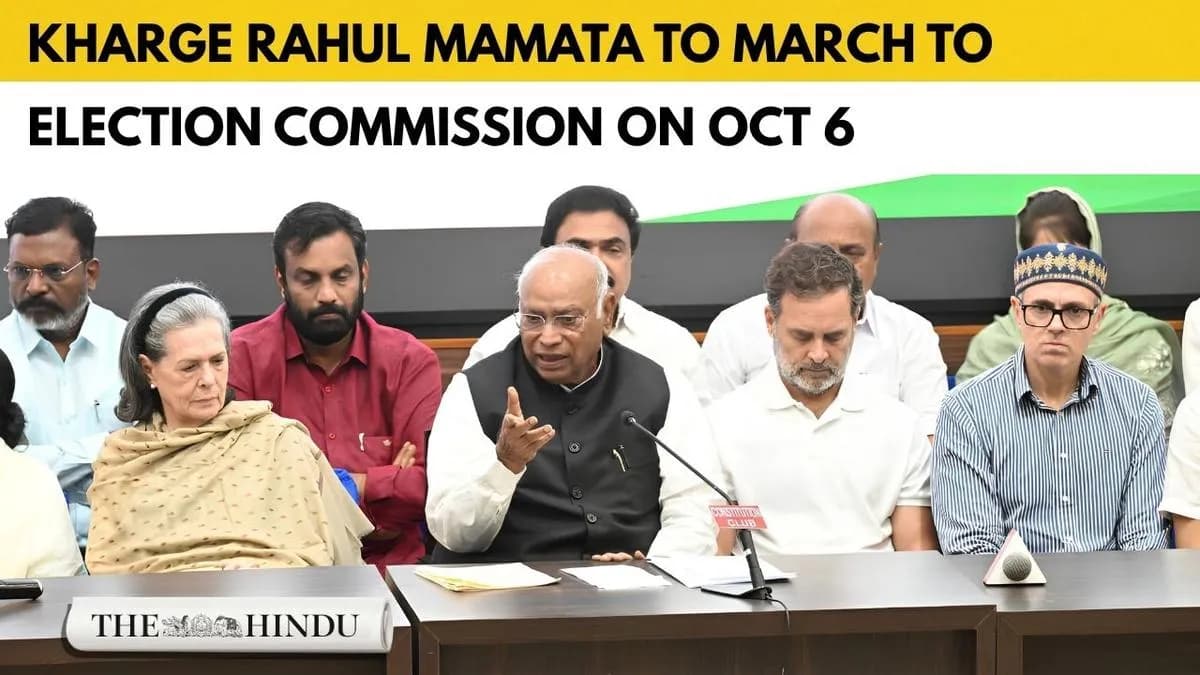
INDIA Bloc Announces Nationwide Protest Plan Over Election Commission Row
The INDIA bloc has announced a nationwide campaign over concerns related to the Election Commission and electoral processes. The Opposition plans protests, a march to the Election Commission headquarters, and a legal challenge to provisions of the Chief Election Commissioner Act, 2023.
By Shivani CH • 107 views
Delhi Minister Parvesh Verma Faces Row After Video of Alleged Slap During Road Inspection Goes Viral
Delhi PWD Minister Parvesh Verma has come under political scrutiny after a video surfaced online showing him allegedly slapping a man during a road inspection in West Delhi. The incident has triggered sharp reactions from the Aam Aadmi Party, while Verma has defended his actions.