Tamil Nadu Politics
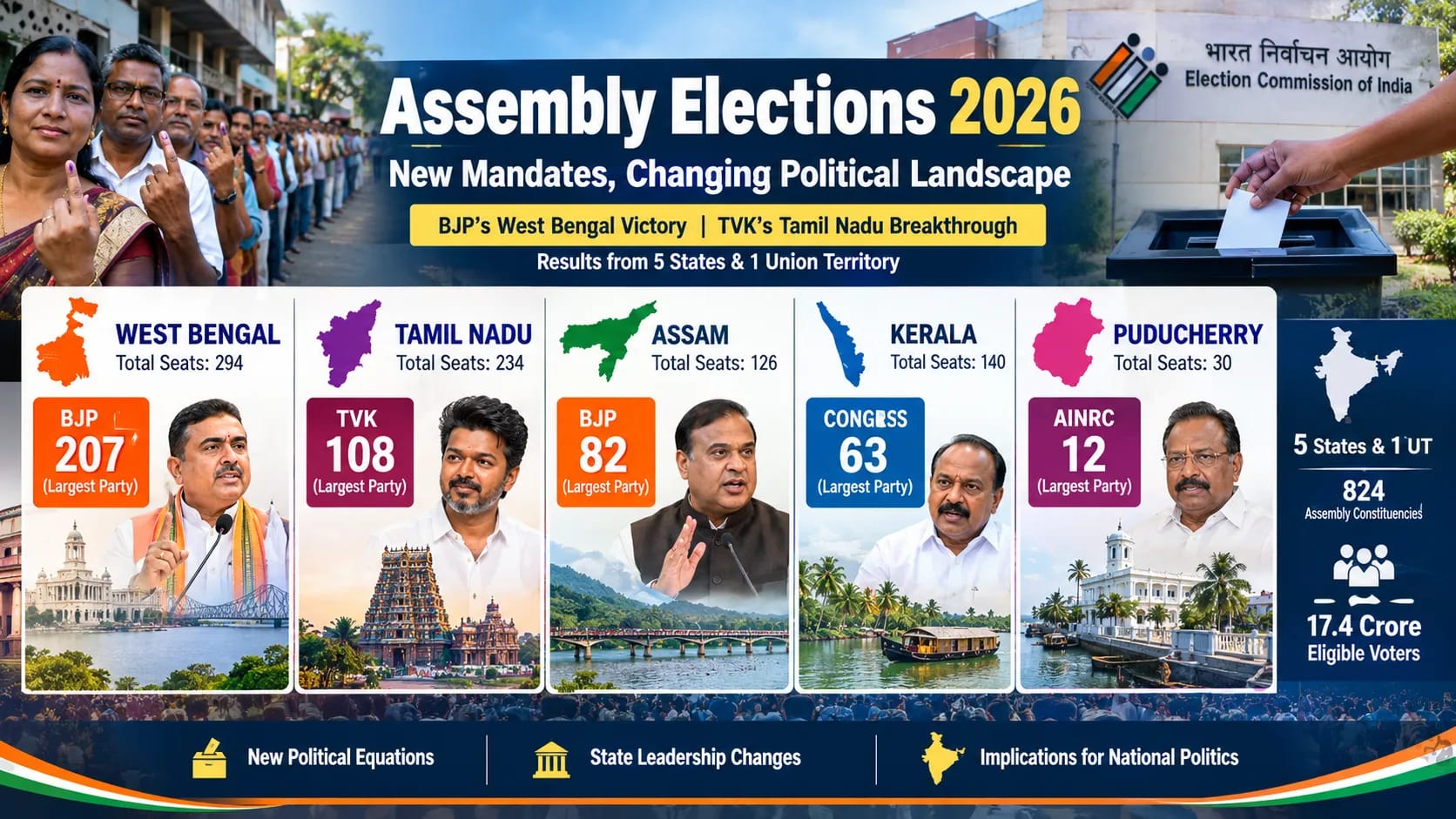
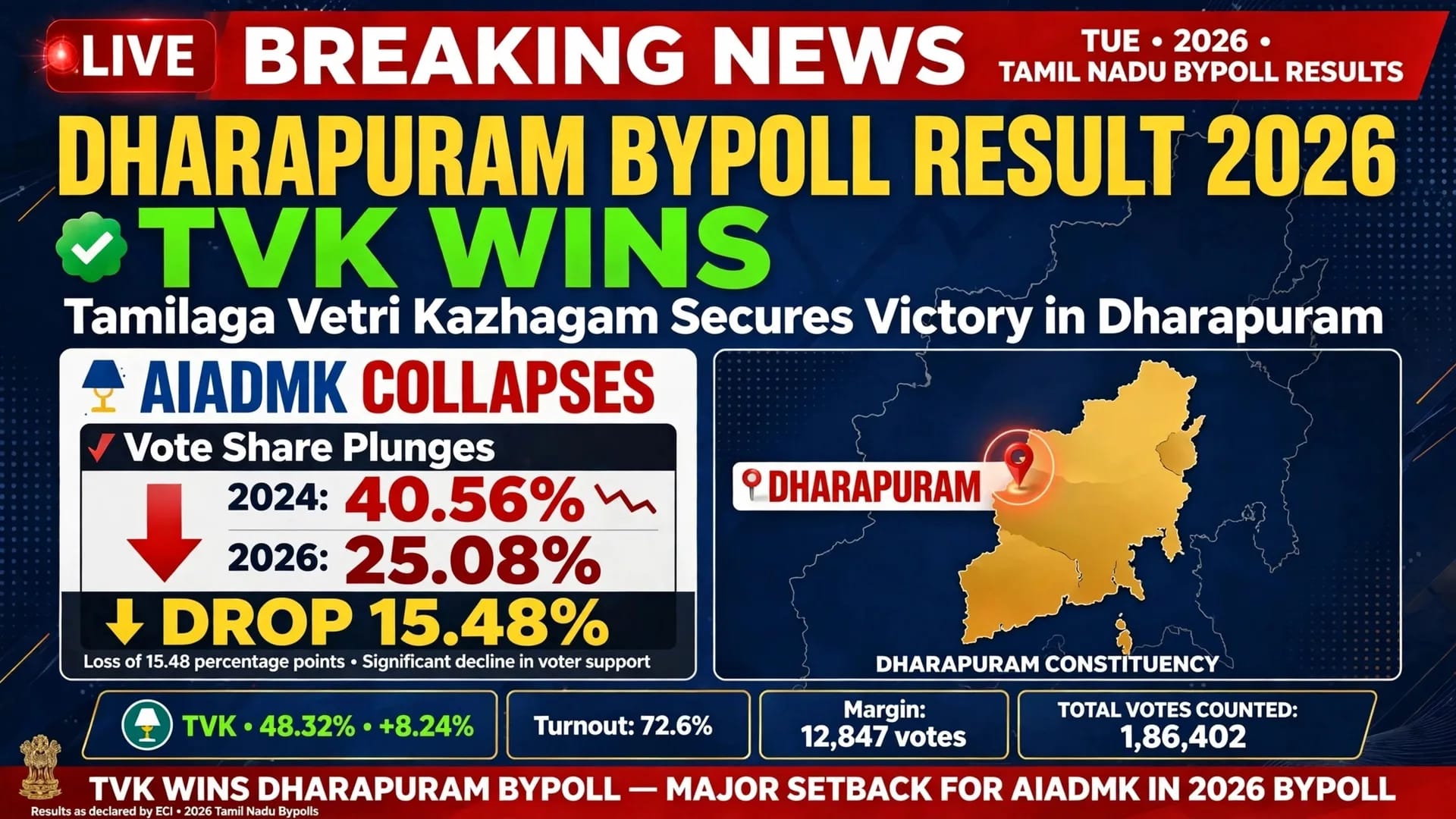
Tamil Nadu is governed by the Tamilaga Vettri Kazhagam (TVK), led by Chief Minister C. Joseph Vijay. Track the latest political developments, policy decisions, and electoral dynamics shaping Tamil Nadu.
Current vs. Opposition

C. Joseph Vijay
Chief Minister, Tamil Nadu — Tamilaga Vettri Kazhagam (TVK)
View profile Opposition
Udhayanidhi Stalin
Opposition Leader — Dravida Munnetra Kazhagam (DMK), Tamil Nadu Assembly
View profileHistory & Achievements

History
Tamil Nadu has a long and influential political history rooted in the Madras Presidency, the Dravidian movement, social reform and the growth of regional political parties. After Independence, the Madras State underwent major territorial changes during the reorganisation of Indian states on linguistic lines. Andhra areas were separated in 1953, while further boundary changes took place during the 1956 States Reorganisation. The state was officially renamed Tamil Nadu on 14 January 1969 under Chief Minister C. N. Annadurai. The political development of Tamil Nadu was strongly influenced by the Self-Respect Movement and the Dravidian movement, which emphasised social justice, equality, Tamil language and cultural identity. The Justice Party, Self-Respect Movement and later the Dravidar Kazhagam played important roles in shaping the state's political and social discourse. The Dravida Munnetra Kazhagam (DMK) came to power in 1967 under C. N. Annadurai, marking a major shift in Tamil Nadu politics from Congress dominance to regional-party government. M. Karunanidhi subsequently became one of the state's most prominent political leaders and served several terms as Chief Minister. In 1972, M. G. Ramachandran (MGR) founded the All India Anna Dravida Munnetra Kazhagam (AIADMK). The DMK and AIADMK subsequently became the two major forces in Tamil Nadu politics. MGR's government was followed by the political leadership of J. Jayalalithaa, who became one of the state's most influential political figures. Tamil Nadu politics has also included significant contributions from Congress, BJP, PMK, VCK, Left parties and other regional organisations. Issues such as social justice, reservation, welfare programmes, education, industrial development, agriculture, water resources, employment, language and state autonomy have remained important themes in state politics. The Tamil Nadu Legislative Assembly has 234 elected constituencies and has played a central role in the state's democratic and policy-making process. The state also has 39 Lok Sabha constituencies and 18 Rajya Sabha seats. Over the decades, Tamil Nadu has developed a distinctive model of competitive regional politics in which welfare policies, social development, industrialisation and Tamil cultural identity have remained central to electoral politics.
Tamil Nadu News
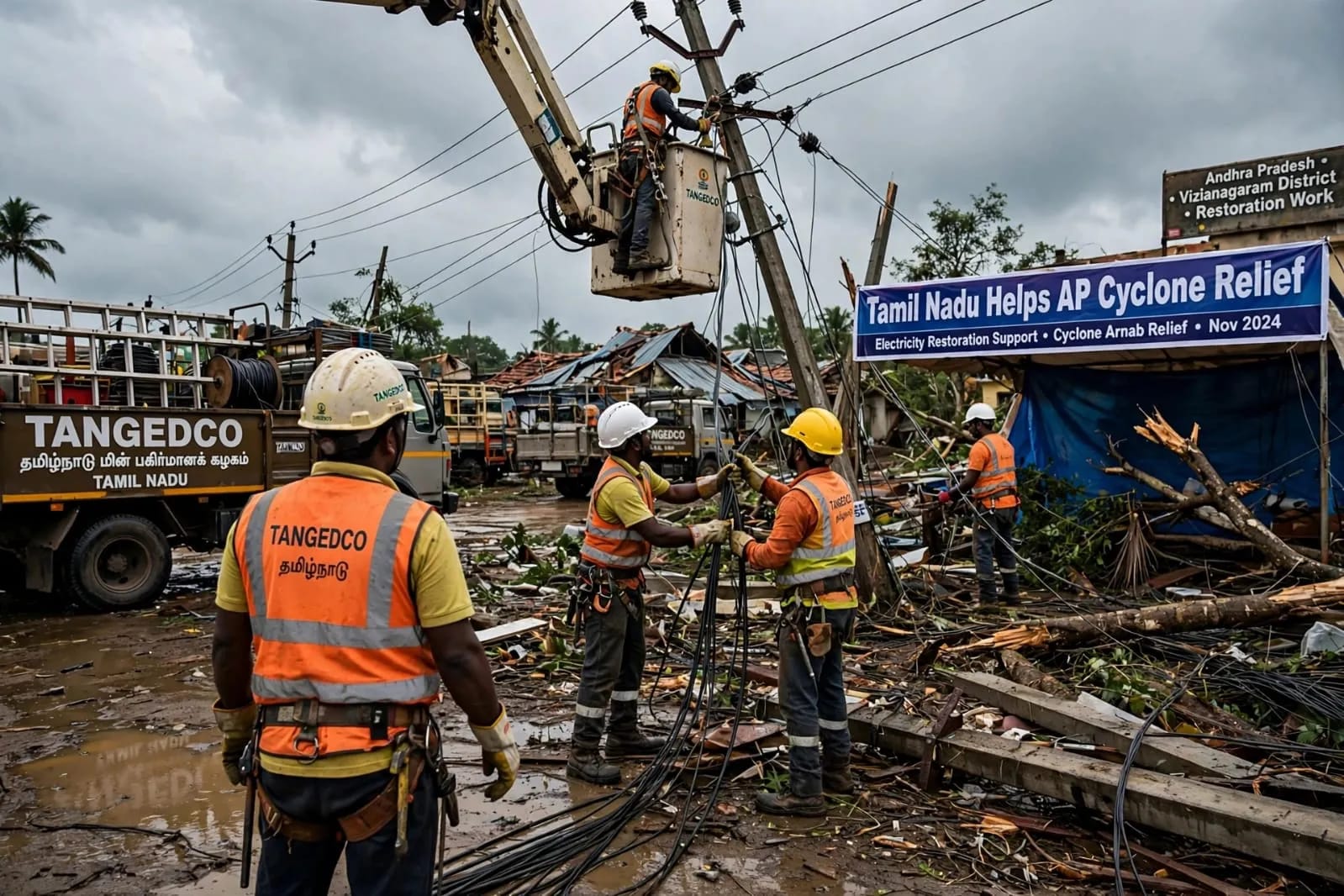
Tamil Nadu Extends Helping Hand to Andhra Pradesh: Sends Electricity Teams and Equipment to Restore Power After Cyclone Arnab
In a major example of inter-state cooperation during a natural disaster, the Tamil Nadu government has agreed to extend assistance to Andhra Pradesh by providing electricity department personnel and essential equipment to speed up power restoration in cyclone-affected regions.
By C Sunil Kumar • 18 views