Bharatiya Janata Party
Bharatiya Janata Party (BJP), founded in 1980, is a major political party in India. Explore its latest activities, statements, and role in the current political landscape.
Current vs. Opposition
Bharatiya Janata Party (BJP)
Ruling Party (National)
Indian National Congress (INC)
Principal Opposition
History & Achievements
The Bharatiya Janata Party describes its political philosophy through Integral Humanism, nationalism, cultural nationalism, democracy, social justice, secularism, economic development and good governance. Integral Humanism, associated
Since 1996: 1996, 1998–1999, 1999–2004, 2014–present.
History
The Bharatiya Janata Party was formally established in 1980 following the dissolution of the Janata Party. The new party was formally announced at a conference of party workers at Kotla Ground in New Delhi on 6 April 1980. Atal Bihari Vajpayee became the BJP's first national president, while Lal Krishna Advani became an important organisational leader.
The BJP developed from the political tradition associated with the Bharatiya Jana Sangh, which was founded in 1951 under the leadership of Syama Prasad Mookerjee. After the Emergency, the Jana Sangh merged with several other political groups to form the Janata Party in 1977. Internal differences within the Janata Party eventually contributed to the formation of the BJP in 1980.
In the 1984 Lok Sabha election, the BJP won two seats. During the late 1980s and early 1990s, the party expanded its electoral base and became an important force in national politics.
In the 1989 Lok Sabha election, the BJP substantially increased its parliamentary representation and became an important participant in coalition politics. In 1996, the BJP emerged as the largest party in the Lok Sabha. Atal Bihari Vajpayee became Prime Minister, although his first government lasted only 13 days.
In 1998, the BJP-led National Democratic Alliance formed the Union government with Vajpayee as Prime Minister. Following the 1999 Lok Sabha election, the NDA returned to power and Vajpayee led the government for a full five-year term from 1999 to 2004.
Between 2004 and 2014, the BJP remained a major opposition party at the national level while continuing to expand its organisation and electoral presence across different states.
In the 2014 Lok Sabha election, the BJP won a single-party majority, winning 282 seats, and Narendra Modi became Prime Minister. In the 2019 Lok Sabha election, the BJP increased its tally to 303 seats and formed the Union government for a second consecutive term.
In the 2024 Lok Sabha election, the BJP won 240 seats and remained the largest single party in the Lok Sabha. The BJP-led National Democratic Alliance secured a parliamentary majority and formed the Union government, with Narendra Modi continuing as Prime Minister.
The BJP has also expanded its political presence through state-level governments and alliances across different regions of India. Its political history has therefore evolved from a relatively small parliamentary party in the 1980s into one of India's principal national political organisations.
Bharatiya Janata Party News
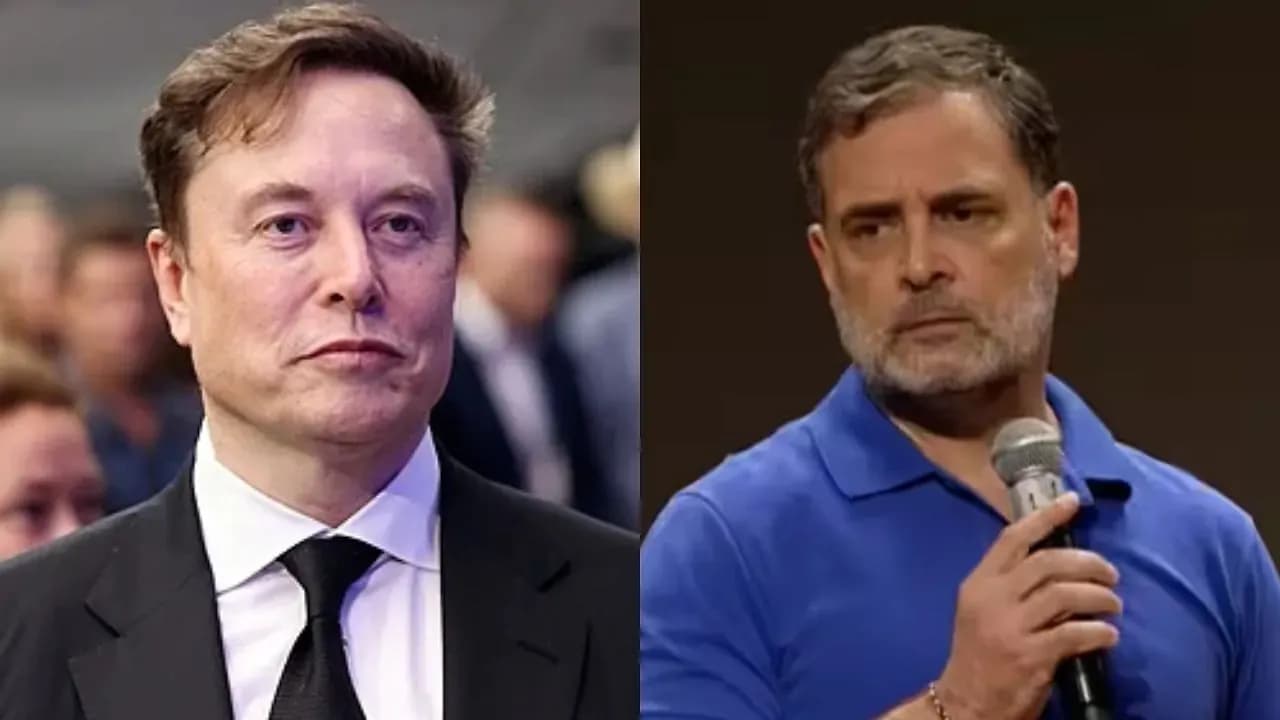
BJP Targets Rahul Gandhi Over Elon Musk Exchange, Defends India’s Spectrum Policy
The BJP has criticised Rahul Gandhi over his exchange with Elon Musk on X while challenging the SpaceX founder’s remarks on India’s spectrum allocation policy. BJP national vice-president Ram Madhav accused Gandhi of inconsistency, turning the debate over telecommunications policy into a wider political confrontation.
By Haripriya • 3 views