ECI Draws a Strict Red Line Ahead of 2027 Elections: Retired Government Officers Face Political Activity Restrictions – Manipur Among Five States Under New Directive
Introduction: Election Commission tightens administrative neutrality rules
With preparations gathering momentum for the 2027 Assembly elections, the Election Commission of India (ECI) has introduced an important clarification concerning the political conduct of retired government officials working with state governments.
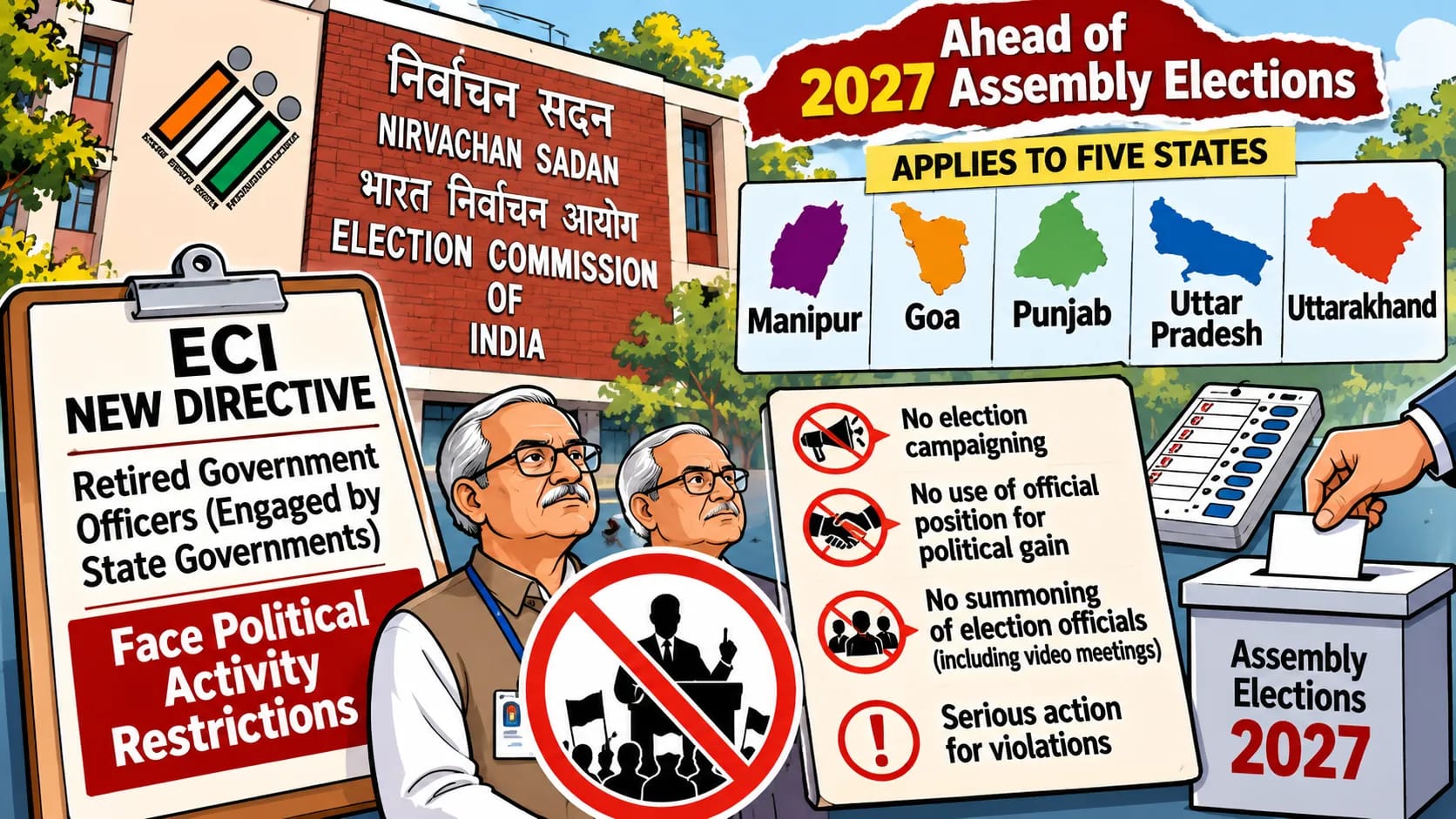
In a directive dated November 9, 2026, the Commission instructed five poll-bound states to extend restrictions applicable to serving government employees to retired officials who have been engaged, re-employed or attached to state governments in various capacities.
The five states covered by the directive are:
The Commission's decision focuses on maintaining political neutrality during the Model Code of Conduct (MCC) period.
What exactly has the Election Commission ordered?
The Election Commission has directed that restrictions and prohibitions applicable to serving government employees should also apply to retired government officials and employees who are engaged or re-employed by state or Union Territory governments in various capacities, where specific neutrality guidelines are otherwise absent.
The main restrictions include:
1. No participation in election campaigning
Covered officials must not participate in election campaigns or canvassing in support of any political party, candidate or individual.
2. Political neutrality is mandatory
They must not use their names, official positions, authority or government-linked responsibilities to assist one political party or candidate over another.
3. Restrictions on contacting election officials
The directive also prohibits covered individuals from summoning election-related officers of a constituency or district where elections have been announced for official discussions or meetings.
This restriction also covers video conferences and other official meetings with such election personnel.
4. Serious action for violations
The Election Commission has warned that any omission or commission contrary to its directions will be viewed seriously.
Why did the ECI extend restrictions to retired officers?
The decision addresses a particular administrative situation.
Several government officials continue to serve state administrations even after retirement through contractual appointments, re-employment or other government engagements.
Although they may no longer be regular serving government employees, their continued association with government departments can involve administrative responsibilities and access to official machinery.
Five states, one common electoral requirement
The five states covered by the directive have different political environments, but they share one important administrative responsibility: ensuring impartial election management.
State Electoral significance
The Commission has communicated the instructions to the respective Chief Secretaries and Chief Electoral Officers.
Political implications: Accountability versus administrative influence
The directive raises an important question about the relationship between government appointments and electoral neutrality.
Retired officials may possess considerable administrative experience and continue contributing to government work after retirement. However, their government-linked positions should not become a source of political influence during elections.
The Election Commission's position is that individuals working in covered government capacities must follow the relevant neutrality requirements.
For political parties, the order provides a clearer framework for raising complaints if they believe government-linked personnel are participating in election campaigning or improperly influencing election officers.
What happens next?
The five state administrations will need to communicate the instructions to the relevant government departments and ensure compliance by covered personnel.
As the 2027 elections approach, the Election Commission is expected to continue monitoring administrative arrangements and the conduct of election-related officials.
Political parties and citizens will also be watching how effectively the neutrality requirements are implemented.
In Manipur, the directive will form part of the wider administrative preparations for the next Assembly election.
Conclusion: A stronger focus on election-time neutrality
The Election Commission's November 9 directive establishes an important clarification for retired government officials who continue working with state governments.
By extending relevant restrictions to this category of personnel in Manipur, Goa, Punjab, Uttar Pradesh and Uttarakhand, the Commission has emphasised that government-linked responsibilities must remain politically neutral during the Model Code of Conduct period.


Join the discussion
Comments (0)