JHARKHAND ASSEMBLY SET FOR A POLITICAL SHOWDOWN! Hemant Soren Government Plans Special Sittings on SIR and Mining Law
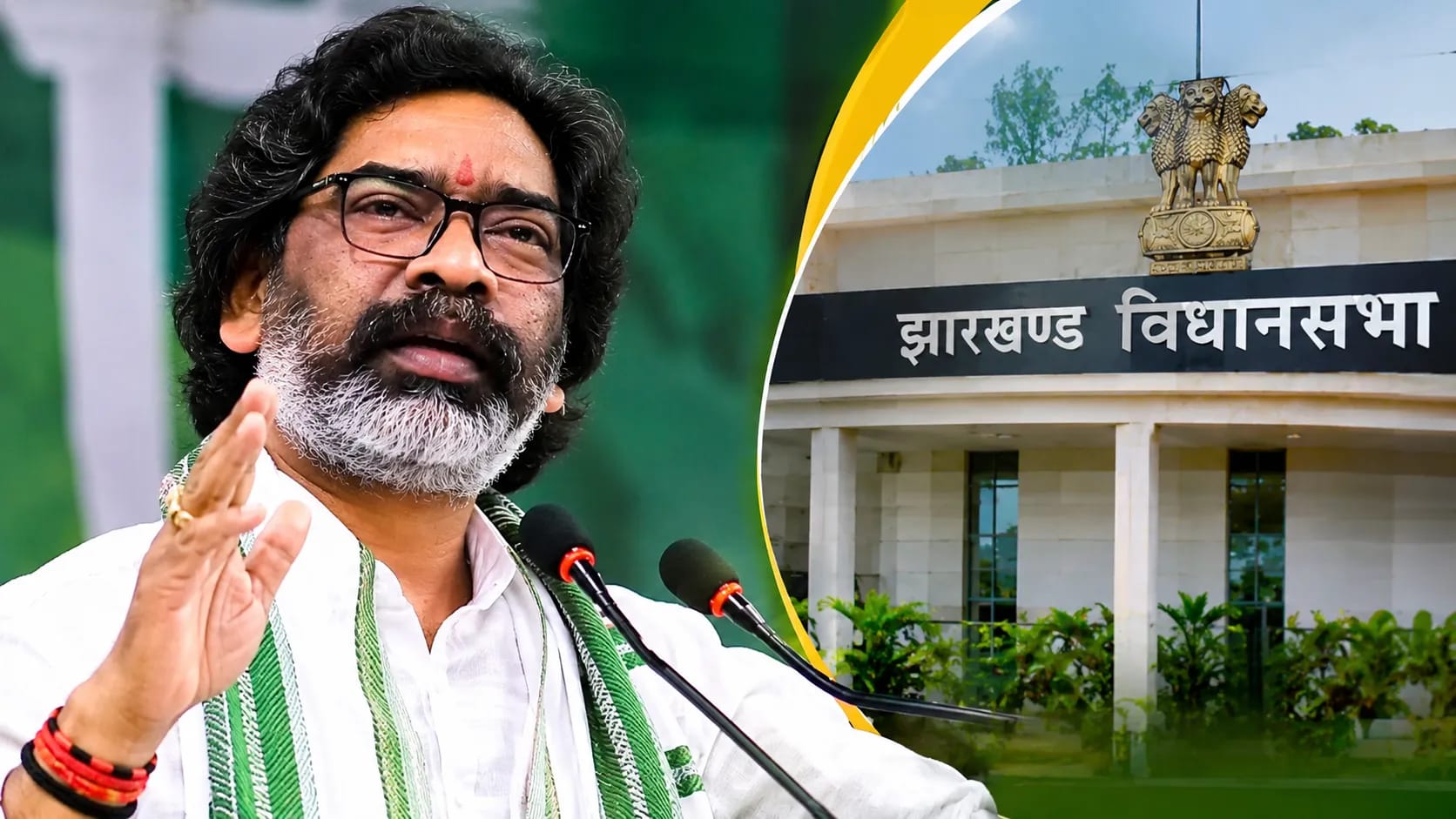
Jharkhand is preparing for an important legislative debate after the state cabinet, chaired by Chief Minister Hemant Soren, approved special sittings of the Legislative Assembly for November 25 and 26, according to reports published after the October 27 cabinet meeting.
The proposed special sittings are expected to focus on two politically significant subjects: the Special Intensive Revision (SIR) of electoral rolls and the Mines and Minerals (Development and Regulation) Amendment Act.
The issues are important for different reasons. SIR concerns the accuracy and administration of electoral rolls, while the mining-law debate involves the distribution of powers and financial responsibilities between the Union and state governments.
The proposed Assembly discussions could provide an opportunity for elected representatives to place their positions on record.
What is the proposed Assembly programme?
Reports following the October 27 cabinet meeting state that the Jharkhand government decided to convene special sittings on November 25 and 26.
The proposed discussions include:
The Special Intensive Revision of electoral rolls.
The Mines and Minerals (Development and Regulation) Amendment Act.
Related questions concerning state authority and the legal framework for mining-related revenue.
The special sittings are expected to give legislators an opportunity to deliberate on these subjects.
The dates and agenda should be checked against the final Assembly notice and official proceedings before publication as a confirmed sitting schedule.
Why has SIR become a political issue?
The Special Intensive Revision of electoral rolls has become an important subject of political discussion in several states.
Electoral rolls determine the registered electorate and are central to the conduct of democratic elections.
The revision process involves checking voter information and following the prescribed procedures for additions, corrections and objections.
Political parties may raise questions about the implementation of the exercise, its transparency and the protection of eligible voters' rights.
In Jharkhand, the proposed special Assembly discussion could provide a formal platform for representatives to debate the process.
It is important to distinguish between concerns raised by political parties and findings formally established by election authorities. Allegations of irregularities should not be presented as proven facts without documentary evidence.
The mining-law debate
The second major subject concerns the Mines and Minerals (Development and Regulation) Amendment Act.
Mining is economically and politically important to Jharkhand because the state has significant mineral resources.
The legal framework governing mining, mineral-bearing land and revenue has implications for state finances and the ability of the government to fund public services.
The debate involves questions about the balance of authority between the Union and state governments.
The Jharkhand government has expressed concerns about changes affecting its ability to levy cess on mineral-bearing land. The state government's position on the issue has been reported as part of the political debate surrounding the proposed Assembly sittings.
Why the Assembly debate matters
The Legislative Assembly is the primary democratic forum where elected representatives can debate issues affecting the state.
A special sitting provides an opportunity for members to raise questions, present arguments and seek clarity from the government.
On electoral roll revision, the debate may focus on the rights of voters and the responsibilities of election authorities.
On mining legislation, members may discuss the financial and constitutional implications of the legal changes.
The quality of the discussion will depend on the evidence presented, the arguments made by members and the decisions taken through the appropriate legislative procedures.
The political significance for Hemant Soren
For the Hemant Soren-led government, the proposed discussions provide an opportunity to present the state's position on two important issues.
The government will be expected to explain its concerns and clarify what action it believes is necessary.
The Opposition will also have an opportunity to question the government's position and demand further details.
A legislative debate does not automatically change the law or reverse a decision taken by Parliament. Any subsequent legal or political action must follow the applicable constitutional and legislative procedures.
Conclusion
Jharkhand's proposed special Assembly sittings could become an important political event in November.
The debate over electoral roll revision concerns democratic participation, while the mining-law issue concerns the state's financial and constitutional interests.
Both subjects have the potential to generate significant discussion between the ruling alliance and Opposition members.



Join the discussion
Comments (0)