
₹62,370 Crore Fertiliser Subsidy Approved! Centre's Winter Spending Plan Puts Farmers and Public Finances in Focus
Introduction
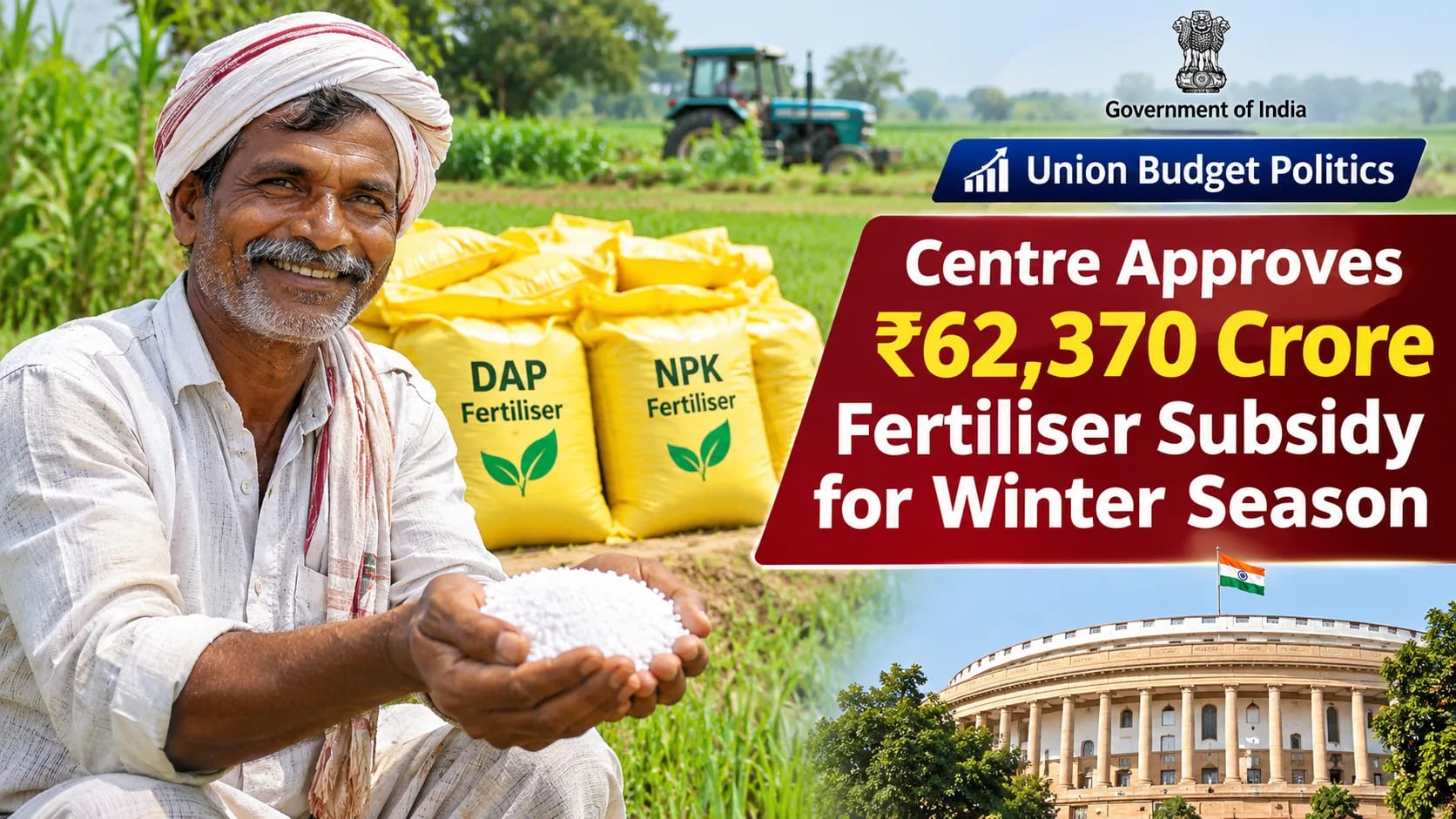
The Union Government's decision to approve ₹62,370 crore in fertiliser subsidies for the winter cropping season has brought agricultural expenditure and budget priorities into focus.
The Union Cabinet approved the subsidy for the October 2026–March 2027 period under the Nutrient Based Subsidy (NBS) scheme. The announcement was made on 11 November 2026.
The decision is important for India's agricultural sector because fertiliser prices directly influence farming costs and agricultural production.
What Has the Government Announced?
The approved subsidy covers phosphatic and potassic fertilisers, including Di-Ammonium Phosphate (DAP) and NPKS fertilisers.
The allocation is approximately ₹24,420 crore higher than the previous winter season's allocation, representing an increase of around 64%.
The government has taken the decision against the backdrop of international supply-chain disruptions and changes in global fertiliser prices.
The subsidy is intended to help maintain fertiliser affordability for farmers.
Why Does This Matter for Union Budget Politics?
Fertiliser subsidies represent a significant commitment of public funds.
The Union Budget 2026–27 had provided approximately ₹1.70 lakh crore for the overall fertiliser subsidy, including urea.
However, the additional requirements arising from changing international prices create questions about the adequacy of the original budget estimates.
The government must maintain agricultural support while balancing expenditure on infrastructure, social welfare, education and other development priorities.
Political and Economic Implications
The announcement raises three important issues.
First, farmers will be watching whether the subsidy translates into reliable fertiliser availability.
Second, policymakers will need to examine how higher subsidy requirements affect fiscal management.
Third, Parliament and financial observers will have reason to scrutinise the difference between the original budget allocation and actual subsidy requirements.
What Happens Next?
The implementation of the revised subsidy rates and the availability of fertilisers during the winter season will be important indicators.
The government's subsequent expenditure accounts will also help establish the financial impact of the decision.
Conclusion
The ₹62,370 crore approval is an important agricultural spending decision for 2026–27. Its success will depend on whether farmers receive affordable fertilisers while the government maintains control over its overall expenditure.







Join the discussion
Comments (0)