
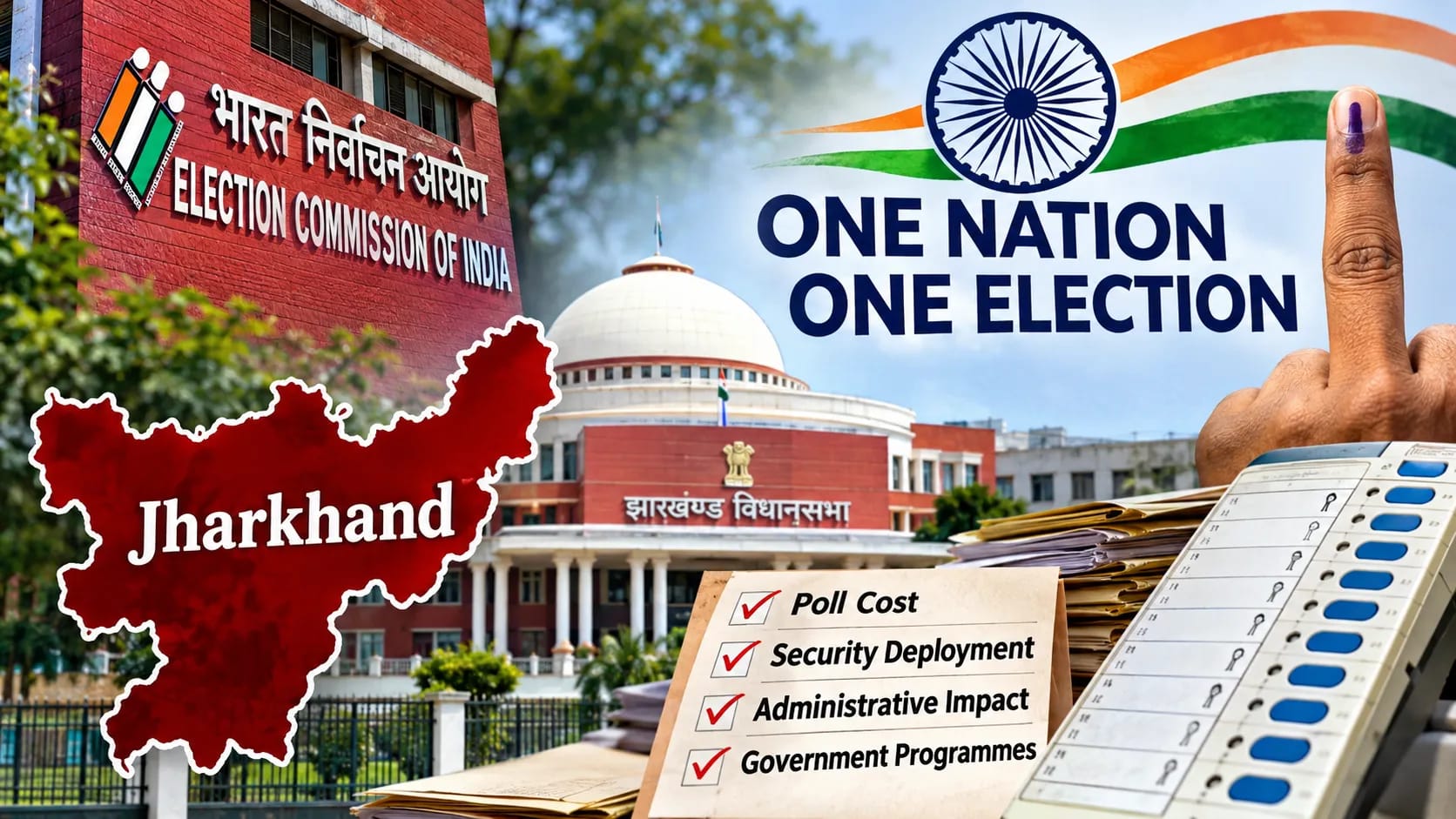
One Nation, One Election Faces Fresh Questions! Jharkhand Government Seeks Department-Wise Data on Poll Costs and Administrative Impact
Introduction
The debate over simultaneous elections in India has gained another important development from Eastern India. On November 13, 2026, fresh reports from Ranchi revealed that the Jharkhand government has asked various departments to submit detailed assessments of the possible impact of holding Lok Sabha, Assembly and local body elections together.
The development comes as the Joint Parliamentary Committee examining the Constitution (129th Amendment) Bill, 2024, continues its examination of the proposed simultaneous-election framework.
At the centre of Jharkhand's latest exercise is an important question: how would conducting multiple elections together affect government expenditure, administration, public services and the state's economy?
Jharkhand Government Seeks Detailed Departmental Reports
According to a report on November 13, Special Officer Akhilesh Kumar Sinha, from the Cabinet Secretariat and Vigilance Department, issued a communication dated November 12 asking senior departmental officials to provide the required information by November 25, 2026.
The communication follows a reminder from the Lok Sabha Secretariat's Joint Committee on the Constitution.
The departments have been asked to assess the direct, indirect and wider consequences of implementing simultaneous elections.
The exercise covers several important government departments, including:
Finance
Home
Agriculture
Education
Tourism
The state government has marked the exercise as a matter of priority.
Election Expenditure Becomes a Major Question
One of the most important aspects of the assessment concerns election-related expenditure.
The Finance Department has been asked to examine the financial implications of simultaneous elections, including their potential impact on the state economy and GDP.
The assessment is expected to consider the costs associated with conducting elections at different levels and the possible financial consequences of bringing them under a common electoral schedule.
The Home Department, meanwhile, has been asked to assess the deployment of police personnel and home guards, law-and-order responsibilities and the impact on regular security operations.
These questions are significant because election administration involves more than the cost of voting machines and polling arrangements. It also requires personnel, transportation, security deployment and administrative resources.
Agriculture and Public Services Also Under Examination
The proposal is not limited to election expenses.
The Agriculture Department has been asked to examine how simultaneous elections could affect agricultural activities, including sowing and harvesting seasons, agricultural employment and farming operations.
This is particularly relevant for Jharkhand, where rural livelihoods and agricultural activities form an important part of the state's economy.
The wider assessment also seeks information about the functioning and implementation of government schemes and programmes during election periods.
The central issue is whether a common election schedule would reduce repeated administrative disruptions or create new logistical challenges.
Political Implications: A Major Constitutional Debate
The simultaneous-election proposal has generated a wider national discussion about constitutional arrangements, federalism, election expenditure and the functioning of state governments.
Supporters of the proposal have argued that synchronised elections could reduce repeated election-related expenditure and administrative interruptions.
Critics and concerned stakeholders have raised questions about the constitutional, political and practical challenges of aligning the terms of different elected governments.
Jharkhand's departmental exercise does not establish the state's final position on the proposal. Instead, it provides an opportunity to document the possible consequences through department-wise information.
What Happens Next?
The immediate deadline for Jharkhand's departments is November 25, 2026.
Their responses will help prepare the state's assessment for the parliamentary committee's examination.
The information could contribute to discussions about election expenditure, administrative deployment, agricultural operations and the functioning of state programmes.
Conclusion
Jharkhand's latest move has brought the financial and administrative dimensions of One Nation, One Election into sharper focus.
The debate is no longer limited to whether elections should be conducted together. It also concerns how such a system could affect state finances, public administration and everyday governance.
As Parliament's committee continues its examination, Jharkhand's departmental findings will be an important part of the wider discussion.

Join the discussion
Comments (0)