BJP Targets Rahul Gandhi Over Elon Musk Exchange, Defends India’s Spectrum Policy
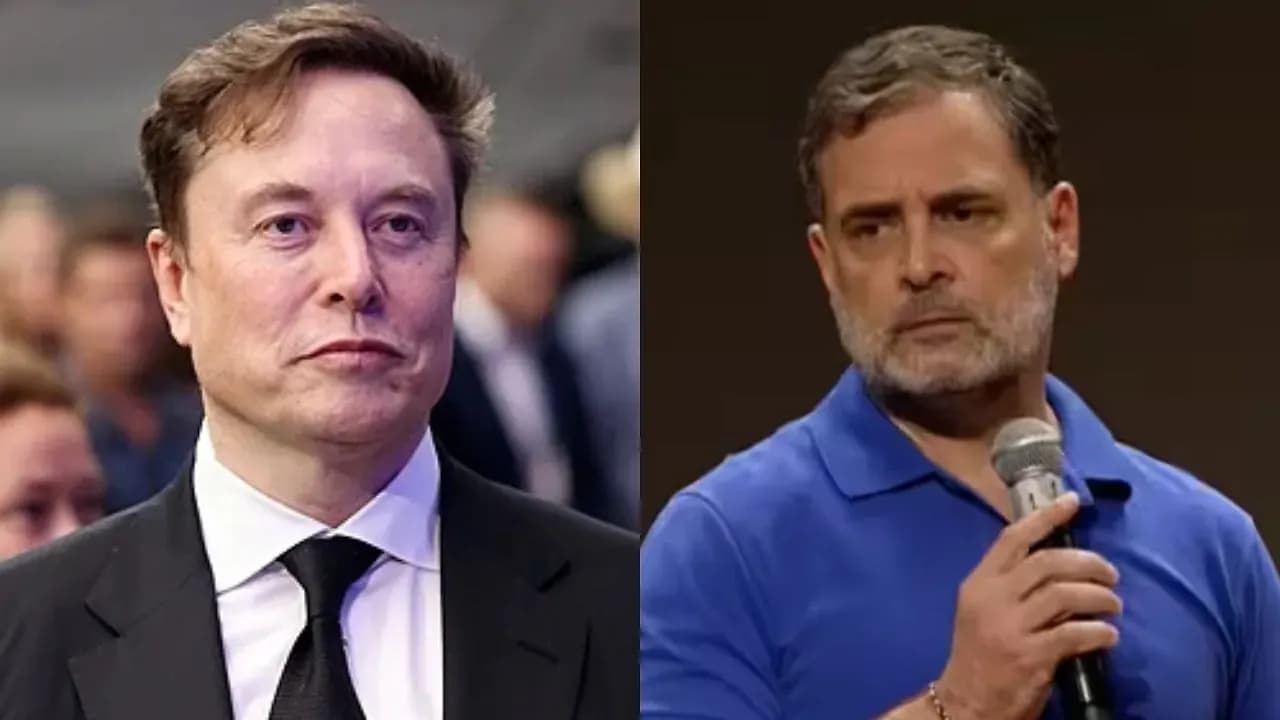
New Delhi, October 9, 2026: The Bharatiya Janata Party (BJP) has criticised Congress leader Rahul Gandhi over his exchange with Elon Musk on social media, while challenging the SpaceX founder’s remarks on India’s spectrum allocation policy. The episode has brought telecommunications policy and political messaging into the same debate.
Addressing the media on Friday, BJP national vice-president Ram Madhav questioned Gandhi’s position, arguing that the Congress leader’s engagement with Musk contradicted his earlier criticism of the government’s dealings with American leadership.
BJP Questions Rahul Gandhi’s Position
Ram Madhav took aim at Rahul Gandhi during a press conference, asking why the Congress leader had shifted from accusing the government of yielding to American pressure to supporting Musk’s position in the spectrum debate.
The BJP leader’s remarks framed Gandhi’s exchange with Musk as a political inconsistency. The party argued that the Congress leader’s response needed to be viewed alongside his previous statements on India’s relations with the United States.
The criticism reflects the BJP’s effort to turn the social media exchange into a broader argument about the Opposition’s position on international business figures and national policy. Gandhi’s comments and their context remain central to understanding the dispute.
BJP Counters Elon Musk’s Remarks on Spectrum Policy
The BJP also challenged comments by Elon Musk concerning India’s spectrum allocation framework. Spectrum is a limited public resource used by telecommunications networks and satellite communication services to transmit signals.
The method of allocating spectrum has implications for competition, service availability, investment and government revenue. Different allocation models can produce different outcomes depending on the type of service, regulatory objectives and technical requirements involved.
Debates over spectrum policy in India have often focused on whether particular bands should be assigned through auctions or administrative processes. The appropriate approach can depend on the service involved and the applicable legal and regulatory framework.
The BJP’s response to Musk’s remarks indicates that the government’s approach to spectrum allocation remains politically sensitive, particularly as satellite-based connectivity and other telecommunications technologies expand.
Why Spectrum Allocation Matters
Spectrum allocation is an important public-policy issue because wireless communication depends on access to specific radio frequencies. Regulators must balance efficient use of the resource with competition, consumer access, investment and interference management.
Auction-based allocation can provide a competitive mechanism for assigning spectrum and generating revenue. Administrative allocation may be used where legislation, technical considerations or the nature of the service supports that approach. The implications of either method depend on the details of the policy and the market concerned.
Satellite communication services have added another dimension to the debate. Companies operating satellite networks require access to suitable spectrum, while governments must consider licensing conditions, security, service obligations and the interests of existing telecommunications providers.
Politics Meets Technology
The exchange involving Gandhi and Musk demonstrates how social media conversations between political leaders and major technology figures can quickly become national political issues.
For the BJP, the episode offers an opportunity to challenge Gandhi’s consistency and defend its policy approach. For the Opposition, questions about spectrum allocation raise wider issues about regulation, market competition and the public interest.
The broader debate is likely to continue as satellite internet and telecommunications services develop. Assessing the competing positions will require attention to the specific spectrum bands involved, the applicable rules and the evidence supporting each policy argument.
Source note: This article is an original rewrite based on reporting published by The Hindu on October 9, 2026. Political characterisations are attributed to the leaders who made them. The article does not treat either side’s policy claims as independently established conclusions.


Join the discussion
Comments (0)