Beyond Reels and Political Slogans: Is Indian Gen Z Ready to Question Its Leaders?
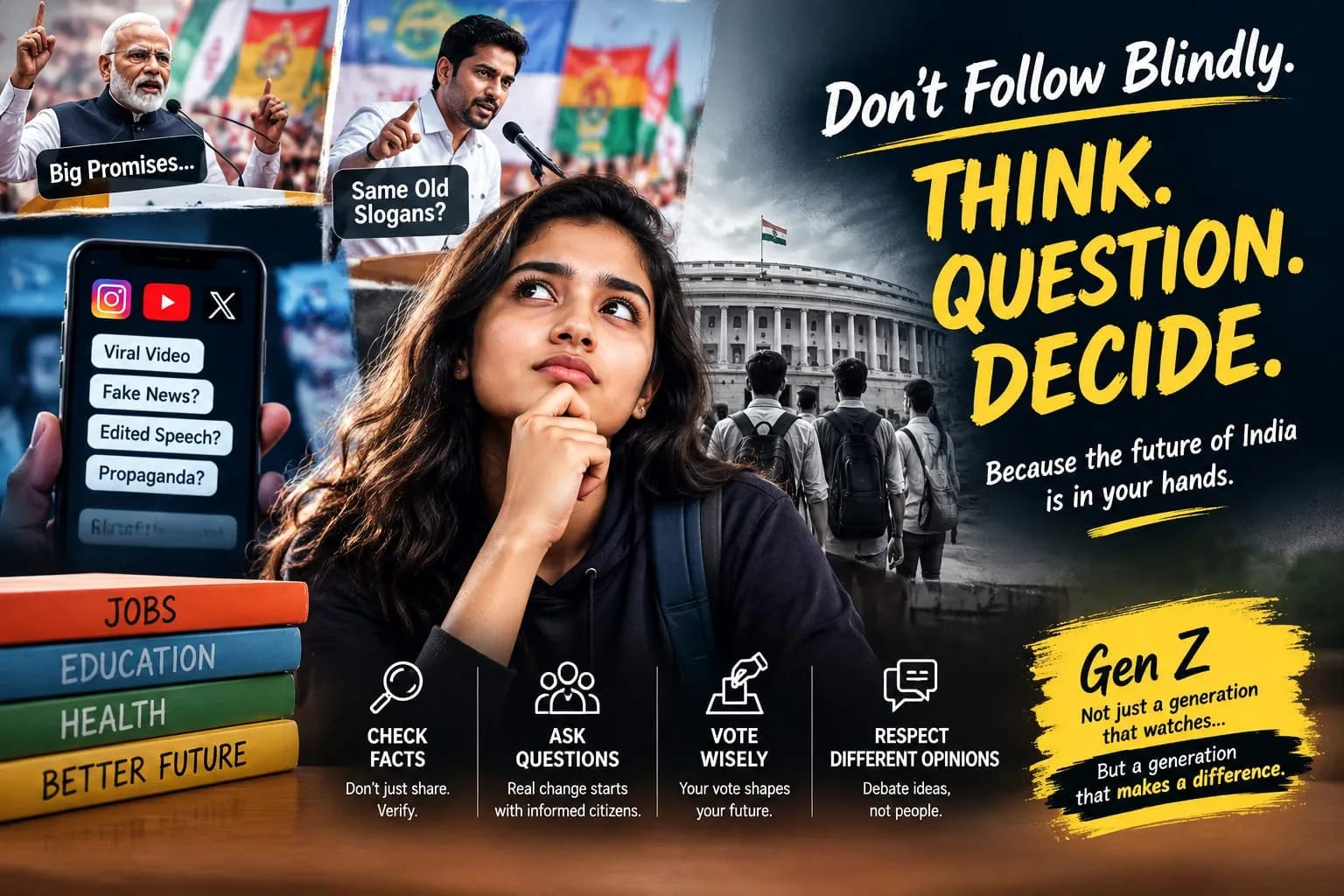
Young India has questions. Does politics have the answers?
India has one of the world's largest youth populations, and young people are no longer just watching politics from the sidelines. They are discussing government policies on Instagram, questioning leaders on social media, sharing political videos and debating the country's future with friends. But an important question remains: Are young Indians influencing political decisions, or are they simply becoming an audience for political campaigns?
For today's youth, politics is not just about party flags, election rallies or leaders exchanging accusations. It is about getting a job after graduation, paying for education, finding affordable housing and building a future without constant financial pressure. These are the real issues that deserve attention.
Jobs Over Promises: What Does the Future Look Like?
Every year, thousands of students graduate with dreams of building successful careers. Yet many struggle to find jobs that match their qualifications. Some accept positions with low salaries, while others spend months preparing for competitive examinations.
Political parties often promise employment opportunities and economic growth. But young voters should ask a simple question: How many sustainable jobs will these promises create, and how will their progress be measured?
A promise sounds impressive during an election campaign. Its real value becomes clear only when it changes someone's life.
Social Media: Information or Political Manipulation?
Social media has made political information easier to access than ever before. A single video can reach thousands of people within minutes. However, speed does not guarantee truth.
Edited clips, misleading headlines, unverified allegations and emotionally charged messages can influence opinions before people understand the complete story.
Young people need to develop one essential habit: verify before sharing. Check the original source, compare reports from credible news organisations and distinguish between facts, opinions and allegations.
Being politically aware does not mean supporting every viral opinion. Sometimes, independent thinking means questioning the people you agree with.
Vote With Your Mind, Not Just Your Emotions
Political identity can become personal. People may support a party because of family traditions, community influence or loyalty to a particular leader. There is nothing wrong with having political preferences, but blind loyalty can prevent people from asking difficult questions.
Before supporting a candidate, consider their record, public service, transparency and proposed solutions. Ask whether their promises are realistic and whether they can be held accountable.
Democracy becomes stronger when voters evaluate performance instead of treating politics like a permanent rivalry between teams.
Your Voice Matters Beyond Election Day.
Join the discussion
Comments (0)