
Election Manifestos in India: How to Examine Political Promises
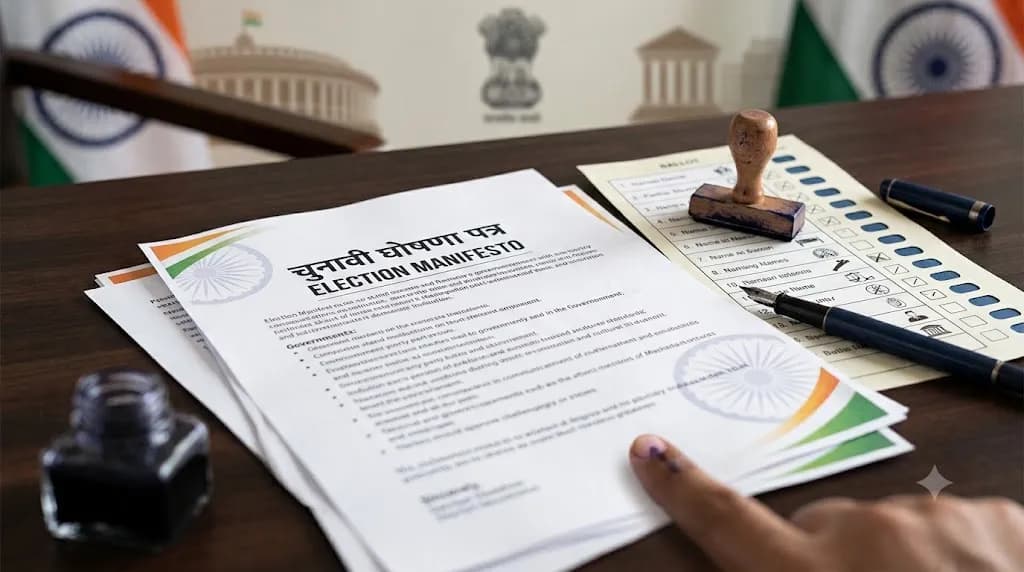
Election Manifestos in India: How to Examine Political Promises
An election manifesto is a document in which a political party sets out its priorities and proposals for voters. A manifesto explains a party’s stated agenda; it does not by itself prove that a proposal has been implemented or that every commitment will be fulfilled.
What guidance applies?
The Election Commission of India has published guidance for election manifestos within the broader framework of election conduct. The Election Commission expects manifestos to be consistent with constitutional principles and relevant election-conduct guidelines, and to explain the rationale and broad financial means for promises.
What should readers examine?
Clarity: Is the promise specific, or is it a broad statement of intent?
Delivery: Does it explain the intended beneficiaries and implementation method?
Funding: Does it discuss financial requirements?
Timeline: Is a timeframe stated?
Responsibility: Which level of government or department would need to act?
These questions do not determine whether a promise is good or bad. They help readers understand what a party has actually committed to and what information is available about implementation.
How can promises be tracked after an election?
Readers can compare manifesto commitments with official budgets, government orders, policy documents and implementation reports. It is important to distinguish between an announcement, a budget allocation, the release of funds and delivery of a service. These stages are related, but they are not interchangeable.
A fair comparison should use the same policy area and relevant time period. Where evidence is incomplete, the gap should be stated rather than filled with assumptions.
Why do manifestos matter?
Manifestos help voters understand the priorities parties choose to communicate during an election. Journalists and citizens can use them to ask precise questions about plans, resources, timelines and progress.
A practical reader’s checklist
Find the original manifesto rather than a viral summary.
Read the complete wording of the promise.
Check relevant budgets and official policy documents.
Look for evidence of implementation and reported outcomes.
Distinguish a political claim from a documented result.
Key takeaway
Election manifestos are useful records of political parties’ stated commitments. Reading them alongside official documents makes it easier to separate campaign promises from later policy decisions and outcomes. A careful assessment relies on the text of the promise, available evidence and transparent comparisons—not assumptions about a party’s intentions.


Join the discussion
Comments (0)