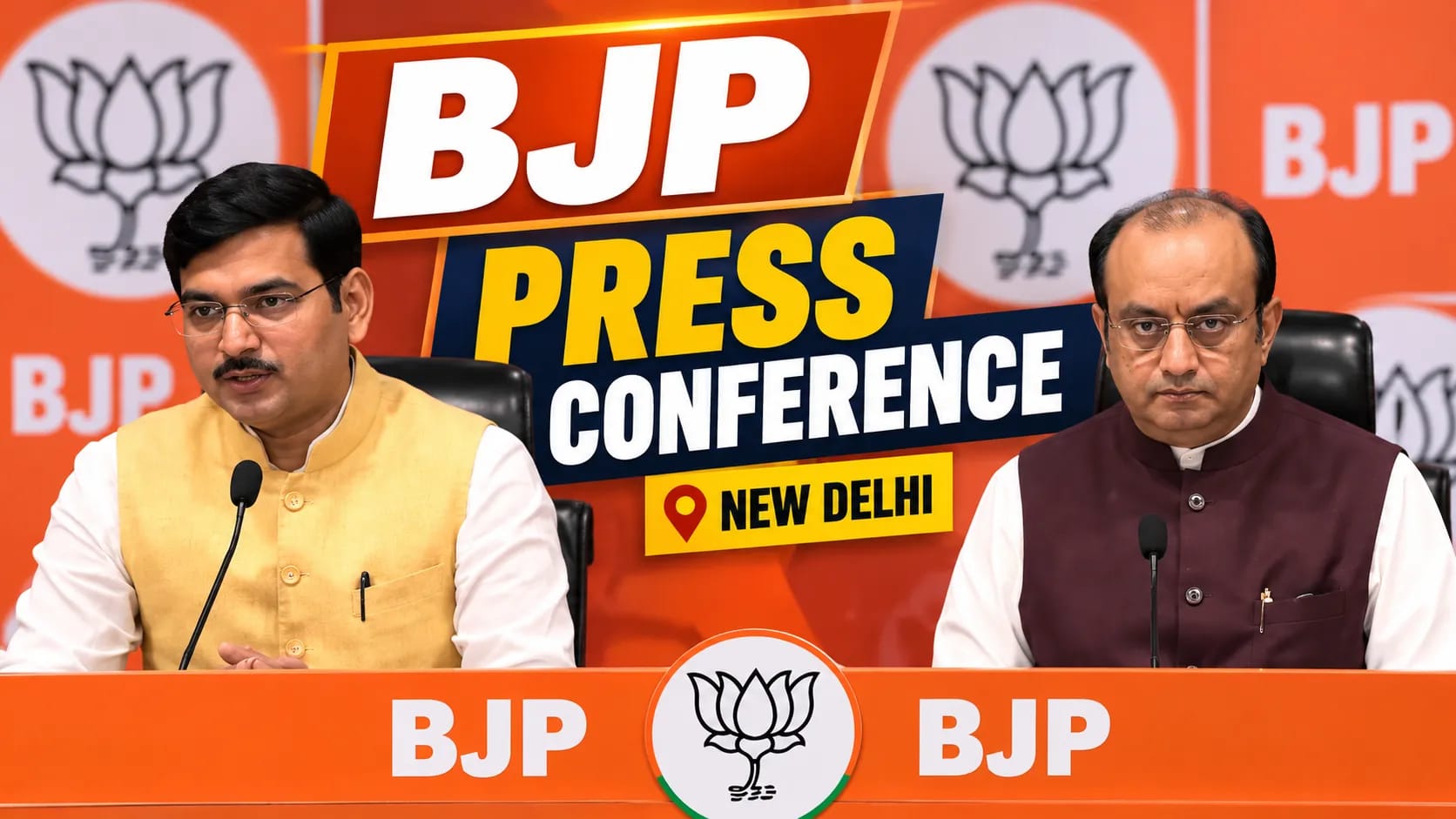
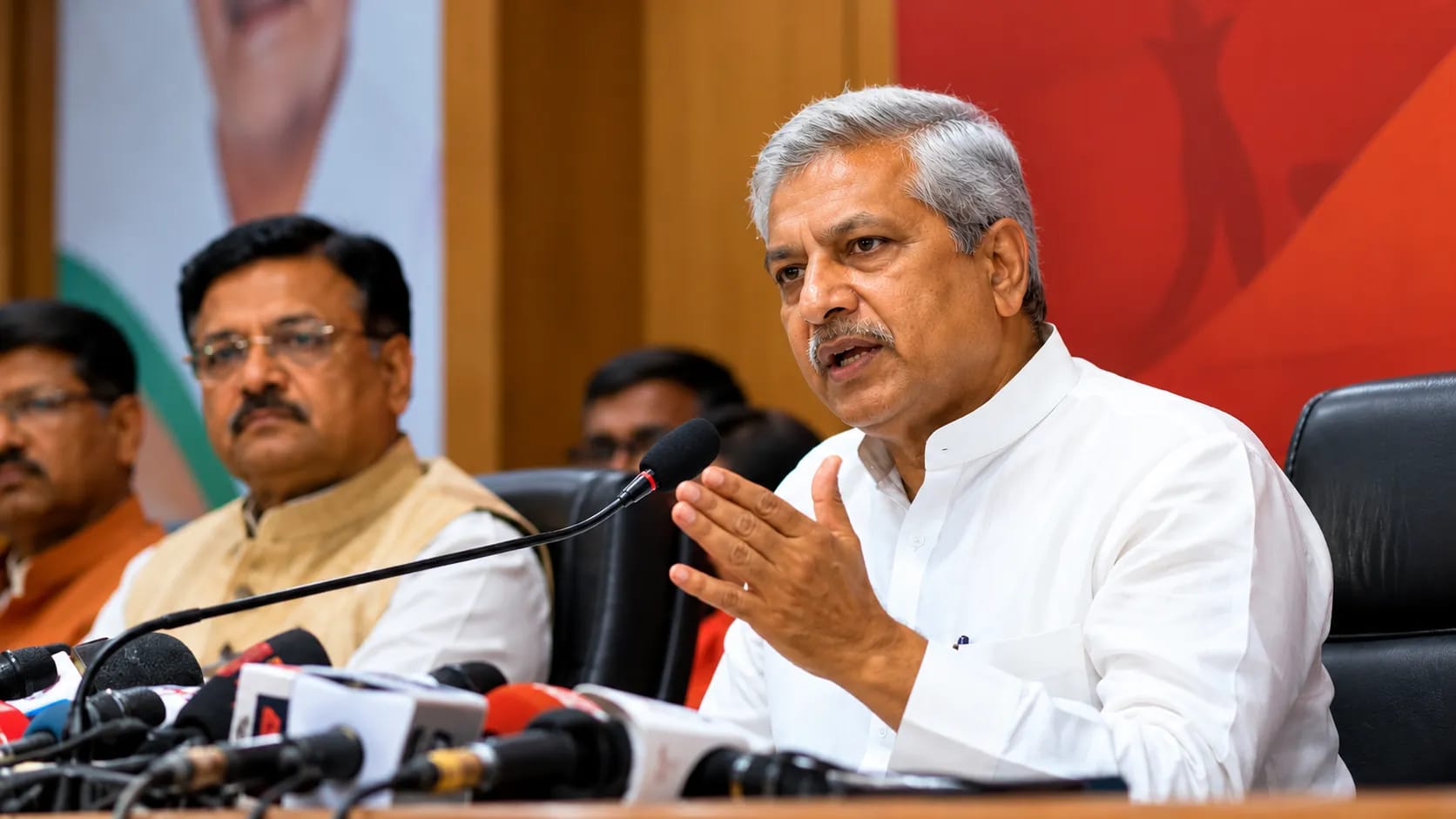
BJP Press Conference: Party Leader Addresses the Media on Political Developments
Shivani CH 14 Oct 2026 0 views
Watch on facebook.com
Opens in a new tab
|
Opens in a new tab
JD(U) Leader Lalan Singh Criticises Rahul Gandhi, Draws Parallel with the Emergency Era
JD(U) leader Rajiv Ranjan Singh, popularly known as Lalan Singh, has criticised Congress leader Rahul Gandhi, comparing his political approach to the period leading up to the Emergency imposed in India in 1975. Singh alleged that Rahul Gandhi wants to take the Congress party back to an era marked by restrictions on fundamental rights and the imprisonment of political opponents.
Referring to the period between 1975 and 1977, Singh recalled the suspension of civil liberties and the detention of political leaders during the Emergency. He stated that he had also been jailed during that period. The Emergency, imposed by then Prime Minister Indira Gandhi on 25 June 1975, lasted until 21 March 1977 and remains a significant chapter in India's democratic history.
Singh alleged that Rahul Gandhi wants to create a situation of political disorder to gain power. Drawing a comparison with Indira Gandhi's decision to impose the Emergency, he claimed that her actions were intended to protect her position in power and suggested that Rahul Gandhi's current political approach reflected a similar ambition.
These remarks represent Lalan Singh's political allegations and interpretation of Rahul Gandhi's intentions. They should not be treated as independently established facts.
The Emergency continues to feature prominently in India's political debates. The period is remembered for restrictions on civil liberties, press freedom and political opposition, as well as the detention of opposition leaders and activists.
Political leaders frequently invoke this period when discussing democracy, constitutional rights, freedom of expression and the exercise of government power. Such comparisons remain a way for parties to challenge their opponents' positions and question their commitment to democratic principles.
Lalan Singh's statement places Rahul Gandhi and the Congress party at the centre of a historical comparison. By referring to the Emergency, he has framed his criticism around democratic rights, political power and the responsibilities of political leadership.
However, comparisons between historical events and present-day politics require careful examination of the specific circumstances and available evidence. A political allegation about a leader's intentions does not, by itself, establish that intention as fact.
Our team is here to help with general questions, partnerships, corrections and feedback.