Gadchiroli's ₹3,000-Crore Development Push Makes Headlines! Modi Government Puts Tribal Welfare, Security and Industrial Growth in Focus
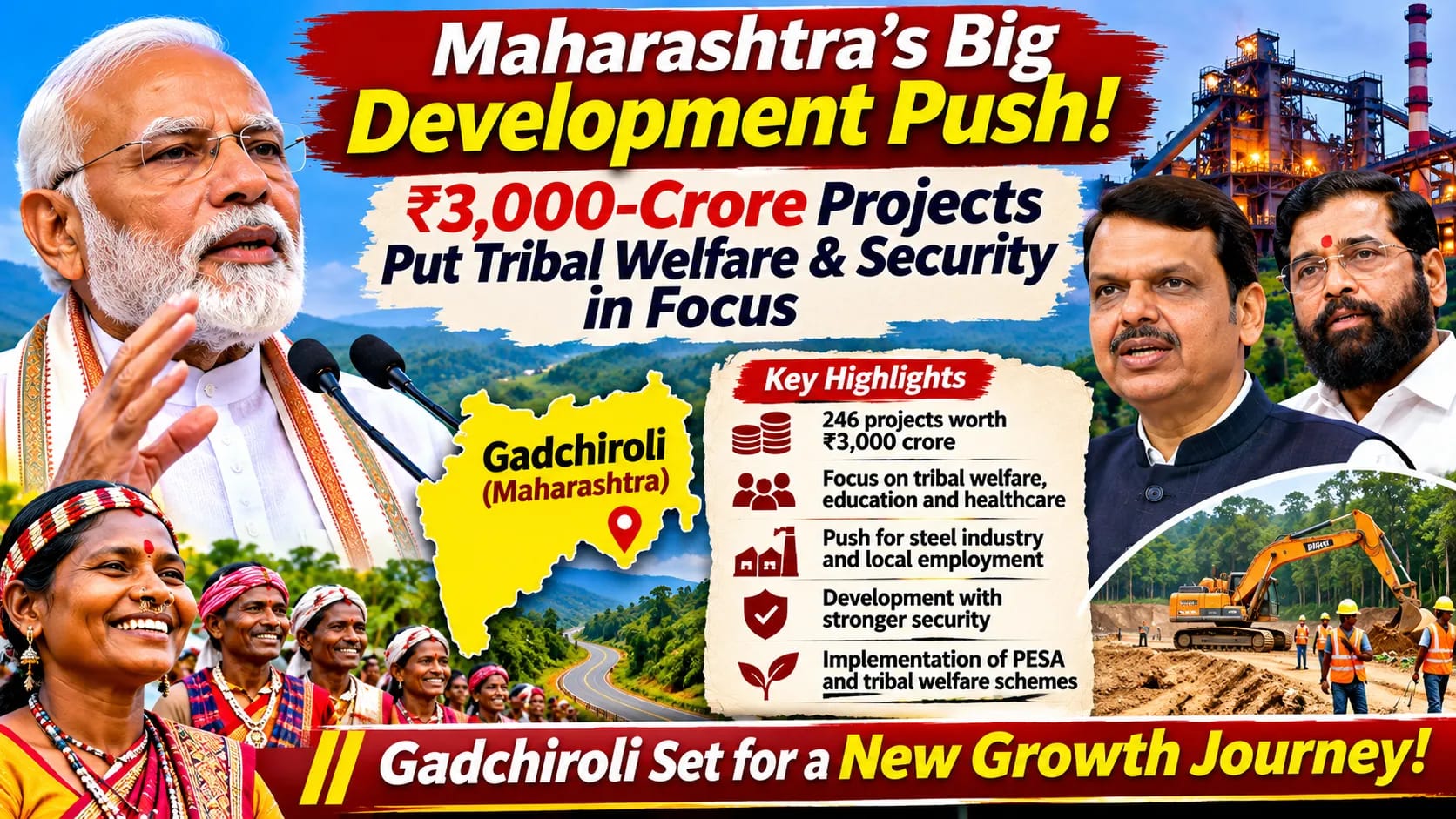
Maharashtra's development and tribal welfare agenda has received fresh national attention following the Janjatiya Gaurav Diwas celebrations organised in Gadchiroli on November 15.
The event, marking the 151st birth anniversary of Bhagwan Birsa Munda, placed tribal communities, regional development and the transformation of historically Maoist-affected areas at the centre of the national political discussion.
Prime Minister Narendra Modi addressed the programme virtually and inaugurated and laid the foundation stones for 246 development projects worth approximately ₹3,000 crore across the country.
₹3,000-Crore Development Announcement
The announcement of 246 projects worth around ₹3,000 crore was one of the major highlights of the programme.
Importantly, the amount relates to the projects across the country, not exclusively to Gadchiroli.
During the programme, the Prime Minister interacted with three tribal beneficiaries from Maharashtra, Gujarat and Telangana to understand the impact of government welfare initiatives.
Gadchiroli's Transformation: From Security Challenges to Development
Gadchiroli has historically faced serious challenges associated with Maoist violence, geographical isolation and inadequate infrastructure.
The Maharashtra government has been attempting to change this situation through a combination of security measures and development initiatives.
Chief Minister Devendra Fadnavis stated that the district's identity was changing through improvements in security, education, employment, infrastructure and industrial investment.
Tribal Rights Must Remain at the Centre
Economic growth in a tribal-dominated region requires more than industrial investment.
Land rights, forest protection, environmental safeguards and community participation are equally important.
The government has highlighted the implementation of the Panchayats (Extension to Scheduled Areas) Act, or PESA, to strengthen village-level self-governance.
Initiatives such as PM JANMAN and the Dharti Aaba Janjatiya Gram Utkarsh Abhiyan have also been highlighted as important instruments for improving services in tribal communities.
What Happens Next?
The implementation of the announced projects and the effectiveness of existing welfare schemes will be important indicators.
Local employment generation, road connectivity, educational access, healthcare facilities and protection of tribal rights will determine whether Gadchiroli's development ambitions translate into visible results.
Conclusion
Gadchiroli's development push represents a major political and governance message about the future of tribal regions in India. The ₹3,000-crore national project announcement, alongside Maharashtra's industrial and infrastructure ambitions, has placed tribal welfare and regional transformation in the spotlight. The real test will be whether economic growth, security and development reach the most remote tribal households while protecting their land, culture and identity.


Join the discussion
Comments (0)