
Meghalaya Political Earthquake! UDP Loses Its MLAs, Withdraws Support from NPP Government – Is Regional Politics Changing Forever?
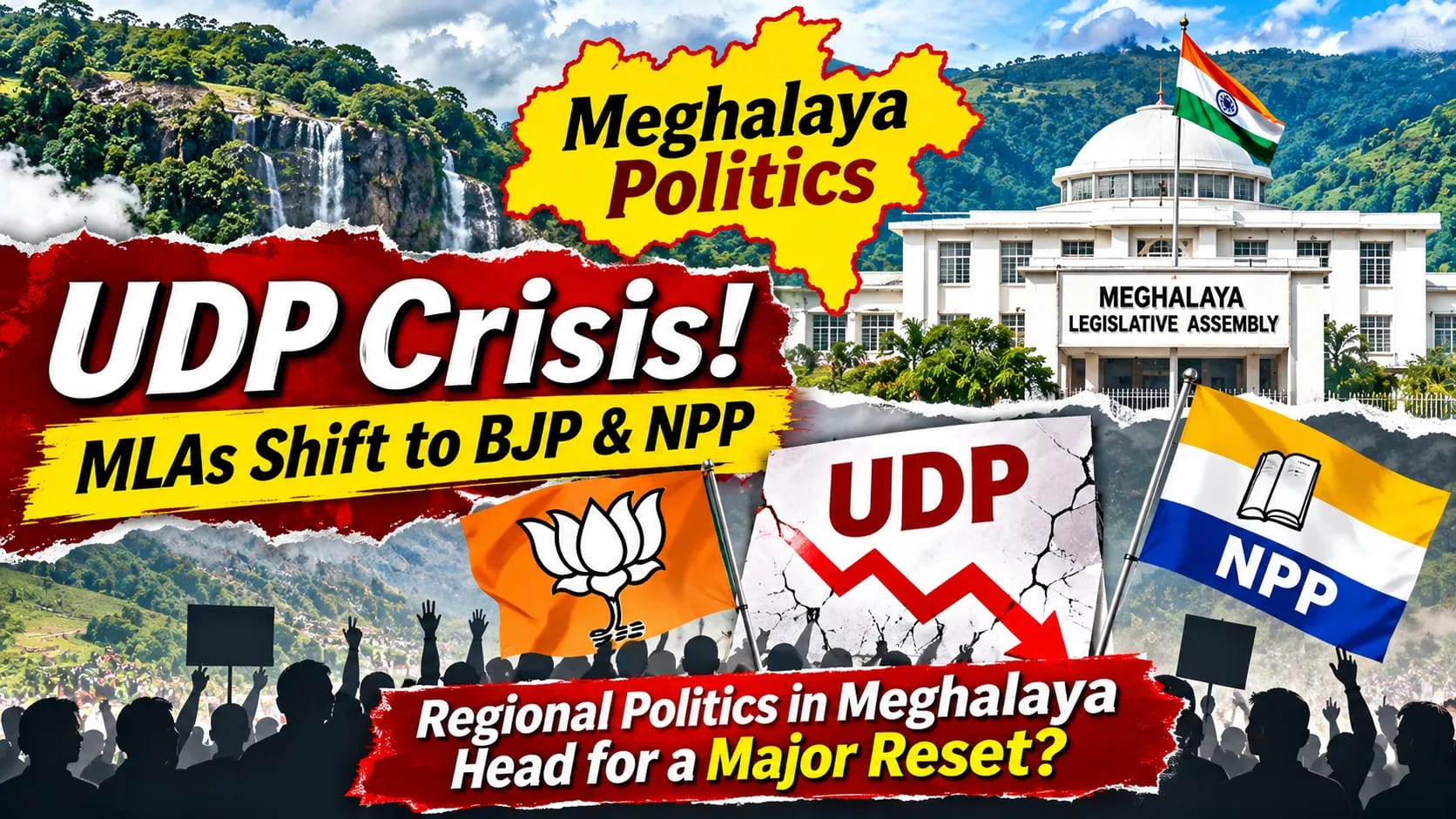
Introduction: Meghalaya Witnesses a Major Political Shake-Up
Meghalaya's political equations have taken a dramatic turn, putting the future of regional party politics under the spotlight.
The United Democratic Party (UDP), which has played an important role in the state's political landscape, is facing one of the biggest organisational setbacks in its history.
A series of legislative mergers has dramatically reduced the party's strength in the 60-member Meghalaya Legislative Assembly. What makes the development particularly significant is that the political movement has benefited both the Bharatiya Janata Party (BJP) and the ruling National People's Party (NPP).
The situation took another turn on November 3, 2026, when the UDP decided to withdraw support from the NPP-led Meghalaya Democratic Alliance government and sit in the opposition.
UDP Suffers a Major Political Setback
The UDP's political difficulties became increasingly visible after eight of its legislators moved to the BJP in September 2026.
The Meghalaya Assembly Speaker subsequently recognised the merger on October 16, 2026.
The development strengthened the BJP's position in the state Assembly, taking its legislative strength from two to ten members.
The situation became even more challenging for the UDP when three additional legislators moved to the NPP.
On October 23, the Speaker formally recognised the merger of the three legislators with the NPP.
UDP Withdraws Support from the NPP-Led Government
The biggest political twist came on November 3, 2026.
The UDP's Central Executive Committee decided to withdraw support from the NPP-led Meghalaya Democratic Alliance government.
Party general secretary Titosstarwell Chyne announced that the UDP would henceforth sit in the opposition.
The decision followed the party's declining legislative strength and the resignation of Metbah Lyngdoh from his ministerial position.
With only one MLA remaining, the UDP's political position has changed considerably.
BJP Gains Ground as Meghalaya's Political Equations Change
The movement of eight UDP legislators to the BJP has given the national party a stronger presence in Meghalaya.
Its Assembly strength increased from two to ten, creating a new political equation within the state's 60-member legislature.
The BJP's growth is significant because Meghalaya has traditionally witnessed strong competition between regional parties and national political organisations.
NPP Strengthens Its Legislative Position
The NPP has also benefited from the UDP's internal political developments.
Following the merger of three UDP legislators, the NPP's Assembly strength increased to 36.
This gives Chief Minister Conrad K. Sangma's party a stronger legislative position.
However, the UDP's withdrawal of support creates a different political situation.
Regional Party Politics Faces an Identity Crisis
The UDP episode raises a larger question about the future of regional political parties in Meghalaya.
Regional organisations have traditionally played an important role in representing local interests and raising issues related to indigenous communities.
For the UDP, the challenge is particularly serious.
What Does This Mean for the 2028 Assembly Elections?
The next Meghalaya Assembly election is expected in 2028, but the political competition is already entering a new phase.
The latest developments could influence the strategies of all major parties.
For the BJP: The increase in legislative strength offers an opportunity to expand its political presence.
For the NPP: The party will attempt to consolidate its position and maintain its leadership in the state.
For the UDP: Rebuilding its political identity and grassroots support will be its biggest challenge.
For the Congress and other opposition parties: The changing political landscape could provide opportunities to challenge the ruling establishment.
The Bigger Political Question: Who Will Represent Meghalaya's Regional Interests?
Meghalaya's political identity has long been connected with regional aspirations, indigenous rights and demands for greater attention to local issues.
The UDP's decline therefore carries significance beyond the movement of individual legislators.
It raises concerns about whether regional political voices will retain their influence as larger parties strengthen their legislative positions.
The BJP and NPP will have to demonstrate that their growing political influence can translate into effective governance.
Conclusion: Meghalaya's Political Battle Has Entered a New Phase
The UDP's dramatic decline and its decision to withdraw support from the NPP-led government have changed Meghalaya's political landscape.
The BJP and NPP have gained legislative strength, while the UDP faces the difficult task of rebuilding its political identity.
But the biggest test lies ahead.
The 2028 Assembly election will provide an opportunity for voters to judge the impact of these political realignments.

Join the discussion
Comments (0)