Rahul Gandhi vs BJP: Should PM Modi Accept an Open Debate Challenge? Panel Heats Up Over Democracy
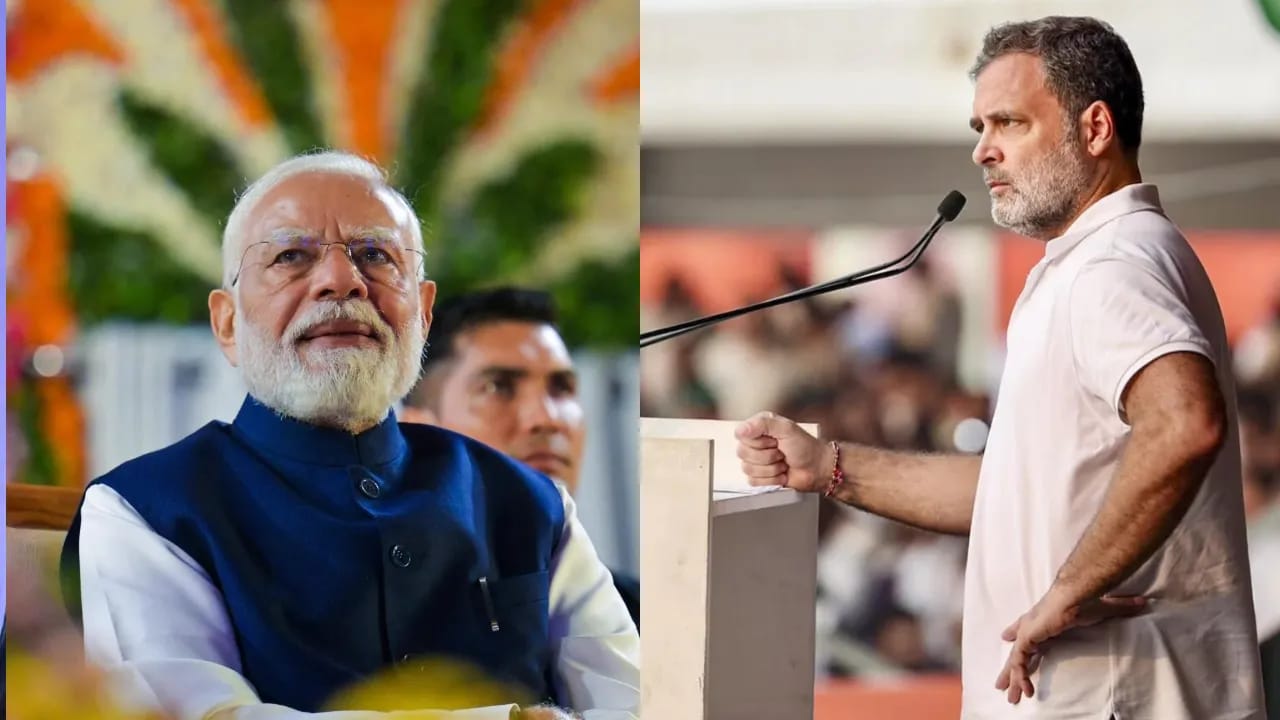
A fresh political confrontation has erupted between the Congress and Bharatiya Janata Party (BJP) after Leader of Opposition Rahul Gandhi challenged Prime Minister Narendra Modi to participate in an open public debate on major national issues.
The challenge has sparked a wider discussion about democratic accountability, political transparency and the role of the Opposition in questioning the government.
Rahul Gandhi renewed his challenge on November 3 and 4, 2026, asking the Prime Minister to choose any venue or platform for a face-to-face discussion. He proposed that the debate cover issues including India's financial system, the India-US trade deal, the Adani controversy and allegations concerning foreign influence in Indian politics.
Gandhi also suggested that the discussion could take place in front of the media and young people, with the Prime Minister free to choose a person to moderate or judge the debate.
India Today Debate Witnesses Heated Exchange
The issue became the centre of a heated discussion on India Today, where representatives from the Congress and BJP exchanged sharp arguments.
The panel included Congress spokesperson Rahul Singh Kalija, BJP national spokesperson Sanju Verma, and political analysts Rajat Sethi and Ashutosh.
Congress spokesperson Rahul Singh Kalija defended Gandhi's demand, arguing that the Prime Minister is accountable to the entire country and that democratic discussions should not be restricted to Parliament.
He referred to Article 75 of the Constitution, particularly the provision concerning the collective responsibility of the Council of Ministers to the Lok Sabha, to support his argument about government accountability.
He questioned why the Prime Minister could make political allegations against the Opposition outside Parliament but should not be expected to respond to those allegations through an open public discussion.
BJP Rejects Rahul Gandhi's Debate Proposal
BJP spokesperson Sanju Verma strongly rejected the demand, arguing that Parliament is the appropriate constitutional forum for questioning the government and debating national issues.
She questioned Rahul Gandhi's participation in parliamentary proceedings and criticised his political record.
Verma also argued that Gandhi had previously demanded debates on issues such as Rafale, Pegasus and Manipur but had not consistently participated in parliamentary discussions when opportunities arose.
However, the debate also witnessed a disagreement over the interpretation of Gandhi's parliamentary attendance figures, with the anchor challenging some of the claims made by the BJP spokesperson.
Opposition Says Debate Would Strengthen Democracy
Political analyst Ashutosh supported the idea of an open debate, arguing that the Prime Minister should be willing to answer questions raised by the Leader of Opposition.
He suggested that the BJP was avoiding the central questions raised by Rahul Gandhi by focusing on his political history and previous statements.
Ashutosh also argued that the political situation had changed and that Rahul Gandhi had emerged as a significant challenger to the Modi government.
He maintained that the government should address allegations through meaningful public engagement rather than relying entirely on political counterattacks.
Rajat Sethi Questions Rahul Gandhi's Political Strategy
Political analyst Rajat Sethi offered a different perspective, describing Rahul Gandhi's repeated public challenges as unnecessary political posturing.
He argued that while the Leader of Opposition has every right to question the Prime Minister, repeatedly demanding a personal debate does not necessarily strengthen democratic institutions.
Sethi suggested that if Rahul Gandhi genuinely wanted to promote a debate-oriented political culture, he should encourage greater internal democratic discussions within his own party.
He also maintained that the Prime Minister should decide his political engagements independently rather than responding to every public challenge.
Parliament or Public Debate: The Bigger Democratic Question
The discussion also highlighted a fundamental disagreement over where political accountability should take place.
The BJP maintains that Parliament is the appropriate place for questioning government policies and demanding answers from the Prime Minister.
The Congress argues that accountability should extend beyond parliamentary proceedings, particularly when political allegations are made publicly outside the House.
Finance Minister Nirmala Sitharaman has also responded to Gandhi's challenge, arguing that Parliament is the appropriate platform for such discussions.
Join the discussion
Comments (0)