

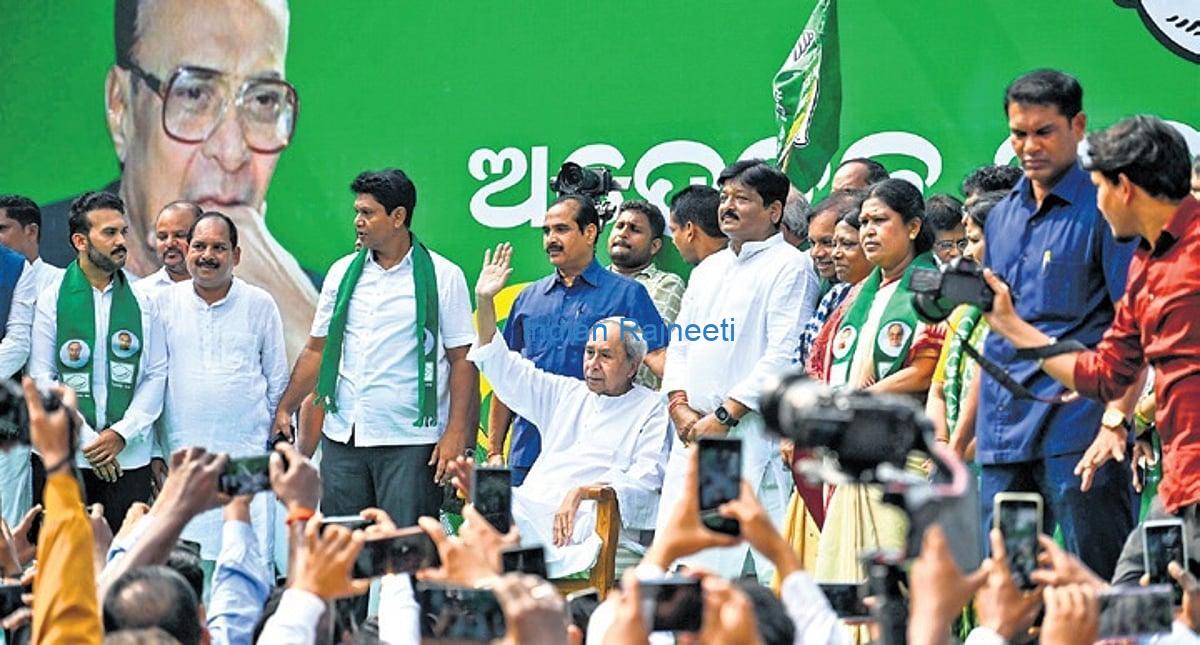
The Biju Janata Dal (BJD) staged a major protest in Bhubaneswar on September 28 against the Mines and Minerals (Development and Regulation) Amendment Act, 2026. BJD president and former Odisha Chief Minister Naveen Patnaik joined the demonstration and addressed party leaders, workers and supporters gathered near the Odisha Assembly.
The protest focused on the BJD’s opposition to provisions of the amended mining law that the party says could reduce Odisha’s powers over mineral resources and mineral-bearing land. Patnaik argued that the legislation has important implications for the state’s financial interests and its role in managing its mineral resources. These are political claims made by the BJD; the government’s position on the legislation differs.
Addressing the gathering, Naveen Patnaik called for political parties and people across Odisha to unite in opposing the implementation of the amended law. He said the issue concerns the rights and interests of Odisha and argued that the state’s mineral resources should provide greater benefits to its people.
Patnaik also questioned the role of BJP MPs from Odisha during the passage of the legislation in Parliament. He criticised what he described as their silence on the issue and questioned whether the interests of the state had been adequately represented. The BJP has rejected the BJD’s criticism, with BJP MP Aparajita Sarangi saying that the party’s MPs did not oppose the legislation because they considered Odisha’s interests while taking their position.
A major point raised by the BJD concerns revenue from mineral resources. Patnaik claimed that Odisha could lose thousands of crores of rupees every year because of the amended law. This figure is part of the opposition’s argument against the legislation and has been disputed by the ruling side. Reports examining the law say the new framework changes the mechanism for calculating certain mineral-related revenues and has raised concerns among mineral-rich states.
The MMDR Amendment Act, 2026 was passed by Parliament on August 13. According to reporting on the legislation, it changes aspects of the taxation and regulatory framework relating to mineral rights and mineral-bearing land. The changes have become a point of contention between the Union government and some mineral-rich states, including Odisha.
Patnaik said he had earlier written to Odisha Chief Minister Mohan Charan Majhi, seeking a special discussion in the Assembly and a resolution opposing the amended legislation. According to Patnaik, he did not receive a response to his requests. The issue has also contributed to disruptions in the Odisha Legislative Assembly, where opposition members have raised objections to the law.
The BJD protest was also presented as the beginning of a wider campaign across Odisha. The party has indicated that it intends to continue its agitation against the amended mining law and seek broader public and political support for its position.
The dispute over the mining law extends beyond party politics and involves questions about state powers, mineral revenue, resource management and federal relations. Odisha is one of India’s major mineral-producing states, making changes to the framework governing mineral resources particularly significant for the state government and mining-affected communities.

For the BJD, the protest represents a broader effort to put Odisha’s mineral resources and state revenue rights at the centre of political debate. For the Union government and the ruling BJP in Odisha, the amended legislation has been defended from a different policy perspective, with BJP representatives rejecting the BJD’s allegations.
The MMDR Amendment Act controversy is expected to remain an important issue in Odisha’s political debate as the BJD continues its campaign and the state Assembly discusses questions surrounding the legislation. The coming weeks are likely to see further political exchanges over mineral rights, state revenue and the division of powers between the Centre and the states.

Be First to Comment