

Political debate in Uttar Pradesh has intensified over the Election Commission of India (ECI) and its ongoing Special Intensive Revision (SIR) of electoral rolls. The issue has become part of a wider national political dispute, with opposition parties questioning aspects of the revision process while BJP leaders and chief ministers have defended the Election Commission.
Yogi Adityanath Defends Election Commission
Uttar Pradesh Chief Minister Yogi Adityanath has publicly defended the Election Commission amid criticism of the SIR exercise. Speaking to reporters in Lucknow, he criticised the Congress, Samajwadi Party and other opposition parties for their comments about the poll panel and called for them to apologise for what he described as irresponsible criticism of constitutional institutions.
Adityanath also argued that SIR is not a new electoral exercise. He referred to previous electoral-roll revisions conducted in 1952, 1957, 1961, 1965–66 and 2003, saying similar exercises had taken place during periods when Congress-led governments were in power.
The Chief Minister further pointed to the opportunity available to eligible voters who may have been left out of the rolls to submit the required forms. His comments came as political parties across several states continued to debate the procedures and implications of SIR.
Opposition Raises Questions Over Electoral Rolls
Opposition parties have taken a different position on the issue. Samajwadi Party president Akhilesh Yadav has continued to question the Election Commission’s handling of electoral rolls and has raised allegations concerning voter deletions in Uttar Pradesh.
Yadav has alleged that some SP supporters’ names were deliberately removed from electoral rolls during the 2022 Uttar Pradesh Assembly election. These allegations are political claims and have not been established as facts by the sources cited here.
The SP has also raised concerns about the use of Form 7, which is used for requesting deletion of a name from an electoral roll. The party has alleged that the process was misused in some cases. The Election Commission and authorities have maintained that electoral-roll procedures operate under established rules and mechanisms for claims and objections.
Election Commission Defends Its Process
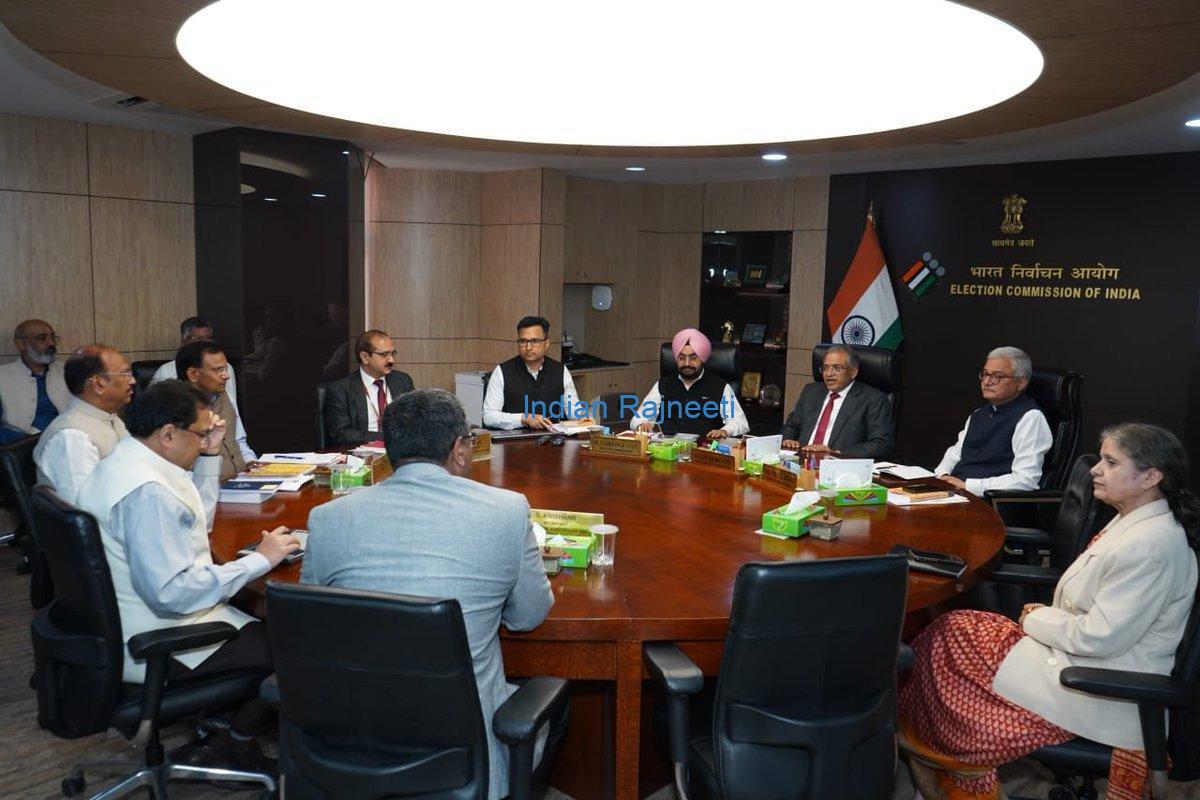
The wider controversy intensified after reports about differences or objections within the Election Commission concerning certain SIR-related decisions. The ECI subsequently issued a joint statement stating that its major decisions were taken through the Commission’s established decision-making process.
The controversy involves Election Commissioners Gyanesh Kumar, Sukhbir Singh Sandhu and Vivek Joshi. Reports have discussed written objections and differing views during internal deliberations, while the ECI has maintained that differing views during deliberations do not necessarily indicate institutional dysfunction.
The Commission has also defended its electoral-roll revision procedures and said eligible voters have mechanisms available to submit claims and objections.
BJP Leaders Back Election Commission
The Uttar Pradesh controversy is part of a broader response from BJP chief ministers and senior party leaders. On September 27, several BJP-led state governments and leaders publicly defended the Election Commission and criticised opposition allegations surrounding SIR.
In Uttar Pradesh, BJP leaders have argued that the Election Commission’s September 26 joint statement clarified that major decisions, including SIR-related decisions, were taken unanimously by the three Election Commissioners.
The BJP has also argued nationally that electoral-roll revision is intended to identify and remove duplicate or otherwise ineligible entries, while opposition parties have focused on concerns about eligible voters potentially being excluded. These represent competing political positions in the ongoing debate.

Why the SIR Debate Matters in Uttar Pradesh
The debate over SIR has implications for electoral-roll accuracy, voter inclusion and the procedures used to verify voter information. Supporters of the revision argue that accurate electoral rolls are important for conducting elections, while critics have raised concerns about the possibility of eligible voters being left out during verification.
For Uttar Pradesh, the issue is particularly significant because the state has one of India’s largest electorates. Political parties are therefore closely watching how electoral-roll verification is conducted and how claims, objections and corrections are handled.
The ongoing discussion is not limited to Uttar Pradesh. Similar political debates over SIR, voter-list revisions and the Election Commission are taking place in several states, including Bihar, West Bengal, Maharashtra and Karnataka.
What Happens Next
The political debate is expected to continue as parties respond to the Election Commission’s clarifications and the implementation of electoral-roll revision procedures.
For voters, the central practical issue remains checking their electoral-roll details and using the prescribed claims and objections process if corrections are required. Political parties, meanwhile, are continuing to debate the transparency and implementation of the SIR exercise.
The Uttar Pradesh developments therefore remain part of the broader national discussion over electoral-roll revision, the Election Commission’s role and political accountability.


Be First to Comment