Arunachal Siang Dam Protest Escalates! Shutdown Calls, Arrests and Police Action Intensify Opposition to Mega Hydropower Project
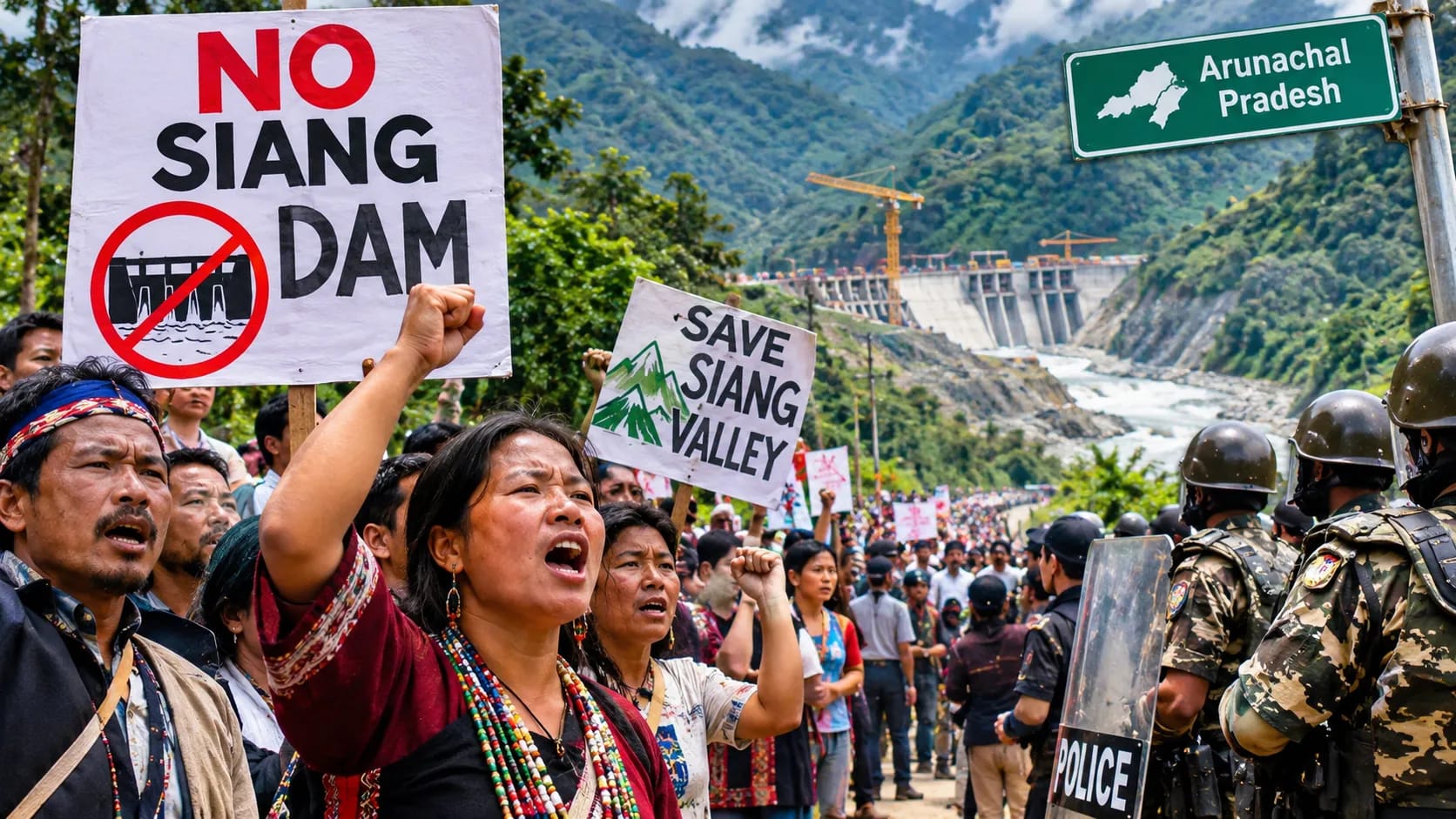
Siang Valley Protest Becomes a Major Political and Administrative Challenge
Arunachal Pradesh is witnessing growing tensions over the proposed Siang Upper Multipurpose Project (SUMP), with opposition from affected communities turning into a major law-and-order and political challenge for the state.
The proposed mega hydropower project has generated considerable concern among residents of the Siang Valley, particularly communities that fear the possible loss of ancestral land, villages and traditional livelihoods.
The controversy has become more serious following confrontations between protesters and security personnel, arrests of individuals involved in the agitation and calls for shutdowns in affected districts.
The developments have placed the state government's infrastructure priorities under increasing public scrutiny.
Why Are Local Communities Opposing the Project?
The proposed Siang Upper Multipurpose Project is an ambitious hydropower initiative planned in the Siang region.
The project is associated with a proposed generation capacity of approximately 11,200 megawatts.
Supporters of large hydropower infrastructure point to its potential contribution to electricity generation, strategic infrastructure and regional development.
However, sections of the local population have expressed strong reservations.
The principal concerns include:
Potential submergence of inhabited villages.
Displacement of local communities.
Loss of agricultural and ancestral land.
Environmental consequences for the Siang river ecosystem.
Possible disruption of traditional livelihoods and cultural practices.
Questions about rehabilitation and compensation.
Protest Intensifies Following Arrests
The situation escalated during October 2026 as protests against the proposed project turned confrontational.
According to a Reuters report published on October 27, clashes between protesters and police resulted in at least 21 arrests.
The report stated that police used tear gas while protesters allegedly resorted to stone-pelting. A police station and an NHPC office were also reportedly set on fire during the violence.
Shutdown Call Adds to Statewide Political Pressure
The controversy intensified further when the SUMP Affected Area Youth Association (SAAYA) called for a shutdown on November 2 across Siang, Upper Siang and East Siang districts.
According to reports published on November 1, the organisation's call was connected to arrests of individuals opposing the project and concerns about the alleged deployment of central armed police forces in project-affected areas.
The association also sought cooperation from the Bogum Bokang Welfare Society.
The shutdown call demonstrated that resistance to the project was continuing despite the security measures and administrative interventions.
Political Questions Facing the State Government
The controversy presents an important challenge for the Arunachal Pradesh government.
Large infrastructure projects are often presented as instruments of economic transformation, employment generation and strategic development.
However, development projects involving substantial land requirements and potential displacement require extensive consultation with affected populations.
The government must address questions concerning:
Whether affected communities have received sufficient information about the project.
How rehabilitation and compensation arrangements will be implemented.
What environmental safeguards will be introduced.
Whether local concerns are being adequately considered.
How peaceful dialogue can be maintained between authorities and protesters.
Strategic Importance of the Siang Project
The project also has a wider national significance.
The Siang river is strategically important because it enters India from the Tibetan region, where China is developing major hydropower infrastructure on the Yarlung Zangbo river.
India's proposed Siang project has consequently been discussed in the context of energy security and strategic river management.
What Happens Next?
The immediate challenge is to prevent further confrontations and establish a credible channel of communication between affected communities and the authorities.
The government will need to balance infrastructure planning with local concerns and ensure that protests are addressed through peaceful and democratic mechanisms.
The question is whether the administration can build sufficient confidence among affected communities before the controversy develops into a longer-term political confrontation.
Conclusion
Arrests, clashes and shutdown calls have highlighted the depth of public opposition in parts of the Siang Valley.
While hydropower infrastructure may offer strategic and economic opportunities, the future of the project will depend heavily on transparency, consultation and the government's ability to address the concerns of affected communities.
The coming weeks will be important in determining whether dialogue can replace confrontation in the Siang Valley.



Join the discussion
Comments (0)