
EC's Big Electoral Shake-Up! Odisha, Mizoram and Arunachal Face Fresh Voter Roll Revision Ahead of 2027
What Has the Election Commission Announced?
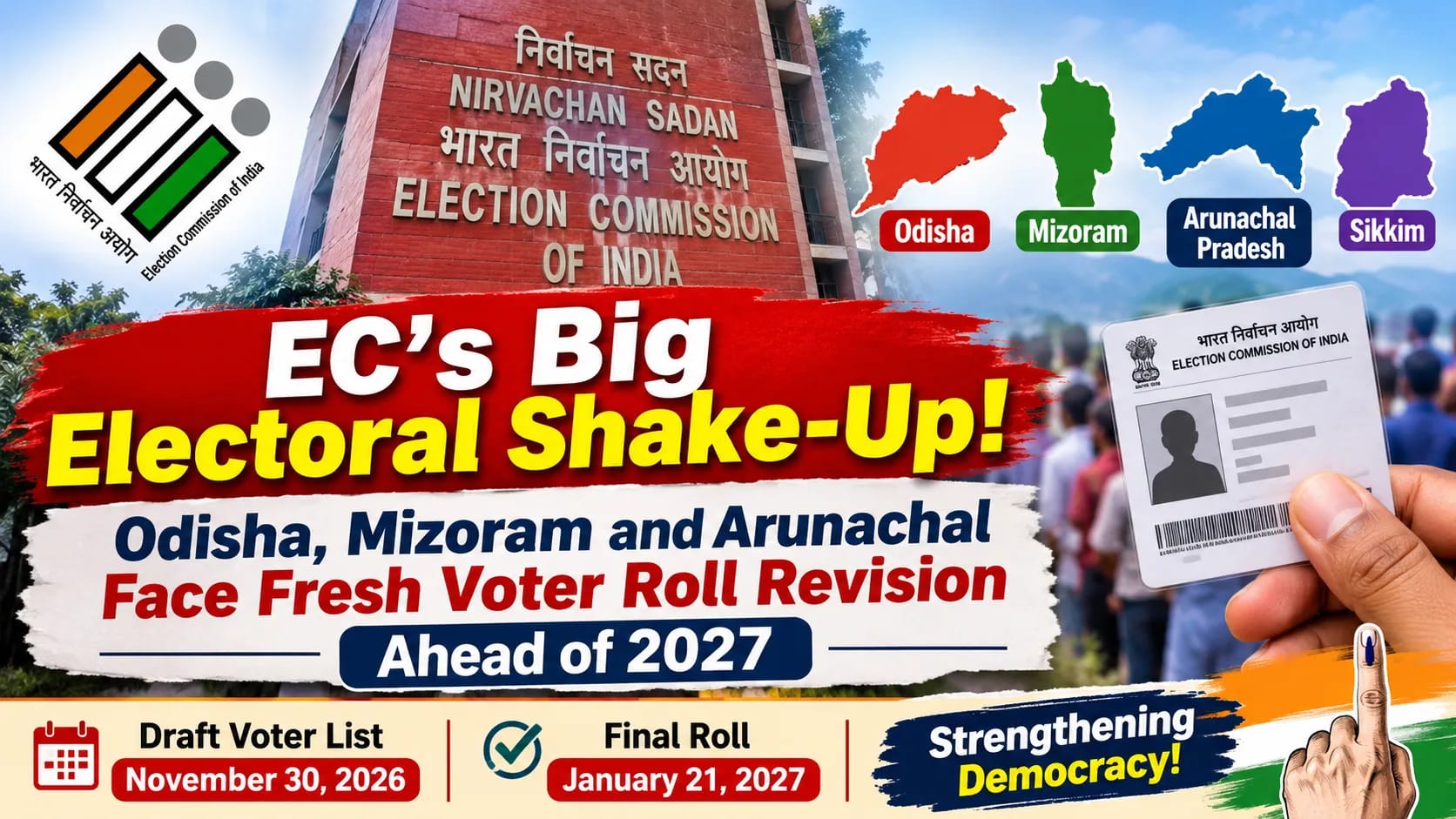
The Election Commission of India has ordered a Special Summary Revision (SSR) of electoral rolls across six states and Union Territories. The exercise is intended to ensure that voter records remain accurate, updated and inclusive ahead of upcoming electoral activities.
The revision will cover:
January 1, 2027, has been fixed as the qualifying date for voter eligibility. Citizens who meet the prescribed eligibility conditions by this date will have an opportunity to register themselves as voters.
According to the announced schedule, polling station rationalisation must be completed by November 20. This process will help election authorities review polling station arrangements and ensure that voters have convenient access to their designated polling locations.
Draft electoral rolls will be published on November 30, while voters will be able to submit claims and objections between November 30 and December 30. During this period, eligible citizens can apply for inclusion, request corrections to existing details and raise objections regarding incorrect entries.
The final electoral rolls are scheduled for publication on January 21, 2027. This will mark the completion of the revision exercise, subject to the prescribed verification and correction procedures.
Why Is This Politically Important?
Electoral roll accuracy is central to democratic participation. A reliable voter list ensures that eligible citizens can exercise their constitutional right to vote without unnecessary administrative difficulties. Missing names, incorrect entries, duplicate registrations and outdated voter information can create serious challenges for both voters and election authorities.
The Commission has also established safeguards against arbitrary deletions. Aadhaar submission remains voluntary, and an application cannot be rejected or an existing entry deleted solely because an individual cannot furnish Aadhaar details. These safeguards are important to ensure that the revision process does not unintentionally exclude eligible voters.
What Happens Next?
The November 30 draft publication will be an important stage in the entire exercise. Once the draft electoral rolls become available, political parties, Booth Level Agents, Booth Level Officers and eligible citizens will have an opportunity to examine the lists and identify possible errors or missing entries.
Voters should carefully verify their names, addresses and other registration details. Anyone who finds an error or discovers that their name is missing should use the prescribed claims and objections process within the announced period.
The effectiveness of the exercise will ultimately depend on transparent verification, accessible registration facilities, timely communication and proper grievance redressal. A well-managed revision can help reduce confusion and strengthen confidence among citizens.

Join the discussion
Comments (0)