
Election Spending Under ECI Scanner: How Assam, West Bengal and Other Eastern States Monitor Political Campaign Expenses
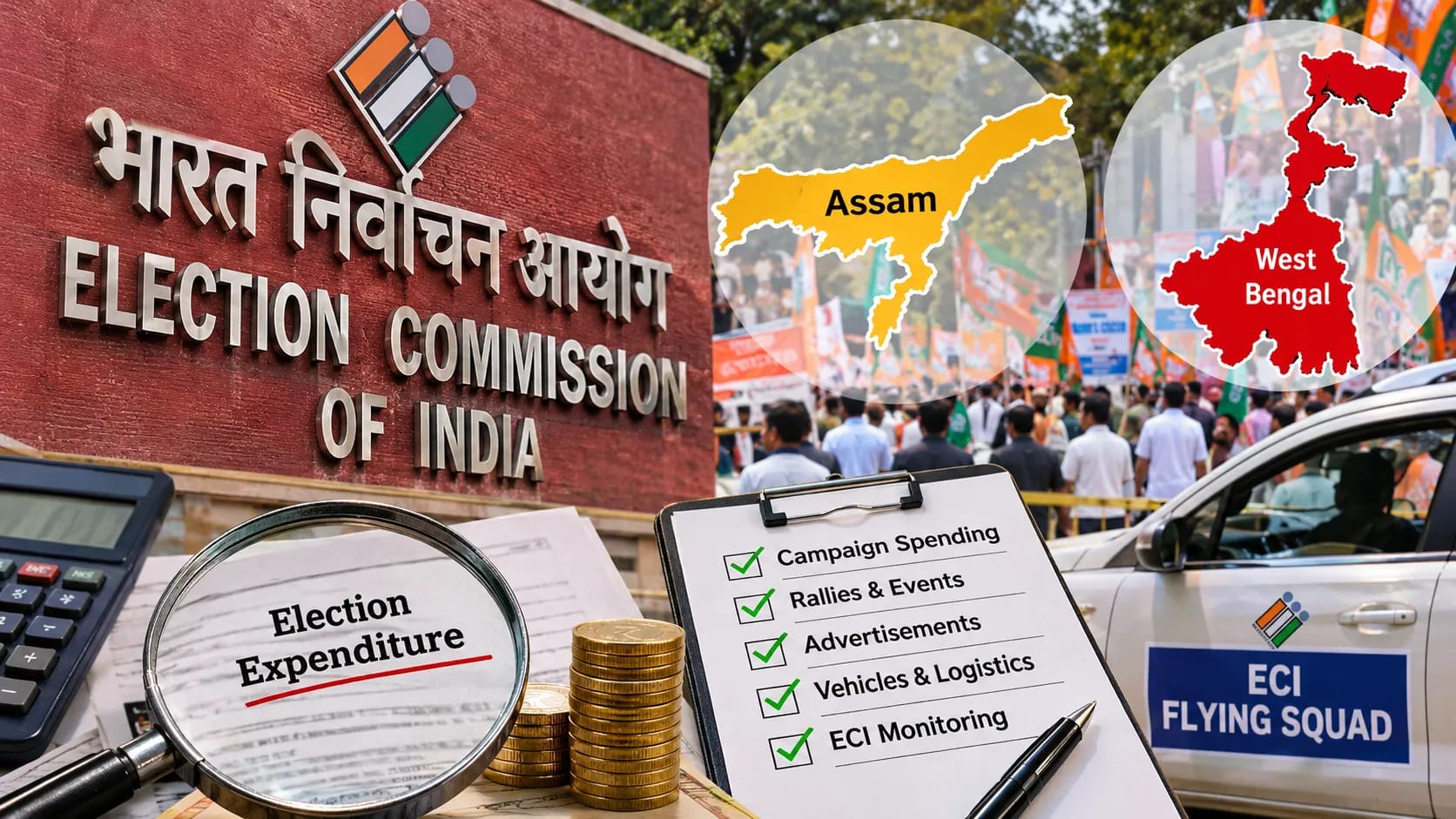
Understanding the election expenditure framework
Election expenditure is one of the most closely monitored aspects of India's electoral administration. Political campaigns involve substantial financial activity, including public meetings, transportation, promotional materials, advertisements and organisational arrangements.
The Election Commission of India (ECI) has established an expenditure-monitoring framework to ensure that candidates follow prescribed financial rules. These regulations are particularly relevant in states such as Assam and West Bengal, where large-scale political campaigns involve extensive organisational activities.
How does the Election Commission monitor campaign spending?
The ECI uses several monitoring mechanisms to track expenditure during elections.
These include:
Expenditure Observers: Officers appointed to supervise election expenditure and examine compliance.
Flying Squad Teams: Teams responsible for responding to complaints and checking suspected violations.
Static Surveillance Teams: Teams deployed at designated locations to monitor suspicious movement of cash and other prohibited inducements.
Video Surveillance Teams: Teams that record campaign activities and help verify reported expenditure.
Media Certification and Monitoring Committees: Bodies that monitor political advertisements and related media activities.
Why Assam and West Bengal matter
Assam and West Bengal have significant political competition and extensive campaign activity. Political rallies, public meetings, promotional campaigns and transportation arrangements can generate considerable expenditure.
For election administrators, the challenge is to ensure that financial reporting remains accurate across constituencies, including remote and geographically difficult areas.
What happens when expenditure rules are violated?
Candidates are required to maintain separate and correct accounts of election expenditure under Section 77 of the Representation of the People Act, 1951.
Candidates must submit their expenditure accounts to the District Election Officer within 30 days of the declaration of results.
The importance of financial transparency
Transparent election spending protects the credibility of democratic competition. Voters should be able to participate in elections without financial inducements influencing their choices.
For Assam, West Bengal, Odisha, Jharkhand and other eastern states, effective expenditure monitoring remains an important part of election administration.
What happens next?
The effectiveness of election expenditure monitoring will depend on consistent enforcement, accurate digital reporting, public complaints and timely scrutiny of candidate accounts.
Conclusion
Election expenditure is not simply a matter of campaign budgets. It is an important part of electoral accountability. The ECI's monitoring mechanisms provide a framework for examining campaign finances and enforcing applicable election regulations across India's eastern and northeastern regions.




Join the discussion
Comments (0)