Supreme Court Issues Contempt Notice to Kerala Congress Leaders Over Post Targeting CJI Surya Kant
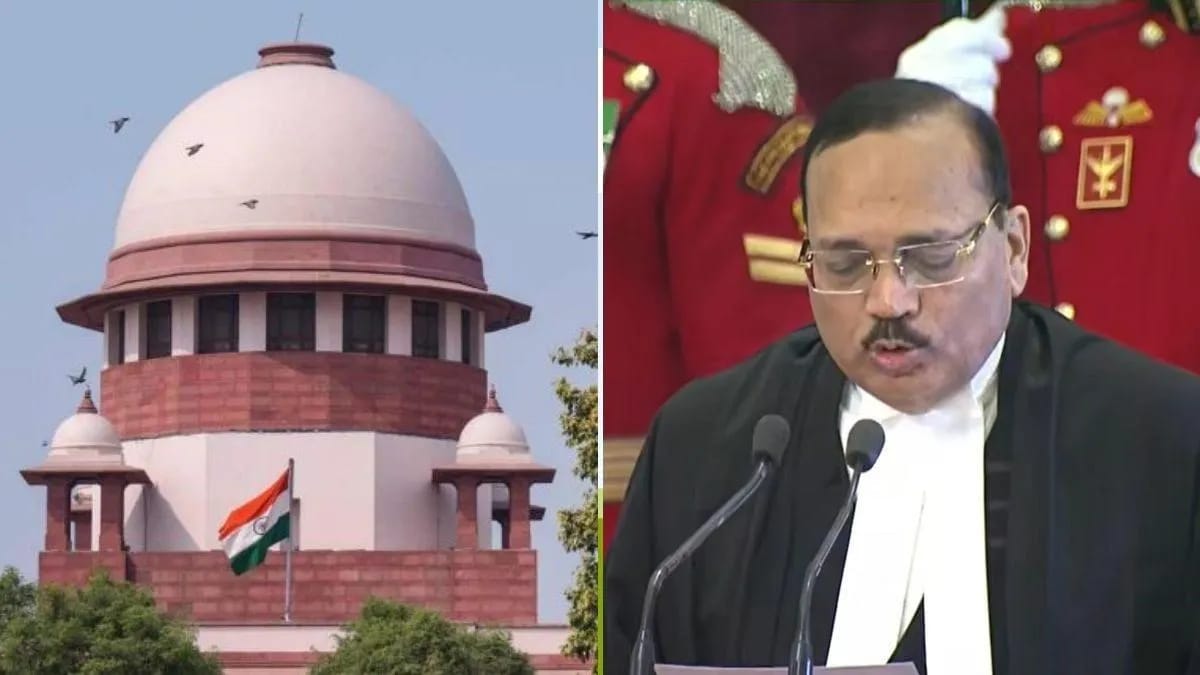
The development has brought the Congress party's Kerala unit under judicial scrutiny and opened a wider debate about freedom of political expression, criticism of constitutional institutions and the limits of political protest.
The Supreme Court's intervention has made this more than an ordinary social media controversy, placing the relationship between political parties and the judiciary under national attention.
How Did the Controversy Begin?
The controversy originated from a post published on October 12 on the official X account of the Kerala Congress unit.
The post came during the INDIA Bloc's protest against the Special Intensive Revision (SIR) of electoral rolls and its demand for the resignation of Chief Election Commissioner Gyanesh Kumar.
During the political confrontation, Congress leaders and opposition representatives had also raised concerns about the Supreme Court's position regarding their interaction with the Chief Justice.
The Kerala Congress social media account subsequently published a message directed at CJI Surya Kant, calling for his resignation.
The post attracted criticism and was later deleted.
Why Did the Supreme Court Intervene?
Advocate Vineet Jindal filed a complaint seeking action over the controversial post.
The matter reached the Supreme Court, where a bench comprising Justices Aravind Kumar and Vipul M. Pancholi examined the issue.
On November 6, the court issued show-cause notices to KPCC office-bearers, asking why contempt proceedings should not be initiated against them.
The court emphasised that judicial independence cannot become a matter of political convenience.
It also clarified that court judgments can be criticised, but freedom of expression cannot be used to intimidate the judiciary or interfere with the administration of justice.
Congress Responds to the Controversy
During the proceedings, the lawyer representing the Kerala Congress informed the court that the controversial material had been uploaded without the approval of senior party office-bearers.
The party also submitted that the post had been removed and an unconditional apology had been issued.
KPCC president Sunny Joseph had earlier stated that the person responsible for publishing the message had been removed from the relevant responsibility.
The Congress leadership maintained that the post did not reflect its official position on the independence of the judiciary.
However, the Supreme Court indicated that it would examine the circumstances and sincerity of the apology before deciding the next course of action.
What Does This Mean for Congress in Kerala?
The development comes at a politically sensitive time for the Congress, which is part of the INDIA Bloc's broader campaign against SIR.
The controversy could create an additional political challenge for the party because it now has to respond to questions about its official social media communication and accountability.
The BJP and other political opponents may also use the development to question the Congress's approach towards constitutional institutions.
At the same time, the Congress will have an opportunity to explain its position through its response to the court.
Conclusion
The Supreme Court's contempt notice has created a significant legal and political challenge for the Kerala Congress leadership.
The case raises an important constitutional question: where should the boundary lie between political criticism and interference with the administration of justice?
The next hearing and the response submitted by KPCC office-bearers will be important developments in determining how the matter proceeds.





Join the discussion
Comments (0)