Himanta's 13 Governance Councils Trigger Political Buzz! Assam's New Grassroots Power Strategy Raises Big Questions
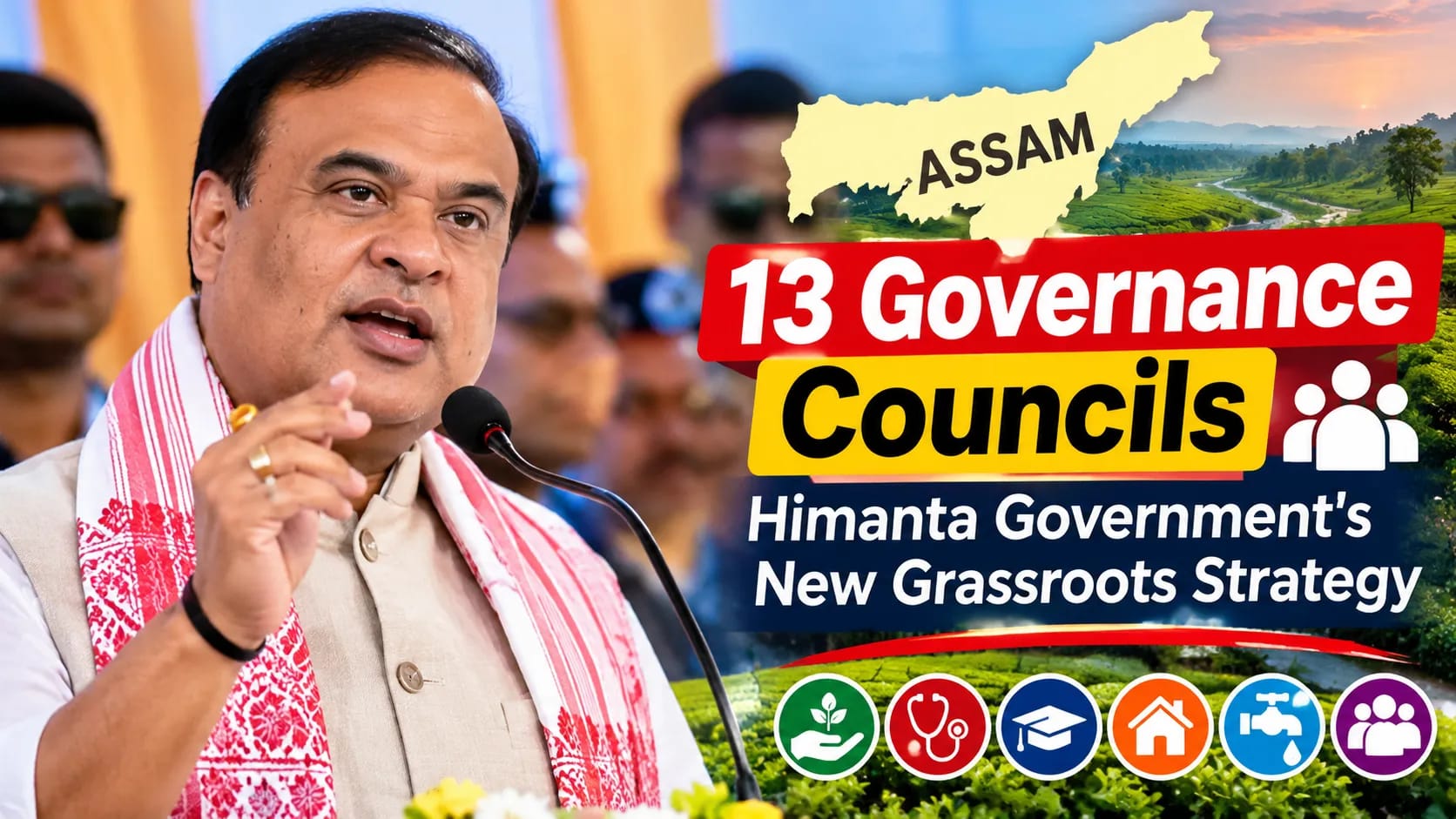
Assam's political and administrative landscape is witnessing a new development after the state government announced plans to establish 13 sectoral governance councils.
The initiative, approved by the state Cabinet on November 3, 2026, is being presented as an effort to bring governance closer to ordinary citizens.
Under Chief Minister Himanta Biswa Sarma's government, the proposed councils are expected to monitor welfare programmes, identify shortcomings in public service delivery and communicate people's concerns to policymakers.
What are Assam's 13 governance councils?
According to the announcement reported on November 9, the proposed councils will operate under the Transformation and Development Department.
Each council will have nine members:
One chairperson.
One vice-chairperson.
Seven non-official members.
MLAs will be eligible to become chairpersons. The government has indicated that preference will be given to experienced individuals, social workers and public representatives.
Which sectors will come under the councils?
The 13 councils will cover several important areas of public administration, including:
Rural livelihoods.
Health and wellness.
Educational entitlements.
Social security.
Public housing.
Drinking water.
Power supply.
Employment.
Cultural affairs and happiness.
Sports.
Health and education in tea garden areas.
Food security and procurement.
Financial assistance and direct benefit transfers.
Why is this politically significant?
Assam's political competition is closely connected with welfare delivery, development promises and public outreach.
The new councils could provide the government with a structured mechanism to identify problems at the local level.
For the ruling establishment, the initiative offers an opportunity to demonstrate that governance is not limited to announcements and policy documents but also involves monitoring implementation.
The accountability question
The success of the initiative will depend on how effectively these councils operate.
Several questions deserve attention:
How independently will members identify shortcomings?
Will citizens have accessible channels to submit complaints?
How will the government respond to recommendations?
Will the councils publish reports about their performance?
What happens when welfare delivery problems remain unresolved?
What happens next?
The next important stage will involve the constitution of the councils, selection of members and commencement of their quarterly meetings.
Their effectiveness should be judged through improvements in welfare delivery, transparency and public grievance resolution.
Conclusion
Assam's 13 proposed governance councils represent an important experiment in decentralised administration.
For Himanta Biswa Sarma's government, the challenge is to transform the announcement into measurable public benefits.
The political debate will not end with the creation of 13 councils. It will begin with their performance.


Join the discussion
Comments (0)