
Meghalaya BJP Leadership Rift Deepens! Sanbor Shullai Demands Greater Cabinet Representation, Raising Questions Over Alliance Unity
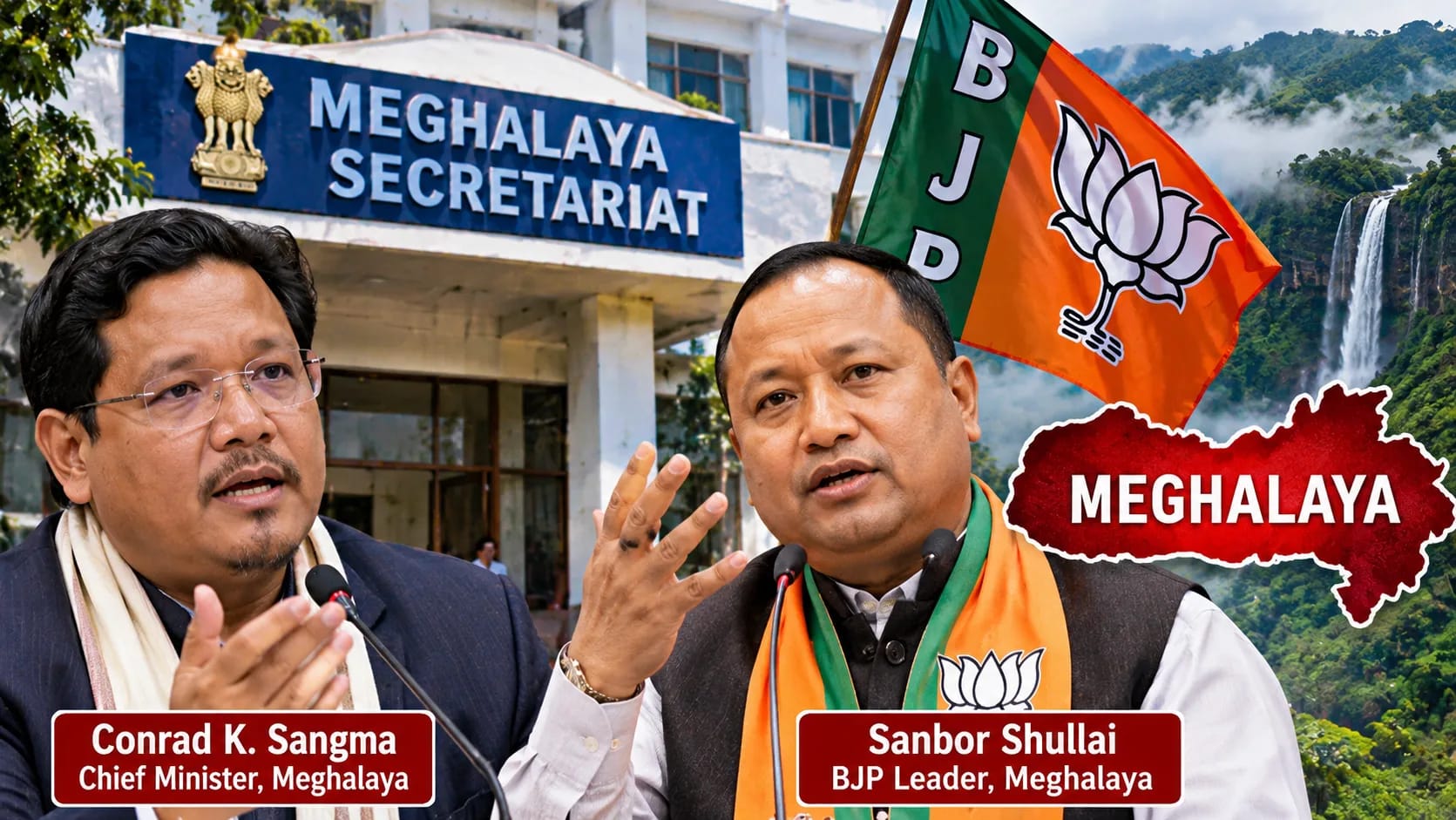
BJP's Cabinet Representation Demand Creates Political Discussion
Meghalaya's political landscape has witnessed fresh discussion over coalition power-sharing following remarks by BJP Legislature Party leader and Cabinet Minister Sanbor Shullai.
The BJP leader has reportedly expressed dissatisfaction with the party's representation in the state Cabinet, arguing that its position within the ruling Meghalaya Democratic Alliance (MDA) deserves greater recognition.
The development has drawn attention because the BJP is an important partner in the coalition government led by Chief Minister Conrad K. Sangma.
What Triggered the Latest Political Disagreement?
According to a November 4 report by Northeast News, Shullai expressed displeasure over the recent Cabinet reshuffle and distribution of portfolios.
He reportedly argued that the BJP, with 10 MLAs in the 60-member Meghalaya Legislative Assembly, deserved additional Cabinet representation.
The demand was raised following the resignation of former United Democratic Party (UDP) president and minister Metbah Lyngdoh.
The vacancy and subsequent Cabinet arrangements appear to have brought the issue of coalition representation into focus.
Shullai reportedly indicated that the BJP had already taken up the matter with Chief Minister Conrad K. Sangma.
BJP's Position Within the Meghalaya Democratic Alliance
The Meghalaya Democratic Alliance is the political arrangement supporting the Conrad K. Sangma government.
The National People's Party (NPP) is the principal force in the ruling arrangement, while the BJP is among its coalition partners.
The BJP's presence in the government gives it an opportunity to participate in policy discussions and administrative decision-making.
Why Is Sanbor Shullai's Statement Important?
Sanbor Shullai is a senior BJP leader in Meghalaya and has held a Cabinet position in the state government.
His remarks are significant because they bring the party's expectations into public discussion.
A demand for additional Cabinet berths is not merely about the number of ministers.
It can also reflect questions about the party's influence over government policy, administrative decisions and its visibility among voters.
For the BJP, stronger representation could provide greater political space in Meghalaya.
For the NPP, the challenge is to maintain a balance between coalition partners while retaining its leadership position within the government.
Conrad Sangma Faces a Coalition Management Challenge
Chief Minister Conrad K. Sangma now faces the familiar challenge of managing expectations among political partners.
Coalition governments require continuous consultation, especially when Cabinet vacancies arise or portfolios are redistributed.
Even when disagreements are limited to ministerial representation, public statements from coalition leaders can create political uncertainty.
Wider Political Implications for Meghalaya
The BJP's demand comes at a time when political parties in Meghalaya continue to assess their organisational strength and electoral position.
Greater ministerial representation could strengthen the BJP's political visibility.
At the same time, the NPP must maintain its position as the principal force in the ruling coalition.
The issue may also become relevant in future political negotiations, particularly if other coalition partners seek changes in their representation or portfolios.
Is the Ruling Alliance Facing a Crisis?
At present, the reported disagreement is best understood as a demand for greater political representation rather than proof of a government crisis.
Shullai's position indicates dissatisfaction with the Cabinet arrangement, but the BJP's continued participation in the government and any subsequent clarification from its leadership will be important in assessing the situation.
Coalition politics frequently involves competing expectations.
What Happens Next?
Attention will remain on the response from Chief Minister Conrad K. Sangma and the BJP's state leadership.
The coming developments may clarify whether the demand results in further negotiations over Cabinet representation or remains an expression of political dissatisfaction.
For now, the issue has placed coalition coordination and power-sharing arrangements under public scrutiny.
Conclusion
Sanbor Shullai's reported demand for greater BJP representation has introduced a fresh political discussion within Meghalaya's ruling alliance.
While the demand does not establish an immediate threat to the government, it highlights the importance of political balance in coalition administration.
The response from Conrad Sangma and the BJP leadership will determine whether the disagreement remains limited to Cabinet representation or develops into a larger political issue.



Join the discussion
Comments (0)