Narendra Modi Completes 25 Years in Government as BJP Highlights Youth, Development and Nation-Building
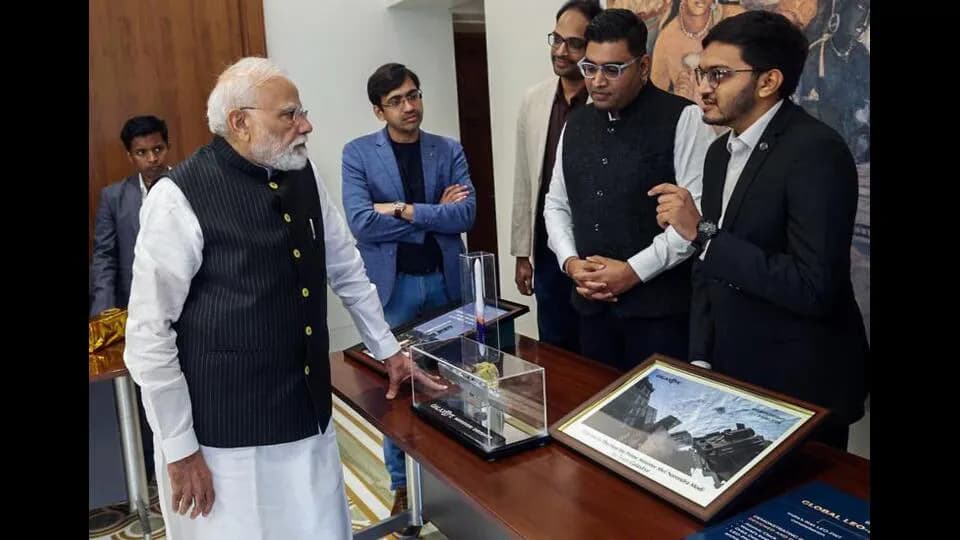
New Delhi, October 3, 2026: Prime Minister Narendra Modi's 25-year journey in constitutional office has been presented by BJP leader and writer Aditya Trivedi as a period focused on development, governance, youth empowerment and nation-building.
Modi first became Gujarat Chief Minister on October 7, 2001, before becoming Prime Minister in 2014. Trivedi, who is regional general secretary of the BJP's Kanpur-Bundelkhand region, argues in a Hindustan Times opinion article that Modi's years in government have been marked by a strong focus on public service and a long-term vision for India's development.
The article describes Modi's political journey as extending beyond electoral politics and places particular emphasis on his approach towards India's young population.
Youth at the Centre of Modi's Governance Approach
According to Trivedi, one of the defining features of Modi's tenure has been the emphasis on India's youth as contributors to the country's future rather than only as beneficiaries of government programmes.
The article traces this approach back to Modi's years as Gujarat Chief Minister, when initiatives in education, entrepreneurship and sports were promoted as part of the state's development strategy.
Trivedi highlights institutions established during Modi's Gujarat tenure, including the National Forensic Sciences University, Rashtriya Raksha University, Pandit Deendayal Energy University and Children's University.
He also points to programmes such as Shala Praveshotsav and Gunotsav, which focused on school enrolment, education quality and reducing dropout rates.
Vibrant Gujarat and Youth Entrepreneurship
The article also highlights the Vibrant Gujarat Global Summit, launched in 2003, as an initiative intended to attract investment and create opportunities for employment and entrepreneurship.
Trivedi argues that Modi's approach encouraged young people to think beyond conventional employment and consider entrepreneurship and business creation.
Sports also formed part of this youth-focused approach. The article points to the Khel Mahakumbh, launched in Gujarat in 2010, as a platform designed to identify sporting talent from rural and smaller communities.
Expansion of Youth-Centric Policies After 2014
After becoming Prime Minister in 2014, Modi expanded several policy initiatives nationally.
Trivedi highlights Startup India and Stand-Up India, launched in 2016, as important programmes aimed at encouraging entrepreneurship and supporting new businesses.
The article also refers to the MUDRA scheme, which provides loans to eligible small entrepreneurs, particularly those seeking to establish or expand micro enterprises.
According to the author, these initiatives reflect an effort to move young Indians from being primarily job seekers towards becoming job creators.
Startup Ecosystem and Digital Transformation
The article highlights India's growing startup ecosystem as another area associated with the Modi government's economic and technology policies.
It points to the expansion of recognised startups and unicorn companies and argues that entrepreneurship has increasingly spread beyond India's major metropolitan centres to tier-2 and tier-3 cities.
Trivedi also links India's digital transformation with opportunities available to young people, citing the expansion of internet connectivity, optical fibre infrastructure and UPI as developments that have changed how Indians access financial and digital services.
National Education Policy 2020
The National Education Policy (NEP) 2020 is another major policy highlighted in the article.
Trivedi describes the policy as an attempt to move away from a predominantly rote-learning model and encourage multidisciplinary education, skills, research and innovation.
The policy introduced changes including greater flexibility in higher education, multiple entry and exit options in some programmes and an increased emphasis on vocational and skill-based learning.
The article presents these reforms as part of Modi's broader emphasis on preparing young Indians for a changing economy.
Sports, Space and Defence
The BJP leader's article also points to sports development as an important part of the government's youth agenda.
Programmes such as Khelo India and the Target Olympic Podium Scheme (TOPS) are highlighted for their focus on identifying and supporting athletes.
The article further discusses reforms that opened greater opportunities for private participation in sectors such as space and defence.
Trivedi cites India's space achievements, including Chandrayaan-3, as examples of the country's growing technological capabilities and the contribution of Indian scientists and engineers.
Vision of a Developed India by 2047
The article connects Modi's youth-focused policies with the government's broader vision of making India a developed country by 2047, the centenary of Independence.
Trivedi refers to young Indians as the “Amrit Generation” and argues that this generation will have an important role in shaping India's economic, technological and social future.
The Mera Yuva Bharat (MY Bharat) platform is also highlighted as an initiative intended to involve young people in volunteering, leadership development and nation-building activities.
Modi's 25-Year Political Journey
As Modi approaches 25 years since entering the office of Chief Minister of Gujarat, the article presents his political journey as one centred on governance, development and youth-oriented policies.
From Gujarat's industrial and educational initiatives to national programmes involving startups, digital infrastructure, education, sports and technology, Trivedi argues that the focus has been on creating long-term institutional changes.
The assessment is the author's political perspective. As BJP regional general secretary, Trivedi writes from a position within the ruling party and describes Modi's record in strongly positive terms.
A BJP Perspective on Nation-Building
The 25-year milestone has become an occasion for the BJP to highlight Modi's tenure and its policy priorities.
The article argues that youth empowerment, entrepreneurship, technology, education and self-reliance have become central themes of the government's development narrative.
As India looks towards 2047, the BJP's political messaging increasingly places the country's young population at the centre of its vision for economic growth and national development.
Modi's 25 years in government therefore provide an opportunity to examine both the policies implemented during his tenure and the political narrative surrounding his long period in public office.

Join the discussion
Comments (0)