Maharashtra Political Shock! Shinde Sena Teams Up with Congress and NCP, BJP Loses Control of Two Key Cooperative Banks
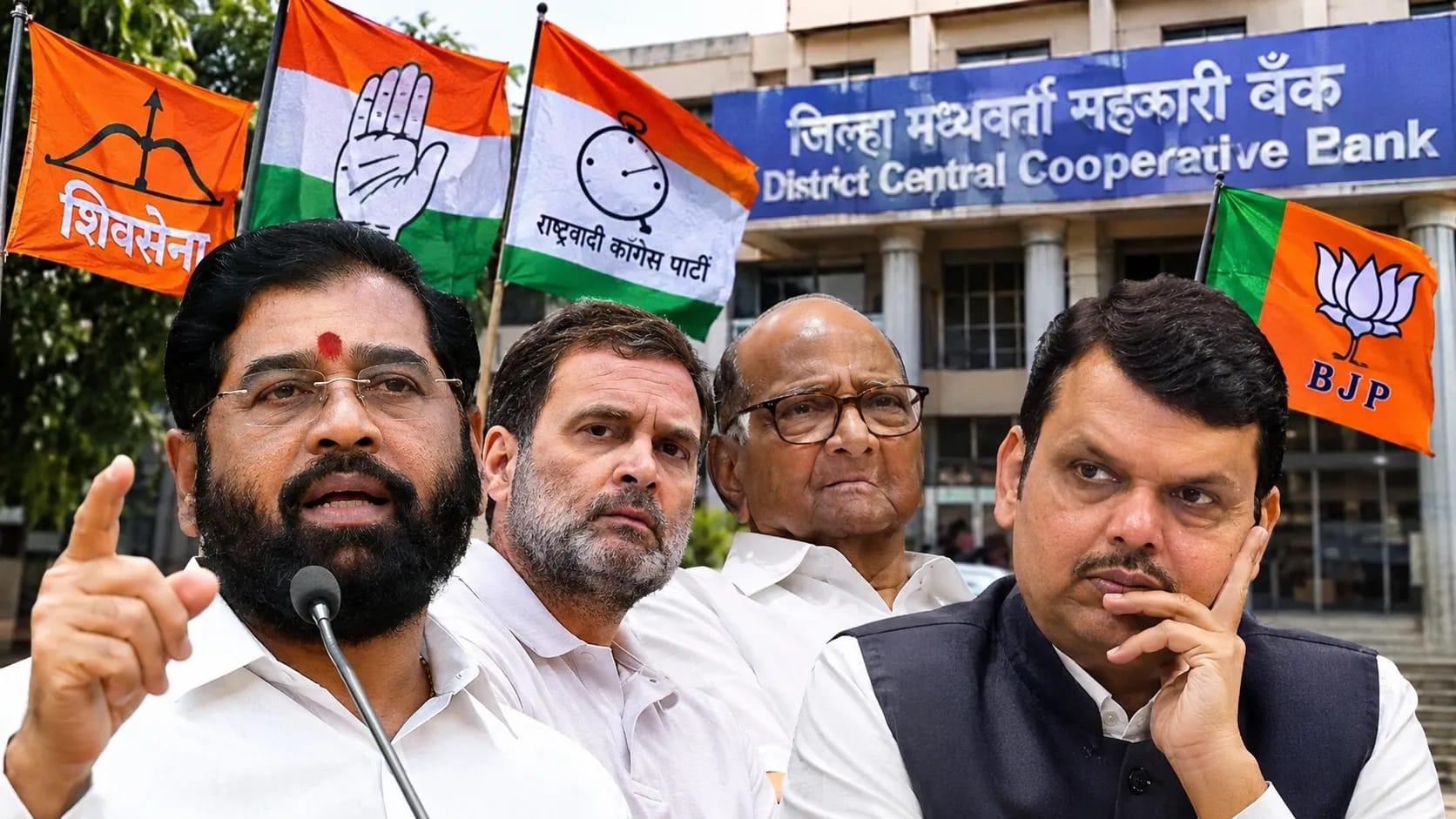
Maharashtra's Political Equations Take an Unexpected Turn
Maharashtra politics has witnessed another significant development, with local political alliances producing an unexpected setback for the Bharatiya Janata Party (BJP).
In a surprising turn of events, the Shiv Sena faction led by Deputy Chief Minister Eknath Shinde moved away from the BJP's preferred political arrangements and joined hands with Congress and Nationalist Congress Party (NCP) leaders during the leadership elections of two important district cooperative banks.
The elections took place in Satara and Sangli districts on November 18, 2026. Despite the BJP having a substantial presence in both institutions, the party failed to secure the top leadership positions.
The development has attracted political attention because the BJP, Shiv Sena and NCP are partners in Maharashtra's ruling Mahayuti alliance. However, local cooperative politics has once again demonstrated that political calculations at the district level can differ considerably from state-level alliance arrangements.
Satara: BJP Has the Largest Group but Loses the Top Posts
The Satara District Central Cooperative Bank witnessed one of the most interesting political developments.
The bank's 21-member board included:
BJP: 9 directors
Ajit Pawar-led NCP: 8 directors
Eknath Shinde-led Shiv Sena: 4 directors
Although the BJP emerged as the single-largest group, its numerical advantage did not translate into control of the bank's leadership.
Instead, the NCP and Shiv Sena joined hands to secure the important positions.
NCP functionary Udaysinh Patil Undalkar was elected chairman, while former Shiv Sena MLA Deepak Chavan became vice-chairman.
Sangli: Congress Returns to the Chairman's Position After 22 Years
The political picture in Sangli was equally significant.
The Sangli District Central Cooperative Bank witnessed a different local political arrangement, with Shinde's Shiv Sena joining hands with Congress.
Congress leader Mahendra Lad was elected chairman, while Shiv Sena's Tanaji Patil secured the vice-chairman position.
The development marked Congress's return to the bank's chairmanship after approximately 22 years.
The Sangli bank has considerable political and cooperative importance in western Maharashtra. Its leadership has traditionally been connected with influential local political networks.
Why Is This Development Important for Maharashtra's Mahayuti Government?
The most important political question following these elections concerns the relationship between the BJP and Eknath Shinde's Shiv Sena.
Both parties are partners in the ruling Mahayuti government. However, their interests do not always align in local political institutions.
Cooperative banks are particularly influential in Maharashtra because they are connected with agricultural credit, rural financing, sugar cooperatives and local economic networks.
Control over these institutions can strengthen political influence among farmers, cooperative societies and local representatives.
Therefore, losing the top positions in Satara and Sangli represents more than an ordinary administrative setback for the BJP.
BJP Leaders Play Down the Setback
Despite the outcome, BJP leaders have attempted to downplay the political implications.
The party's position has been that it remains the largest individual group in the Satara bank and that the cooperative institutions should not necessarily be viewed through the lens of political rivalry.
There have also been efforts by leaders to present the elections as local cooperative arrangements rather than evidence of a breakdown within Mahayuti.
What Happens Next?
The immediate political focus will remain on whether the BJP and Shiv Sena can manage their differences in other district-level institutions.
The developments in Satara and Sangli may also influence future cooperative elections and local political negotiations.
For the BJP, the challenge will be to maintain its influence in western Maharashtra's cooperative sector.
For Shinde's Shiv Sena, the arrangements demonstrate its ability to negotiate influential positions even when it chooses partners outside the ruling alliance.
Congress, meanwhile, has gained an important symbolic victory in Sangli with its return to the chairmanship after more than two decades.
Conclusion
Maharashtra's Satara and Sangli cooperative bank elections have delivered an important political message: numerical strength does not always guarantee institutional control.
Eknath Shinde's Shiv Sena has demonstrated its willingness to pursue local arrangements with Congress and NCP leaders, while the BJP has been pushed away from the top positions in both institutions.
Whether this remains a district-level political adjustment or develops into a larger challenge for Mahayuti unity will be an important question in Maharashtra politics.



Join the discussion
Comments (0)