Odisha's ₹24,150 Crore Budget Bombshell: Majhi Government Unveils Seven New Initiatives as Opposition Erupts in Assembly
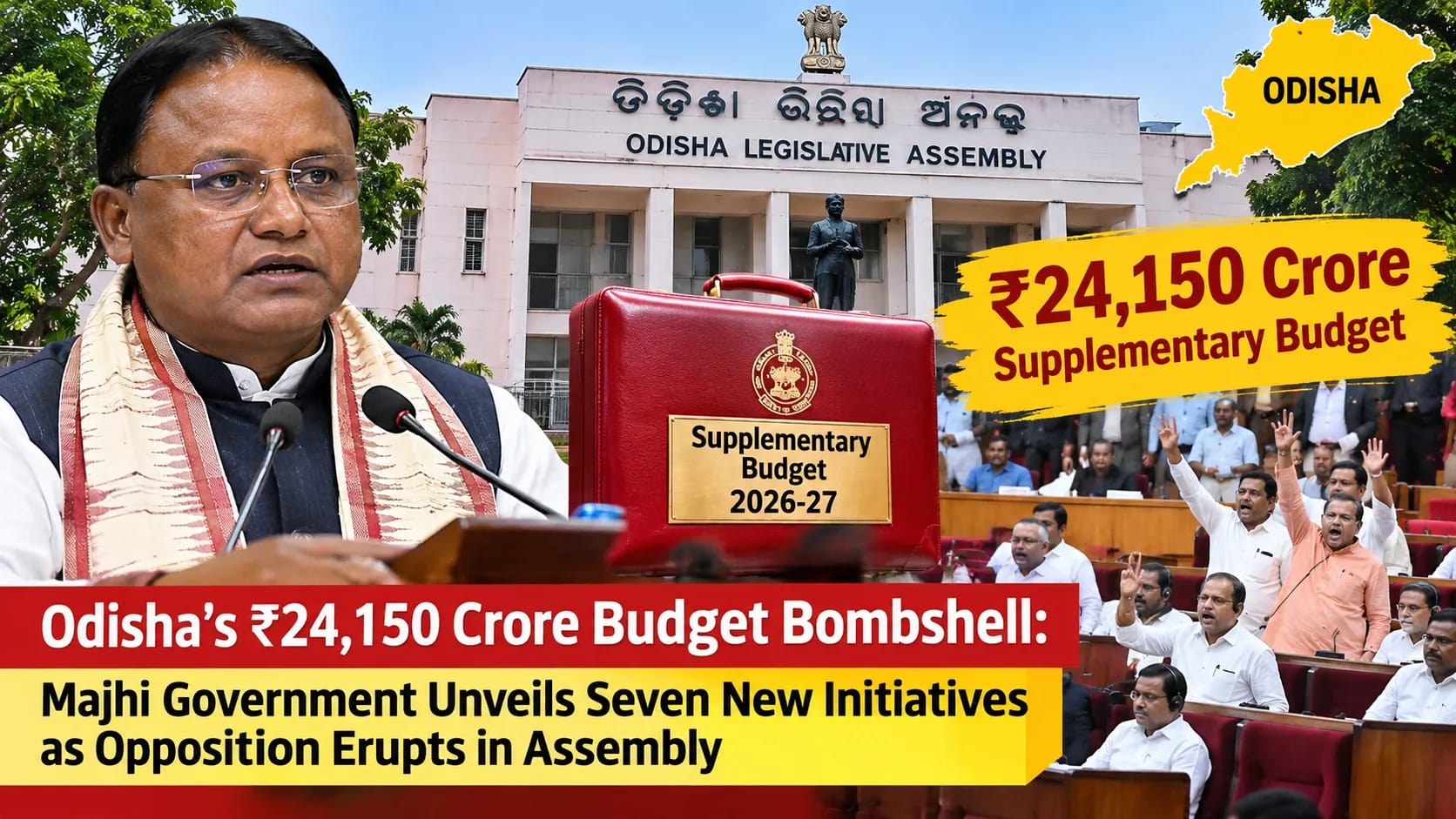
Odisha's political battlefield witnessed another major confrontation as Chief Minister Mohan Charan Majhi presented the state's first supplementary budget for the financial year 2026–27, proposing an additional expenditure of ₹24,150 crore.
The announcement comes at a politically important moment for the BJP-led government, which is attempting to strengthen its development and welfare agenda while facing criticism from opposition parties inside the Legislative Assembly.
The budget presentation was accompanied by noisy protests from the Biju Janata Dal (BJD) and Congress. Opposition legislators entered the Well of the House and raised slogans against the government, creating an atmosphere of confrontation during the proceedings.
Where will the ₹24,150 crore go?
According to the Chief Minister's official announcement, the supplementary expenditure is divided into three major components:
₹17,990 crore for programme expenditure.
₹5,100 crore for disaster response.
₹1,060 crore for administrative expenditure.
The allocations indicate that the government intends to support ongoing programmes while making additional financial provisions for welfare and development requirements.
Seven new initiatives announced
The supplementary budget introduces seven initiatives:
MukhyaMantri Annapurna Yojana: A food-security initiative.
Gyanodaya – Siksha ru Samruddhi: Free education from KG to postgraduate level.
Urban Challenge Fund: Support for urban development.
Public Health Infrastructure: Financial assistance for strengthening healthcare infrastructure.
One-Time Settlement: A proposal to liquidate closed spinning mills.
Ganjam Salt Pan Land Acquisition: Land acquisition for salt-pan-related requirements.
Railway Connectivity: Land acquisition for new railway lines.
Opposition versus government: The political battle
The BJD and Congress protests demonstrated that the supplementary budget is not simply a financial exercise. It has become part of the wider political contest between the ruling BJP and opposition parties.
For the government, the additional allocation offers an opportunity to present its development priorities and welfare commitments.
For the opposition, legislative scrutiny remains important because supplementary expenditure increases the financial commitments of the state.
What happens next?
Attention will now turn towards the implementation of the seven initiatives, the utilisation of the supplementary allocation and the government's ability to meet its financial commitments.
The proposed spending will also remain an important subject of political scrutiny during the Assembly proceedings.
Conclusion
Odisha's ₹24,150 crore supplementary budget has placed government spending at the centre of the state's political debate. The BJP government is projecting welfare and development, while the opposition is preparing to challenge its decisions.
The larger question is whether these seven initiatives will deliver the promised development on the ground.



Join the discussion
Comments (0)