"No One Talks About Him, So He Targets Biharis": Prashant Kishor's Blistering Attack on Raj Thackeray
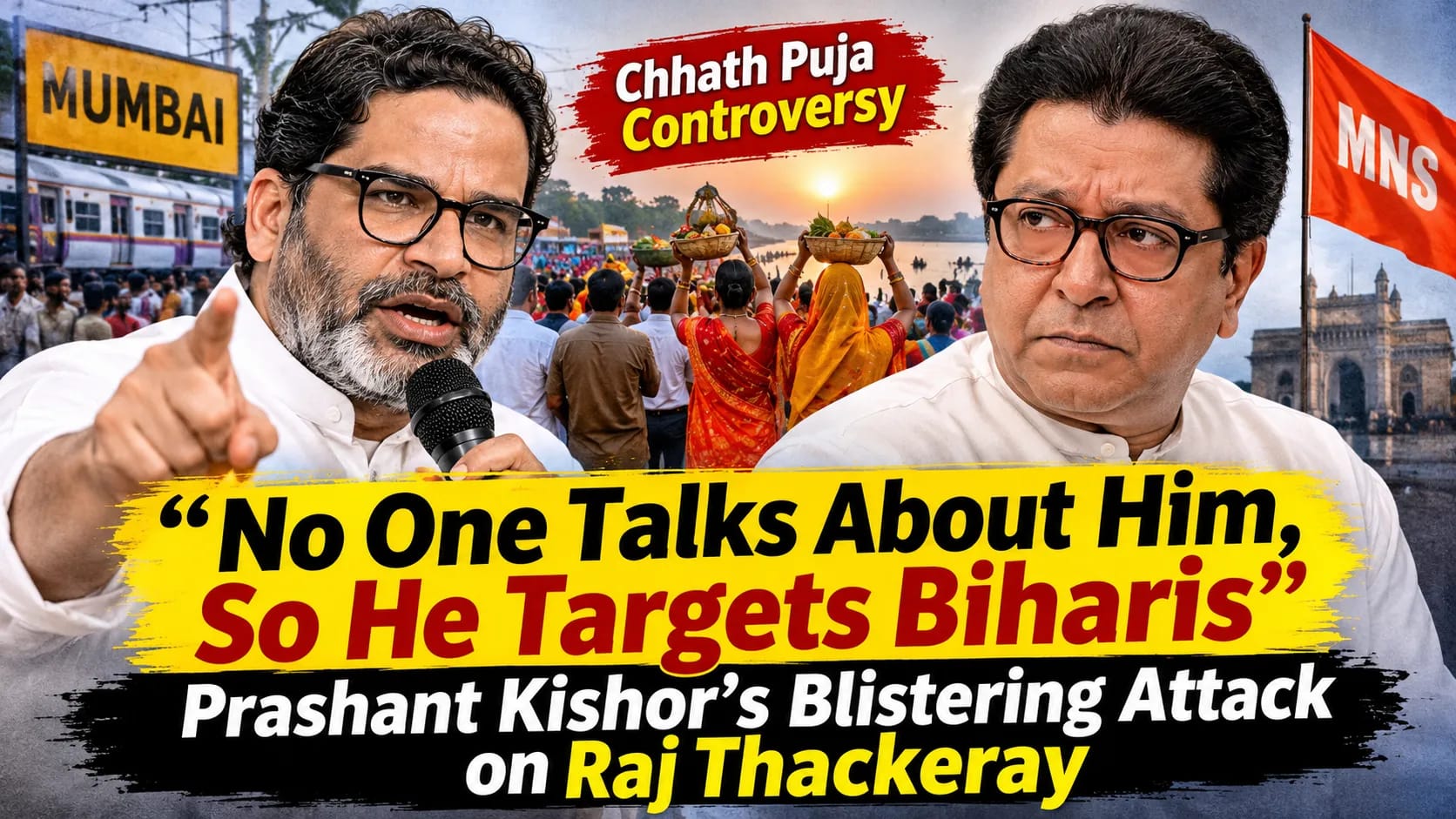
Prashant Kishor's Blistering Attack on Raj Thackeray
Reacting to Raj Thackeray's remarks, Prashant Kishor described him as a "lumpen element" and questioned why the media continues to give importance to such statements.
Kishor alleged that whenever nobody pays attention to Thackeray for several months, he makes controversial remarks against people from Bihar and Uttar Pradesh to secure media coverage.
He also questioned Thackeray's political position, pointing out his changing political statements towards Prime Minister Narendra Modi.
Kishor sarcastically questioned Thackeray's relevance in Maharashtra, where the BJP-led NDA is in power, and argued that if Hindi-speaking people face discrimination, they should question the ruling government.
His central message was clear: political leaders should not be allowed to gain publicity by targeting ordinary people because of their regional identity.
What Triggered the Political Confrontation?
The controversy started after Bhojpuri songs associated with Chhath Puja were played at some railway stations in Mumbai.
The issue attracted objections from MNS workers and became a political flashpoint.
Raj Thackeray subsequently criticised the BJP-led Maharashtra government, alleging that the BJP was attempting to create tensions between Marathi-speaking people and North Indian communities through Chhath Puja celebrations.
He also connected the issue with the upcoming Uttar Pradesh Assembly elections, alleging that cultural and regional divisions were being used for electoral benefits.
However, the controversy soon moved beyond a disagreement over songs at railway stations and became a larger debate about the treatment of people from Bihar and Uttar Pradesh in Maharashtra.
Raj Thackeray's Regional Politics Under Question
Raj Thackeray has built much of his political identity around Marathi language, regional pride and the interests of Maharashtra's local population.
Protecting Marathi language and culture is a legitimate political concern. However, the question arises when regional pride becomes a reason to question the cultural practices or dignity of people who have migrated from other Indian states.
Mumbai is one of India's largest economic centres. People from Bihar, Uttar Pradesh and several other states work in construction, transportation, industries, hotels, businesses and countless other sectors.
They contribute to Maharashtra's economy and the everyday functioning of Mumbai.
No political movement should treat these citizens as outsiders simply because they speak another language or celebrate a different festival.
Chirag Paswan Also Enters the Debate
Union Minister Chirag Paswan also criticised Raj Thackeray over the controversy.
Paswan highlighted the contribution of people from Bihar and Uttar Pradesh to Maharashtra's economic growth and questioned the politics of regional discrimination.
He also invoked the legacy of Balasaheb Thackeray, arguing that protecting Marathi identity should not require humiliating people from other states.
His remarks added another political dimension to the controversy, bringing together criticism from leaders with different political backgrounds.
The Bigger Question: Who Has the Right to Celebrate Their Culture?
India's strength lies in its diversity. A person from Bihar can work in Mumbai, a person from Karnataka can build a business in Hyderabad, and a person from Tamil Nadu can celebrate their traditions in Delhi.
The Constitution guarantees citizens the right to move freely and reside in different parts of India, subject to constitutional and legal restrictions.
Chhath Puja is an important religious and cultural festival for millions of people, particularly in Bihar and eastern Uttar Pradesh. Their cultural identity should not become a political weapon.
At the same time, the use of public railway facilities for cultural celebrations can be discussed through proper administrative rules. But administrative questions should not turn into hostility against an entire community.
Conclusion: Marathi Pride Should Not Become an Excuse for Regional Division
Prashant Kishor's attack has brought Raj Thackeray's regional politics back into the national spotlight. The controversy is no longer just about Bhojpuri songs or Chhath Puja celebrations; it raises a much larger question about the relationship between regional identity and national unity.
Maharashtra has every right to protect its language, traditions and cultural identity. But people from Bihar, Uttar Pradesh and other states also have the right to live, work and celebrate their traditions with dignity.
Political leaders should be judged by their contribution to employment, development and public welfare, not by how effectively they create divisions between communities.
India cannot become stronger by treating Indians as outsiders in their own country.
Join the discussion
Comments (0)