Odisha Government Marks Two Years of Subhadra Yojana with Programmes Across 338 Locations
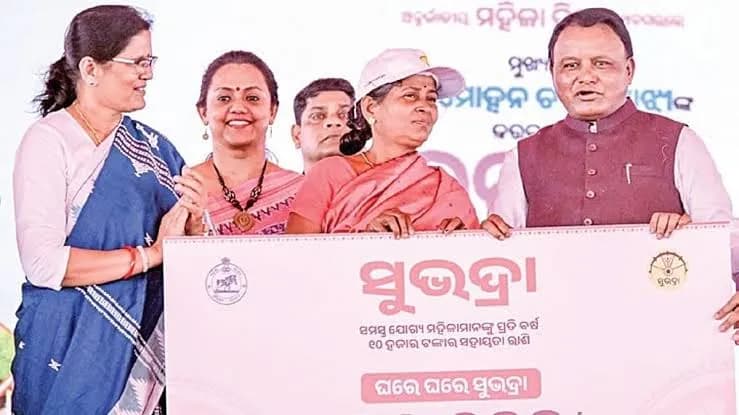
The Odisha government marked two years of the Subhadra Yojana on September 17, 2026, with programmes organised across 338 locations as the state's flagship women-focused welfare scheme entered its third year.
The scheme was launched in Bhubaneswar on September 17, 2024, by Prime Minister Narendra Modi after the Bharatiya Janata Party formed the government in Odisha. The launch date also coincided with the Prime Minister's birthday.
The two-year milestone has provided the Odisha government an opportunity to highlight the scheme's implementation, direct-benefit transfers and outreach among women beneficiaries.
According to Deputy Chief Minister Pravati Parida, more than 1.03 crore women had received financial assistance amounting to approximately ₹25,800 crore through five instalments by September 2026.
Subhadra Yojana Completes Two Years
The anniversary programmes were organised across Odisha on September 17.
Deputy Chief Minister Pravati Parida said celebrations would take place at 338 locations, including programmes involving ICDS projects, Anganwadi centres and Child Development Project Offices.
Rangoli competitions, community activities and other programmes were organised to mark the occasion and highlight the scheme's focus on women. The government also appealed to people to participate in a lamp-lighting programme between 6 pm and 7 pm on September 17.
The celebrations were presented by the state government as part of a broader focus on women's empowerment, dignity and economic self-reliance.
What Is the Subhadra Yojana?
The Subhadra Yojana is a women-focused financial assistance programme of the Odisha government.
Under the scheme, eligible women receive ₹50,000 over a five-year period. The assistance is provided at ₹10,000 per year, divided into two instalments of ₹5,000 each. Payments are made through Direct Benefit Transfer.
The annual instalments are linked to two occasions:
International Women's Day – March 8
Raksha Bandhan/Rakhi Purnima
The structure is designed to provide recurring financial assistance rather than a single one-time payment.
More Than 1.03 Crore Women Beneficiaries
The scale of the programme has increased significantly since its launch.
The Odisha government said that more than 1.03 crore women beneficiaries had received assistance through five instalments by September 2026.
The government reported that approximately ₹25,800 crore had been transferred directly into beneficiary bank accounts through DBT.
The fifth instalment alone, released in August 2026, covered more than 1.03 crore beneficiaries, with around ₹5,160 crore transferred at that stage.
The large beneficiary base has made Subhadra an important component of Odisha's welfare-delivery system.
Direct Benefit Transfer and Financial Access
One of the important features of Subhadra is the use of Direct Benefit Transfer (DBT).
Instead of distributing assistance through physical channels, the money is transferred directly to eligible beneficiaries' bank accounts.
This makes banking access, beneficiary verification and accurate account details important components of implementation.
The government has also emphasised banking arrangements and timely processing during instalment disbursements.
For beneficiaries, regular digital transfers can also create greater flexibility in deciding how the money is used for household needs, savings or economic activity.
Eligibility for Women
The scheme is designed for eligible women between 21 and 60 years of age, subject to the scheme's other conditions.
The government has continued to process new applications and expand the beneficiary base.
During the 2026 registration cycle, applications were invited through the Subhadra portal, with women aged 21 to 60 as of April 1 eligible to apply subject to the scheme's eligibility requirements.
The government has also indicated that women who turn 21 and meet the eligibility conditions can enter the programme.
This makes beneficiary registration an ongoing part of the scheme rather than a process limited to its original launch.
New Beneficiaries Continue to Join
The second anniversary also highlighted the government's plans to bring additional eligible women into the programme.
During the fifth instalment in August 2026, more than 2.21 lakh beneficiaries received the assistance for the first time, according to the state government.
The continuing addition of beneficiaries means the scheme's coverage can change over time as new women become eligible and applications are processed.
Subhadra and Women's Economic Participation
The Odisha government has linked the scheme to a wider objective of improving women's economic participation.
According to figures cited by Deputy Chief Minister Pravati Parida, assessments by IIM Sambalpur, SBI and NITI Aayog indicated that more than 26% of women beneficiaries had become self-reliant through entrepreneurship. This is a government-cited assessment and should be distinguished from an independent evaluation of the scheme's overall impact.
The government has also highlighted the potential use of Subhadra assistance for small enterprises and income-generating activities.
This has made women's entrepreneurship an important part of the policy discussion surrounding the programme.
From Financial Assistance to Entrepreneurship
The government has increasingly presented Subhadra as more than a cash-transfer programme.
The broader policy objective includes encouraging women to use financial assistance to strengthen household economic security and, where possible, support entrepreneurial activity.
The government has also discussed skill training, guidance, market linkages and financial assistance through women's entrepreneurship initiatives.
Such initiatives connect the welfare programme with the state's broader economic-development agenda.
Lakhpati Didi and Women's Self-Reliance
Women's entrepreneurship has also been connected with the state's Lakhpati Didi initiative.
At the fifth Subhadra instalment programme in August, the Odisha government said the state had created 27 lakh Lakhpati Didis, ahead of its target.
The government's broader women's-development strategy therefore combines direct financial assistance with entrepreneurship, skill development and market access.
The long-term outcome of these programmes will depend on how beneficiaries use financial support and whether it translates into sustainable income opportunities.
Nutrition and Women's Welfare
The anniversary programmes were also linked with the government's wider women and child welfare activities.
The Women and Child Development Department has said it is working through Poshan Abhiyan toward the goal of eliminating malnutrition in Odisha.
Anganwadi centres, ICDS projects and CDPO offices were included in the anniversary activities, connecting the Subhadra celebrations with existing women and child welfare infrastructure.
This gives the anniversary a broader administrative dimension beyond the direct financial assistance provided under Subhadra.
Subhadra's Five-Year Structure
The programme was designed as a five-year financial assistance scheme.
Eligible women are entitled to receive ₹50,000 over five years, with ₹10,000 provided each year through two instalments.
The scheme therefore extends beyond a single financial year and requires continued beneficiary verification, payment processing and administrative monitoring.
With the programme now entering its third year, attention will increasingly focus on its continuing implementation and the experience of beneficiaries.
Odisha Government's Welfare Delivery
The Subhadra programme is part of the Odisha government's broader welfare-delivery framework.
The administration under Chief Minister Mohan Charan Majhi has continued to highlight direct transfers, women's welfare, social assistance and beneficiary outreach as important areas of governance.
The anniversary provides the government an opportunity to communicate the scale of the programme while also highlighting other women-focused initiatives.
Seva Sankalp Abhiyan
The Subhadra anniversary also coincided with the Seva Sankalp Abhiyan planned by the Odisha BJP.
The campaign was scheduled from September 17 to October 17, with an emphasis on public outreach and communication around welfare initiatives.
The anniversary programmes and the organisational campaign are therefore taking place during the same period, although they are separate government and party activities.
The distinction between government scheme implementation and party political activity remains important when reporting on the developments.
Subhadra and Odisha Politics
The implementation of Subhadra has become part of the wider political discussion in Odisha.
The BJP government can point to the number of beneficiaries and the scale of direct transfers when discussing its welfare record.
Opposition parties, meanwhile, may raise questions about eligibility, implementation, beneficiary access, government spending and the broader economic impact of welfare programmes.
These different political positions form part of Odisha's continuing debate over governance and public policy.
Role of Opposition Parties
The Subhadra anniversary also provides an opportunity to examine the wider political debate surrounding welfare policies in Odisha.
Opposition parties can question implementation and government priorities, while the ruling party can highlight the number of beneficiaries and financial transfers.
For voters, issues such as access to the scheme, timely payments, eligibility, administrative procedures and the use of financial assistance remain relevant alongside broader political arguments.
Women Voters and Political Discussion
Women's welfare is an important subject in Odisha's political discussion because programmes targeting women can have implications for household finances, social welfare and economic participation.
Subhadra's large beneficiary base means the scheme will continue to receive attention from political parties, policymakers and civil society organisations.
However, the presence of a large beneficiary programme does not by itself establish how individual voters will respond politically.
The political significance of the scheme will depend on broader factors including governance, employment, development, public services and other issues discussed during elections.
Digital and Administrative Delivery
The use of DBT has also increased the importance of digital and administrative systems.
Beneficiary applications, bank-account verification, payment processing and grievance mechanisms all form part of the delivery process.
As the scheme expands, administrative capacity will remain important to ensure that eligible beneficiaries can access the assistance and that payment-related issues can be addressed.
Economic Impact and Questions for the Third Year
As Subhadra enters its third year, several questions are likely to receive greater attention.
These include:
Whether beneficiaries continue receiving instalments on schedule
How many new women enter the scheme
How beneficiaries use the financial assistance
Whether assistance supports savings or income-generating activities
How entrepreneurship initiatives develop
How banking access affects beneficiaries
Whether eligible women face difficulties during registration
How the government addresses payment or verification issues
How the scheme interacts with other welfare programmes
What longer-term economic outcomes emerge
These questions can provide a broader framework for assessing the programme beyond the size of its beneficiary base.
Subhadra and Odisha's Development Agenda
The government has connected women's economic participation with its wider development objectives.
The administration has spoken about creating opportunities for women entrepreneurs and improving their access to training, financial support and markets.
The longer-term policy question is therefore how direct financial assistance can be combined with employment, entrepreneurship, skills and access to markets.
This broader approach could become an important part of the discussion as Odisha continues to formulate its development priorities.
What to Watch After the Two-Year Anniversary
Several developments will be important as Subhadra enters its third year:
New beneficiary registrations
Future instalment payments
DBT implementation
Beneficiary verification
Women's entrepreneurship programmes
Skill-development initiatives
Market-linkage programmes
Banking and financial inclusion
Poshan Abhiyan activities
Anganwadi and ICDS programmes
Government welfare spending
Opposition responses
Odisha BJP's Seva Sankalp Abhiyan
Broader debates over welfare and development
Long-term outcomes for beneficiaries
Subhadra Yojana: Key Facts
The major facts surrounding the scheme as it enters its third year include:
Launch: September 17, 2024
Target group: Eligible women aged 21–60, subject to scheme conditions
Total assistance: ₹50,000 over five years
Annual assistance: ₹10,000
Annual payment structure: Two instalments of ₹5,000
Payment system: Direct Benefit Transfer
Beneficiaries reported by September 2026: More than 1.03 crore women
Amount transferred through five instalments: About ₹25,800 crore
Two-year anniversary: September 17, 2026
Anniversary programmes: 338 locations across Odisha
The beneficiary and transfer figures are based on statements made by the Odisha government and reported by PTI and other outlets.
Conclusion
The completion of two years of the Subhadra Yojana marks an important stage in Odisha's women-focused welfare policy.
Since its launch in September 2024, the programme has expanded to more than 1.03 crore beneficiaries, with the Odisha government reporting approximately ₹25,800 crore transferred through five instalments.
The anniversary programmes across 338 locations, together with activities at Anganwadi centres, ICDS projects and CDPO offices, have brought the scheme's implementation into focus across the state.
As Subhadra enters its third year, attention is likely to shift toward new registrations, continued DBT payments, women's entrepreneurship, financial inclusion and the longer-term outcomes of the assistance.
At the same time, the scheme will remain part of Odisha's wider political and policy discussion, with the government highlighting its welfare delivery and opposition parties continuing to present their own views on governance, spending and development priorities.
The next phase of Subhadra will therefore be watched not only for the number of beneficiaries covered, but also for how effectively the programme connects financial assistance with women's economic opportunities and broader social development.
Related Keywords
Join the discussion