
Punjab AAP MLA Sukhveer Singh Maiserkhana Suspended After Raising Teacher Shortage in Government Schools
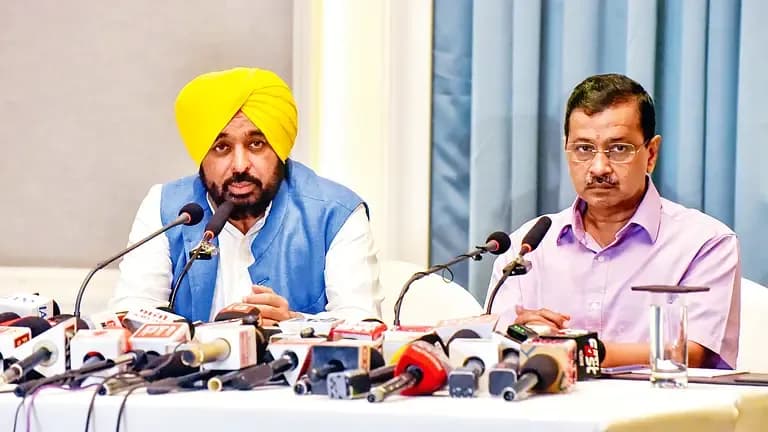
The Aam Aadmi Party (AAP) in Punjab is facing renewed political pressure after suspending Maur MLA Sukhveer Singh Maiserkhana, who publicly raised concerns about teacher shortages in government schools attended by his two children. The suspension has intensified a debate over education, party discipline and internal dissent ahead of the 2027 Punjab Assembly elections.
The AAP suspended Maiserkhana on Saturday, October 3, 2026, for alleged anti-party activities and indiscipline, shortly after he released a video criticising the state government's handling of staffing shortages in government schools. The party rejected his allegations, accusing him of spreading misinformation about the condition of a School of Eminence in Bathinda district.
Sukhveer Singh Maiserkhana Questions Punjab's Education System
In his video, Maiserkhana said he was speaking as a father concerned about his children's future. Both his children attend government schools, making his decision to rely on the public education system a central part of the controversy.
The first-time MLA alleged that he had repeatedly raised the teacher shortage issue with senior AAP leaders, including Chief Minister Bhagwant Mann and former Delhi Deputy Chief Minister Manish Sisodia, but had not received a satisfactory response.
Maiserkhana questioned the government's claims of an education revolution and said that even Schools of Eminence, presented as model institutions, needed adequate teaching staff.
He said he had grown frustrated with repeatedly requesting more teachers and suggested that he could be denied a party ticket for the 2027 Assembly elections. However, he maintained that he would continue raising issues affecting the public.
His decision to enrol his children in government schools had previously attracted attention. He had explained that political leaders should have confidence in public education if they expect ordinary families to use government schools.
AAP Rejects Allegations, Cites School Staffing Records
The AAP defended its decision to suspend Maiserkhana and disputed his account of staffing conditions at the School of Eminence in Bathinda.
According to the party, an official record issued by the school's principal on September 29 showed that the institution had 30 sanctioned teaching posts, of which 25 were filled. The staff included one principal, seven lecturers, 15 Master Cadre teachers and two computer science teachers.
The school reportedly had 580 students studying in Classes 6 to 12 across 19 sections. Five sanctioned teaching posts remained vacant, and the principal had already requested that the vacancies be filled, along with additional posts where necessary.
The AAP argued that these figures contradicted the claim that only one teacher was on duty across the entire school. It accused the MLA of presenting misleading information and attempting to damage the party's reputation.
The party also said elected representatives were expected to maintain discipline and factual accuracy in public statements. It maintained that public allegations intended to undermine the organisation could invite disciplinary action.
The two sides therefore presented different accounts: Maiserkhana highlighted staffing shortages and what he described as ignored requests for help, while the AAP cited school records to dispute his characterisation of the institution's staffing situation.
Earlier Disputes Involving AAP MLAs
Maiserkhana's suspension comes amid earlier instances of disagreements between AAP legislators and the party leadership in Punjab.
In September 2025, Sanour MLA Harmit Singh Pathanmajra criticised the state government's handling of floods and objected to what he described as interference by the party's Delhi leadership. His security cover was subsequently withdrawn, and he was booked by Patiala Police in a case involving allegations of rape, cheating and criminal intimidation.
Pathanmajra described the case as politically motivated and alleged that he was being targeted. Opposition parties linked the police action to his criticism of the government, while the AAP maintained that the law was taking its course.
In June 2025, Amritsar North MLA Kunwar Vijay Pratap Singh was suspended from the AAP for five years after opposing the arrest of Shiromani Akali Dal leader Bikram Singh Majithia in a disproportionate-assets case. He questioned the manner in which the Vigilance Bureau had conducted the operation.
These incidents have contributed to a wider political debate about how the party handles public criticism from its elected representatives.
Seven AAP Rajya Sabha MPs Defect to BJP
The controversy surrounding Maiserkhana also follows a major setback for the AAP in Parliament.
In April 2026, seven of the party's 10 Rajya Sabha MPs crossed over to the Bharatiya Janata Party (BJP). Six of the seven were from Punjab: Raghav Chadha, Sandeep Pathak, Vikramjit Singh Sahney, Rajinder Gupta, Ashok Mittal and Harbhajan Singh.
The MPs invoked the two-thirds merger provision under anti-defection rules, and their merger with the BJP was accepted by the Rajya Sabha Chairman.
The defections and the disputes involving Punjab MLAs have given opposition parties further grounds to question the AAP's organisational unity as the next Assembly election approaches.
Congress, BJP and SAD Target Bhagwant Mann Government
Opposition parties have seized on Maiserkhana's allegations to challenge the AAP government's claims about its education reforms.
Punjab Congress president Pargat Singh alleged that the incident exposed shortcomings in the government's education narrative. He questioned whether AAP legislators could freely raise concerns about issues affecting Punjab and accused the party leadership in Delhi of exercising excessive influence over the state government.
BJP leaders also criticised the AAP, arguing that the MLA's concerns raised questions about the government's claims of an education revolution.
Shiromani Akali Dal president Sukhbir Singh Badal said the controversy had undermined the AAP's claims about its Sikhya Kranti initiative. He questioned the emphasis on promoting Schools of Eminence when teaching vacancies remained.
Congress MP Sukhjinder Singh Randhawa also raised questions about the accessibility of the Chief Minister to members of his own party.
The AAP, meanwhile, maintained that concerns should be raised through internal party channels and defended its right to take disciplinary action when elected representatives publicly breach party discipline.
AAP Faces Political Test Ahead of Punjab Election 2027
The AAP won a sweeping victory in the 2022 Punjab Assembly elections, securing 92 of the state's 117 seats and forming the government under Bhagwant Mann. The party's education reforms were among the prominent elements of its governance agenda.
However, the latest controversy places education, government-school staffing and internal party discipline back in the political spotlight. The dispute is particularly significant because Maiserkhana has made his own children's experience in government schools central to his criticism.
For the Congress, BJP and Shiromani Akali Dal, the incident offers an opportunity to challenge the AAP's claims about governance and public services. The AAP, in turn, must defend its education record while managing disagreements within its organisation.
As Punjab approaches the 2027 Assembly elections, the controversy surrounding Maiserkhana could become part of a broader debate about the quality of public education, accountability in government and the freedom of elected representatives to raise concerns.
Ultimately, the dispute highlights two competing questions for Punjab voters: whether the government's education policies are delivering adequate staffing and facilities, and whether political parties can address internal criticism without allowing disagreements to undermine public confidence.



Join the discussion
Comments (0)