R Veeramani POCSO Case Raises Questions Over Police Probe as Vijay Targets Stalin

`The R Veeramani POCSO case has become a major point of political and legal controversy in Tamil Nadu. What began with a complaint and a video has since developed into a wider investigation, with the handling of the original police probe now attracting as much attention as the allegations against the accused.
The case has also entered the political arena. Tamilaga Vettri Kazhagam chief and Chief Minister C Joseph Vijay has questioned former Chief Minister M K Stalin over the way the case was handled during the previous DMK government. Stalin, however, has rejected allegations that his government attempted to protect Veeramani and has accused the ruling party of using the matter for political purposes.
The controversy comes at a sensitive time for Tamil Nadu politics, with the case being raised during campaigning for the Madurantakam and Dharapuram bypolls.
How the Case Began
The case was registered in October 2025 after police received a pen drive containing a video that allegedly showed the sexual abuse of a minor girl.
The initial investigation was handled by the Chennai Police. Investigators reportedly faced difficulties in identifying the girl seen in the video and in gathering sufficient evidence to proceed with the case.
In February 2026, police moved towards closing the investigation. However, the Special POCSO Court did not accept the closure report and ordered further investigation.
That decision became an important turning point in the case.
The renewed investigation eventually led to the identification of the survivor. Her statement was later recorded before a Judicial Magistrate, giving investigators a new direction in the case.
Why the Police Investigation Is Under Scrutiny
The controversy is not limited to the allegations against R Veeramani. Questions have also been raised about the manner in which the original investigation was conducted.
The central issue is why a case involving alleged sexual abuse of a minor and video evidence moved towards closure before the court ordered further investigation.
The later developments have naturally brought attention to the decisions taken during the earlier investigation.
Senior IPS officers A Arun and N Kannan were subsequently placed on compulsory wait. The government orders did not themselves establish wrongdoing by either officer, but the action came as scrutiny of the police handling of the case increased.
The Tamil Nadu government also constituted a four-member all-women Special Investigation Team to investigate the case.
The SIT's role has therefore become particularly important. Its investigation is expected to examine not only the allegations against the accused but also the circumstances surrounding the earlier police probe.
Vijay Questions the Previous DMK Government
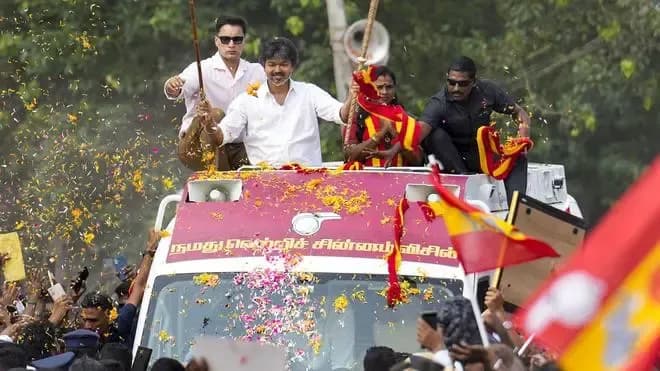
The case became a political issue during the campaign for the Madurantakam bypoll.
TVK chief C Joseph Vijay publicly questioned M K Stalin over the handling of the case during the DMK government's tenure.
Vijay alleged that a complaint received during the previous administration had effectively been allowed to disappear and demanded an explanation from Stalin.
The attack gave the TVK an opportunity to present the case as an example of what it described as failures in the previous government's handling of law and order.
However, the political allegations should be distinguished from established facts. There is no finding in the material examined here that M K Stalin personally ordered officials to protect Veeramani.
That distinction is important because responsibility for an investigation cannot automatically be attributed personally to a political leader simply because the investigation took place while that leader's government was in office.
Stalin Rejects the Allegations
M K Stalin has rejected the suggestion that his government attempted to protect Veeramani.
The former Chief Minister has maintained that his government did not issue any instruction to shield the accused and has called for anyone involved in the alleged offences or in protecting the accused to face legal action.
Stalin has also accused Vijay of turning the issue into an electoral matter.
The exchange between the two leaders has consequently shifted the case from being solely a criminal investigation to becoming part of a larger political battle between the DMK and TVK.
For Vijay, the case provides an opportunity to question the previous administration's record. For Stalin and the DMK, the challenge is to explain the earlier investigation while rejecting allegations of deliberate political interference.
CPI(M) Also Questions the Earlier Investigation
The controversy has also drawn criticism from the CPI(M).
CPI(M) state secretary P Shanmugam questioned why the police did not pursue the investigation more effectively after registering an FIR.
The party has also questioned the decision to move towards closure and called for stronger action against officers facing scrutiny.
The CPI(M)'s position is significant because it does not simply accept the narrative presented by either the ruling TVK or the opposition DMK. While the party has criticised the earlier investigation, it has also pointed out that the decisive intervention in keeping the case alive came from the Special POCSO Court.
The Investigation Widens
The case has continued to expand as investigators examine additional allegations.
The renewed investigation led to the arrest of R Veeramani and two associates on August 29, according to the report.
The police investigation subsequently identified additional survivors and examined further complaints.
The widening probe has increased pressure on investigators to determine whether the allegations are connected and whether there were failures in the earlier handling of information.
At the same time, allegations made in complaints must be treated carefully. A complaint or allegation does not by itself establish guilt. The facts have to be established through investigation and, where necessary, judicial proceedings.
Why the Case Has Become Politically Important
The timing of the controversy has added to its political importance.
Tamil Nadu is in the middle of campaigning for the October 6 bypolls in Madurantakam and Dharapuram. The case has therefore become part of the wider electoral contest.
Vijay has used the controversy to attack the previous DMK administration, while Stalin has accused the TVK government of using a sensitive case for political advantage.
The issue also places the government under pressure to demonstrate that the present investigation is independent and focused on establishing facts rather than strengthening a political narrative.
For the DMK, the question is different. The party has to defend the actions of an administration under which the original FIR and investigation took place while making clear that no individual should be held responsible for an offence without evidence.
What the SIT Investigation Could Establish
The Special Investigation Team now has several important questions to answer.
Investigators will have to examine the original complaint, the evidence received by police, the reasons for the attempted closure and the subsequent judicial intervention.
They will also have to examine how the survivor was eventually identified and what new information emerged during the renewed investigation.
The additional allegations will require separate verification as well. Investigators will have to determine whether the complaints relate to separate incidents and whether there is any connection between them.
Another important issue is whether there was any deliberate suppression of evidence or complaints. If investigators find evidence of wrongdoing by anyone involved in the investigation, the appropriate legal and departmental process will have to follow.
Until then, claims of a political cover-up remain allegations rather than established findings.
What Happens Next
The SIT investigation is likely to remain the central focus of the case.
Further complaints may be examined as the investigation continues, while investigators are expected to collect evidence, record statements and determine the legal action required in each case.
The political debate is also likely to continue.
With the bypolls approaching, the DMK and TVK have clear political reasons to present very different versions of the controversy. Vijay is likely to continue questioning the previous administration, while Stalin and the DMK are expected to challenge what they describe as political exploitation of the case.
Ultimately, the investigation and the courts will determine what can be established as fact.
Conclusion
The R Veeramani POCSO case has developed into more than a criminal investigation. It has become a test of police accountability, judicial oversight and political responsibility in Tamil Nadu.
The case moved towards closure during the earlier investigation but was kept open after the Special POCSO Court ordered further investigation. Subsequent developments, including the identification of the survivor, arrests and the widening probe, have brought renewed attention to the circumstances surrounding the original investigation.
The political confrontation between C Joseph Vijay and M K Stalin has added another layer to the controversy, particularly because the case has surfaced during an important period of electoral campaigning.
But the political debate should not overshadow the central issue. The priority must remain the investigation of the allegations, protection of survivors, preservation of evidence and accountability wherever wrongdoing is established.
For now, the most important questions remain with the investigators and the courts. Their findings, rather than political claims from either side, will ultimately determine what happened and who, if anyone, should be held responsible.`
Join the discussion
Comments (0)