Tamil Nadu Political Row Escalates as DMK Announces Statewide Protests Against CM Vijay
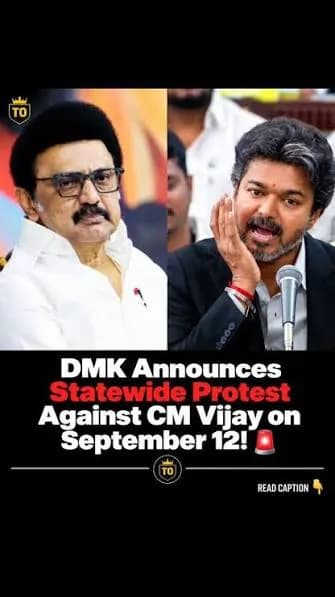
DMK Announces Statewide Protests
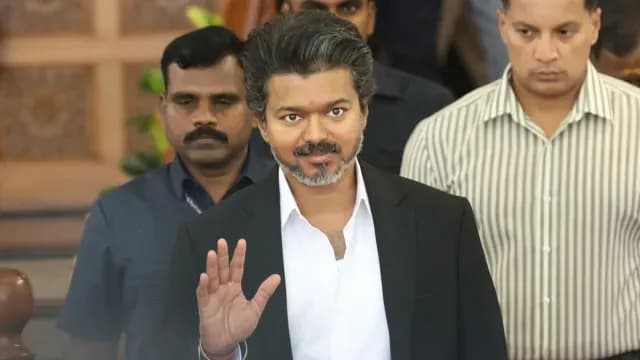
Tamil Nadu's political atmosphere has become more heated after the DMK announced protests across district headquarters on September 12 against remarks attributed to Chief Minister C. Joseph Vijay.
According to the DMK, the remarks made in the Assembly were disrespectful towards M.K. Stalin and the contributions of senior Dravidian leaders. The party has called on its cadres and supporters to participate in demonstrations across the state.
The protests are expected to put the political differences between the DMK and Vijay's political camp firmly in the spotlight.
Vijay's Remarks Trigger Political Debate
The controversy centres on comments attributed to Vijay during an Assembly discussion involving Stalin's political career and his arrest during the Emergency period.
The DMK has strongly objected to the remarks and accused Vijay of making politically motivated statements. The party has also criticised what it describes as misleading political claims and the use of the Assembly for partisan purposes.
The dispute has quickly become part of the wider Politics (opens in a new tab) of Tamil Nadu.
DMK Targets Vijay's Political Approach
The DMK's criticism extends beyond the specific remarks. The party has raised several objections to Vijay's political approach, including his statements on government schemes, the Dravidian model of governance and the functioning of the state administration.
The confrontation is significant because Vijay's political movement has emerged as an important new force in Tamil Nadu.
The state's established Political Parties (opens in a new tab) are therefore closely watching how the new political formation positions itself against the DMK and other major players.
Protests Add to Growing Political Competition
The announcement of statewide demonstrations demonstrates that the dispute has moved beyond verbal exchanges between individual leaders.
Party workers are expected to participate in protests at district headquarters, giving the controversy a wider organisational dimension. The demonstrations could also provide the DMK with an opportunity to reinforce its political narrative among its grassroots supporters.
For Vijay's camp, the controversy represents another test of how it responds to criticism from an established political organisation.
Tamil Nadu's Political Landscape Changes
Tamil Nadu has traditionally been dominated by strong regional political movements, with the DMK and AIADMK playing central roles for decades.
The emergence of Vijay's party has added a new dimension to the state's political competition. The coming period is likely to see increased campaigning, public meetings and political Rallies (opens in a new tab) as parties attempt to strengthen their support bases.
The latest confrontation could therefore be an early indication of the intensity of political competition that lies ahead.
What Happens Next?
The immediate focus will be on the DMK's statewide protests and the response from Vijay's political camp.
If both sides continue to escalate their criticism, the dispute could become a larger campaign issue. It may also influence how voters assess the leadership styles and political priorities of the competing parties.
With Tamil Nadu's political environment becoming increasingly competitive, issues involving leadership, governance and political legacy are expected to remain central to the state's public debate
“Political tensions have intensified in Tamil Nadu after the DMK announced statewide protests against Chief Minister C. Joseph Vijay over remarks concerning Chief Minister M.K. Stalin and the Dravidian political legacy. The confrontation adds another major issue to the state's increasingly competitive political landscape.”
Related Keywords
Join the discussion