West Bengal Election Spending Under Scrutiny! ADR 2026 Report Reveals Campaign Costs and Funding Transparency Gaps
Introduction
Political campaign expenditure has become an important subject in India's electoral system. With elections involving extensive public meetings, rallies, transportation, advertisements and digital campaigning, understanding how political candidates finance their campaigns is essential for electoral transparency.
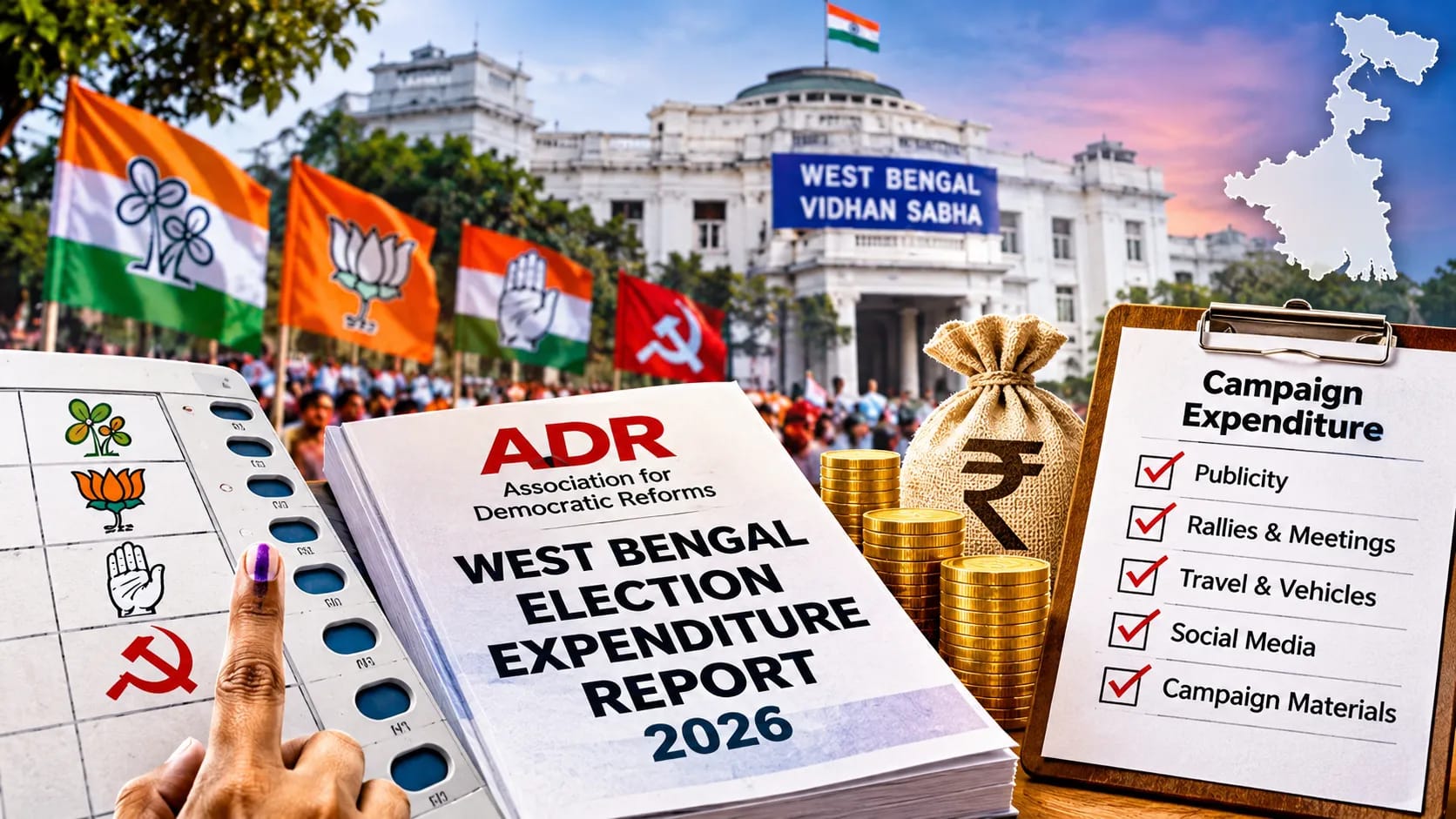
West Bengal's 2026 Assembly elections have brought this issue into focus following the publication of an analysis by the Association for Democratic Reforms (ADR) and West Bengal Election Watch.
The September 1, 2026 report examines the election expenditure statements of all 294 newly elected MLAs. It provides information about campaign expenses, sources of funding and the financial declarations submitted by candidates.
What does the ADR 2026 report reveal?
According to ADR, the expenditure limit for individual Assembly candidates in West Bengal was ₹40 lakh.
The analysis found:
Average election expenditure among the 294 MLAs was ₹23.86 lakh.
Forty-three MLAs, representing 15%, declared expenditure below 50% of the permitted limit.
BJP MLAs recorded average expenditure of ₹24.20 lakh.
AITC MLAs recorded average expenditure of ₹23.66 lakh.
Two Congress MLAs recorded average expenditure of ₹15.82 lakh.
Campaign spending and its different components
Election expenditure includes several activities that help candidates reach voters.
The ADR analysis covers expenses relating to:
Public meetings and processions.
Electronic and print media campaigning.
Campaign workers.
Vehicles used during election campaigns.
Virtual and social media campaigning.
Campaign materials and publicity.
Mandatory publication of criminal antecedent declarations.
One notable finding was that 212 MLAs, or 72% of those analysed, declared expenses on campaign vehicles.
Political party funding and transparency
Candidate expenditure is only one part of election financing. Political parties also spend money through central headquarters and state units.
Separate party-level expenditure disclosures reported by the media provide another perspective on West Bengal's election finances.
According to a September 2026 report by The Week, the BJP declared expenditure of ₹286.99 crore in West Bengal, including ₹217.16 crore on general campaigning and ₹69.83 crore on candidates and related expenses.
Congress reported ₹42.08 crore through its central headquarters and state unit, while the CPI(M)'s West Bengal unit reported ₹8.23 crore.
What happens next?
The availability and quality of financial disclosures will remain important for monitoring electoral expenditure in West Bengal.
The Election Commission's reporting framework, candidate expenditure statements and party audit disclosures provide different but complementary information.
Conclusion
The 2026 ADR analysis offers an important look at the financial side of West Bengal's Assembly elections. The findings highlight the scale of candidate expenditure and the importance of accurate financial declarations.




Join the discussion
Comments (0)