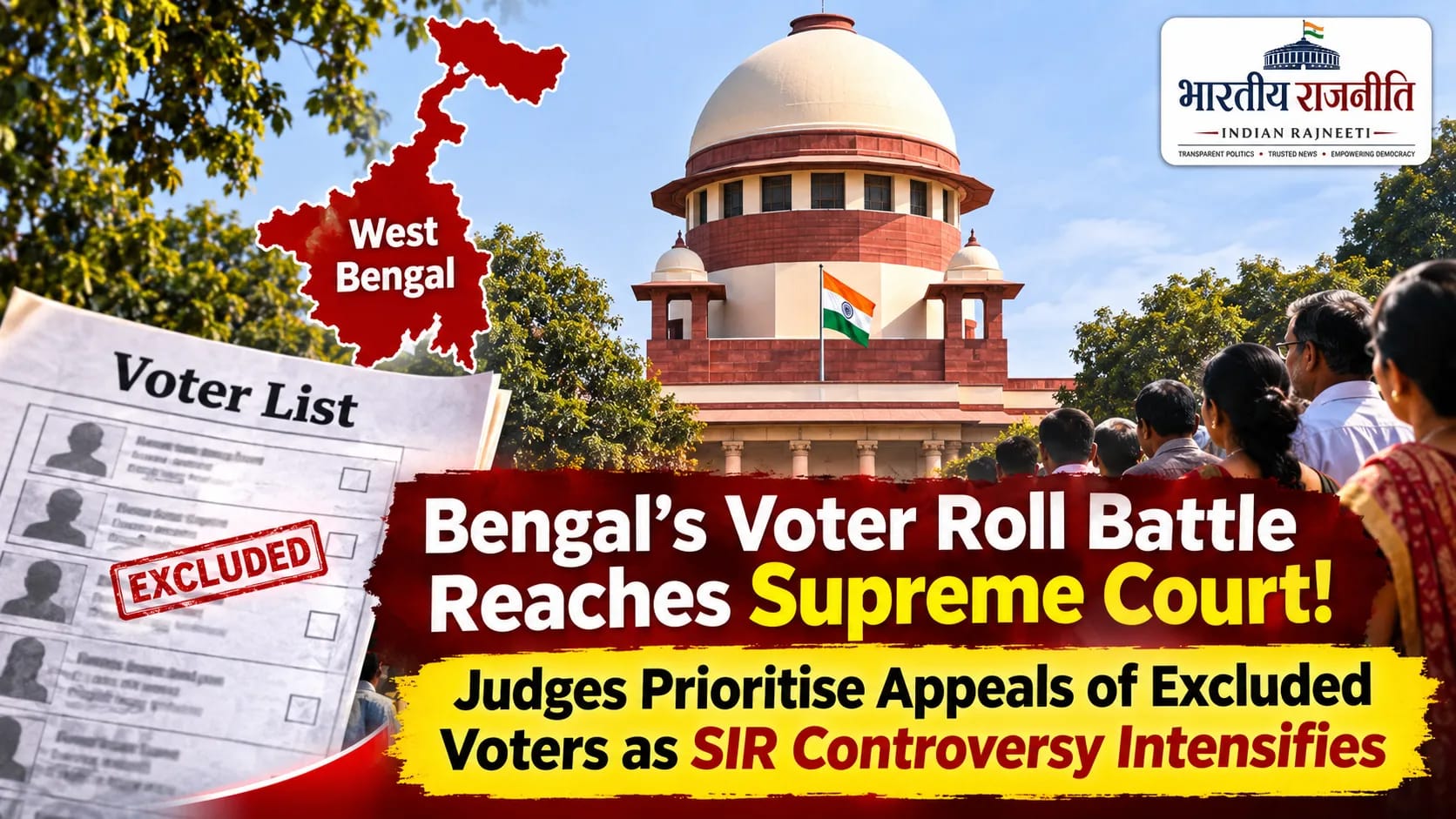
Bengal's Voter Roll Battle Reaches Supreme Court! Judges Prioritise Appeals of Excluded Voters as SIR Controversy Intensifies
Sucharita Mohanty 25 Nov 2026 3 min read 3 views
|
|
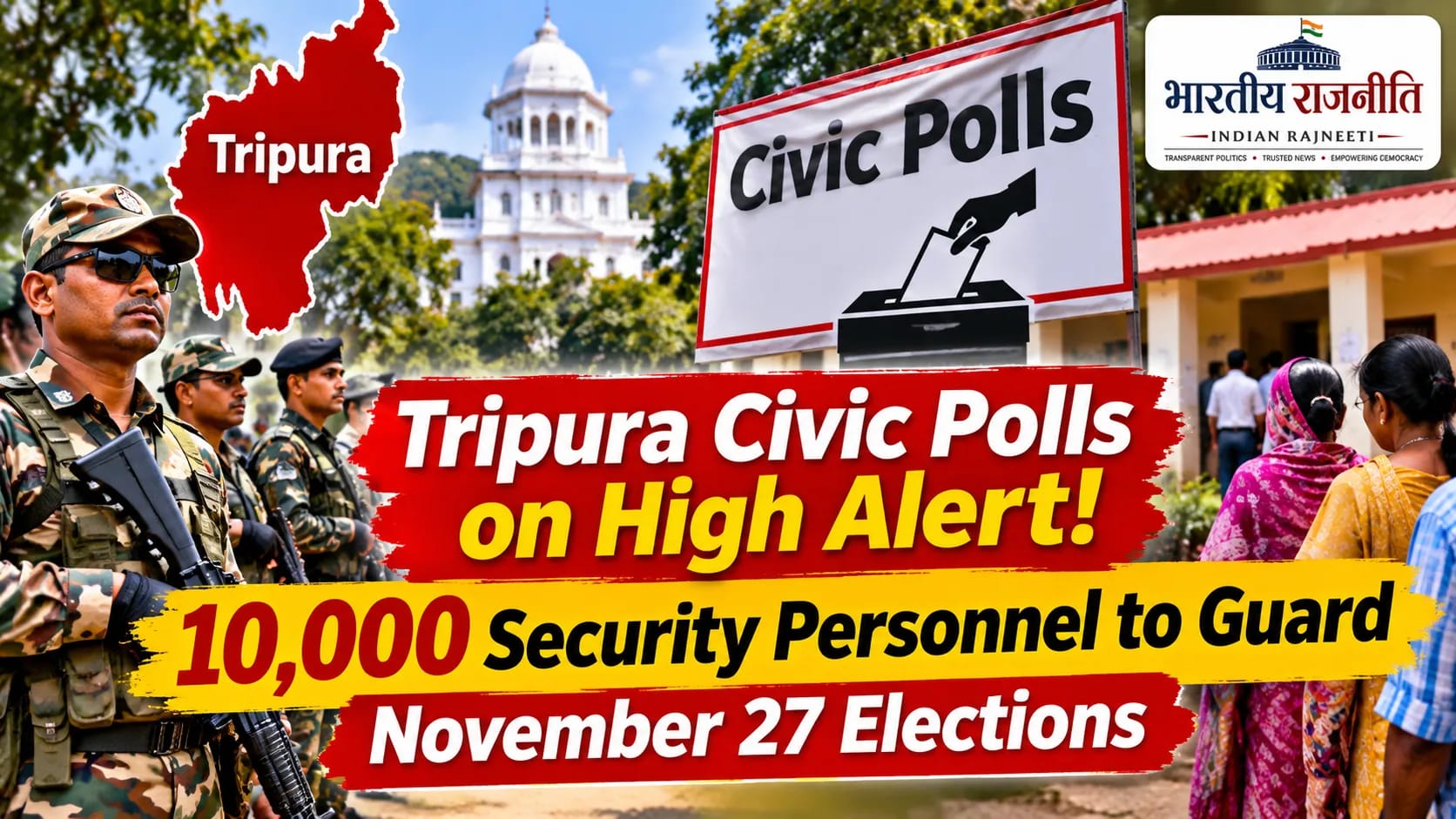
Tripura is preparing for a major civic electoral exercise with more than 10,000 security personnel expected to protect polling stations. With 16 civic bodies going to the polls, political attention is increasing across the state.
By Sucharita Mohanty • 3 views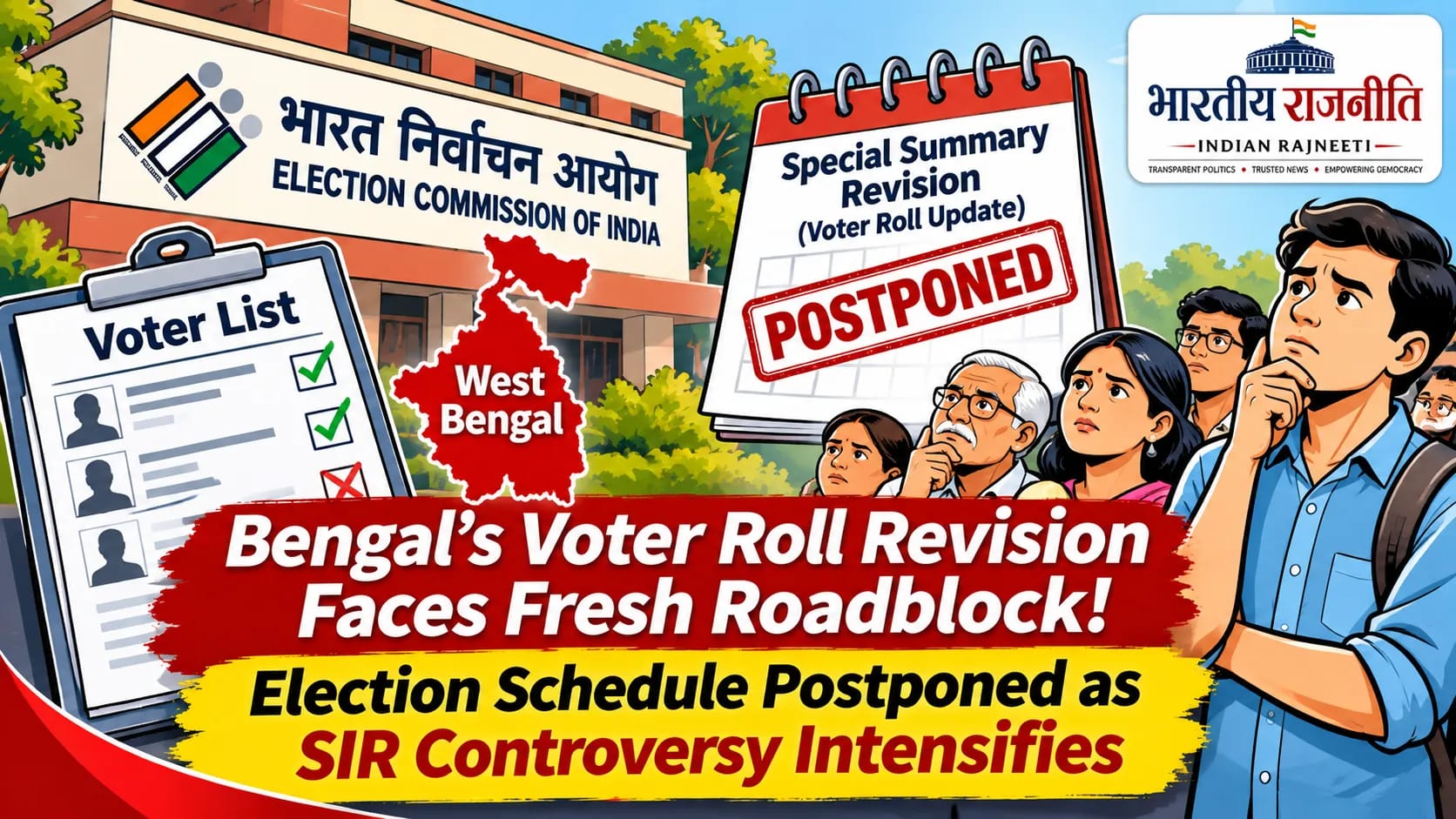
West Bengal's controversial Special Intensive Revision (SIR) of electoral rolls has reached another important turning point. The Supreme Court has directed appellate tribunals dealing with the voter-list dispute to prioritise appeals filed by people whose names were removed from electoral rolls.
The intervention has intensified the political debate surrounding voter rights, electoral transparency and the responsibility of election authorities to ensure that eligible citizens are not deprived of their democratic participation.
The issue has become particularly significant because electoral registration is not simply an administrative exercise. It directly determines whether an eligible citizen can participate in elections.
For thousands of families waiting for decisions on their appeals, the latest judicial direction could prove extremely important.
The Supreme Court directed the appellate tribunals to divide the pending appeals into two separate categories.
The first category includes appeals filed by voters whose names were deleted from electoral rolls during the SIR exercise.
The second category includes appeals challenging the inclusion of certain individuals in the voter lists.
The Court directed that appeals involving excluded voters should receive priority, while challenges against the inclusion of names could be deferred for the time being.
The direction reflects the urgency of examining cases where citizens claim that their names were wrongly removed.
The Court also emphasised the need to improve the functioning of the appellate mechanism so that pending cases can be addressed more efficiently.
The scale of the dispute is enormous.
According to figures presented during the proceedings, approximately 38.31 lakh appeals have been filed before the appellate tribunals.
Around 22.21 lakh appeals concern voters seeking restoration of their deleted names, while approximately 16.10 lakh challenge the inclusion of certain names.
The large number of pending appeals has raised questions about whether the existing tribunal structure can process applications quickly enough.
For affected voters, delays are especially concerning because electoral deadlines can determine whether they are able to participate in upcoming elections.
The Supreme Court also directed that appeals concerning voters within the Kolkata Municipal Corporation area should receive priority.
If eligible voters remain excluded while their appeals are pending, they could face difficulties participating in the electoral process.
The Court has also asked the Election Commission to consult the Chief Justice of the Calcutta High Court regarding increasing the strength of the appellate tribunals.
Improving accessibility and providing adequate working space are also important parts of the effort to accelerate the process.
The SIR controversy has become one of the most important political debates in West Bengal.
Political parties are likely to examine the latest judicial intervention from different perspectives.
For the opposition, the priority given to excluded voters provides an opportunity to intensify demands for electoral safeguards and transparency.
For the ruling establishment, the challenge will be to ensure that the revision process and subsequent appeals are handled fairly and efficiently.
However, the central issue should remain above political competition: every eligible citizen must receive a fair opportunity to establish their voting rights.
The controversy also places the Election Commission's administrative machinery under greater scrutiny.
The immediate challenge is the disposal of pending appeals.
The tribunals must prioritise exclusion-related cases and improve their capacity to handle applications.
Voters will be watching closely for decisions regarding their individual cases.
The Election Commission will also have to coordinate with the judicial authorities to strengthen the appellate process.
The final outcome will depend on how efficiently these directions are implemented.
West Bengal's SIR controversy has entered a decisive phase.
The Supreme Court's direction to prioritise appeals filed by excluded voters places democratic participation at the centre of the debate.
The coming weeks will be crucial for thousands of people awaiting decisions on their electoral status.
Political arguments may continue, but the fundamental principle remains clear: eligible citizens must not lose their democratic voice because of unresolved administrative disputes.
The real test will be whether the authorities can translate judicial directions into timely and effective relief for affected voters.
“West Bengal's voter-list controversy has entered another crucial phase as the Supreme Court directs appellate tribunals to prioritise appeals from excluded voters. With millions of cases involved, the political and administrative implications are growing.”
West Bengal's electoral revision process has encountered another setback after the scheduled Special Summary Revision was postponed. The development has intensified concerns over voter registration and the pending SIR appeals.
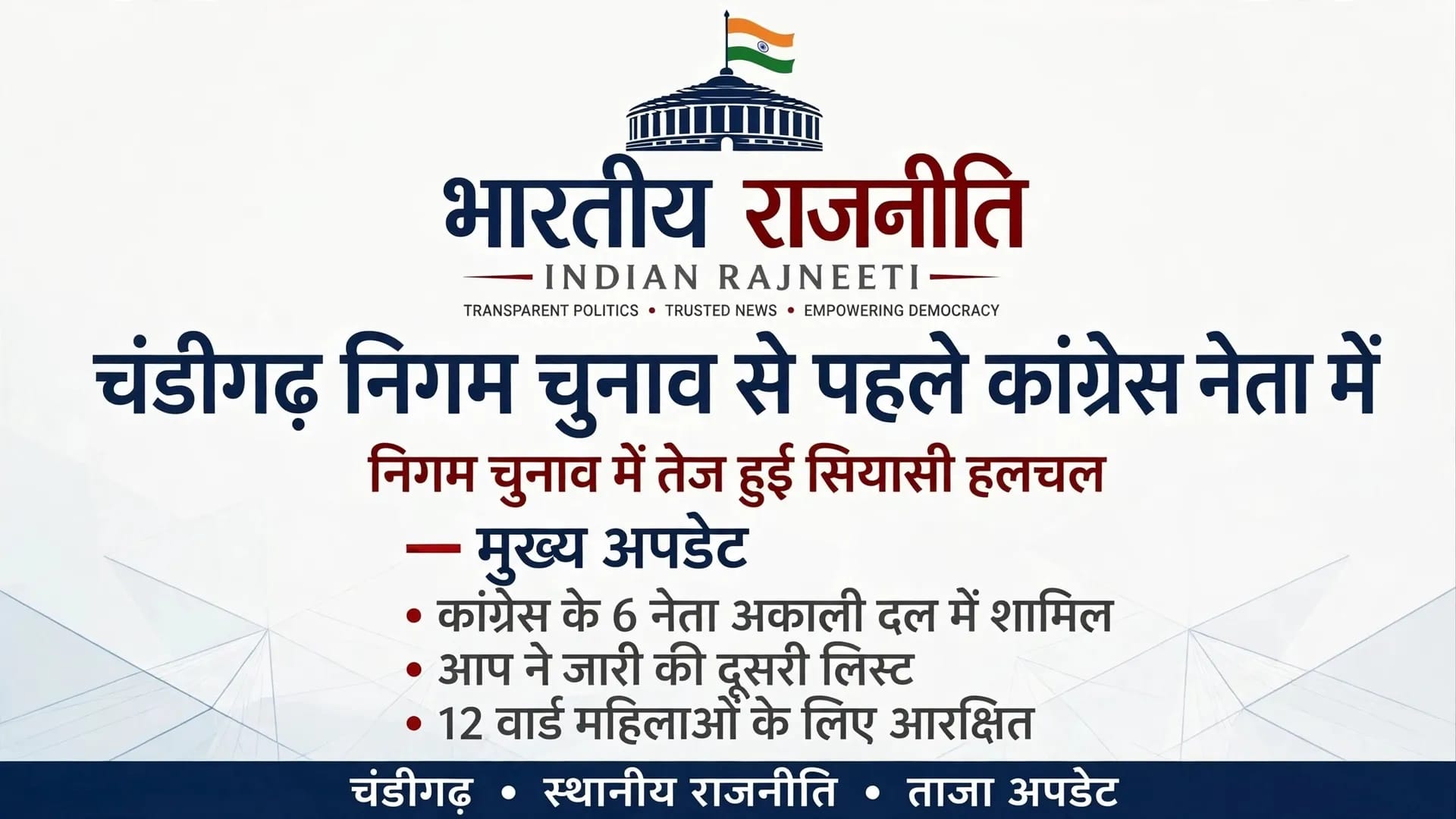
23 दिसंबर को होगा मतदान आप ने जारी की दूसरी लिस्ट
By Karishma • 3 views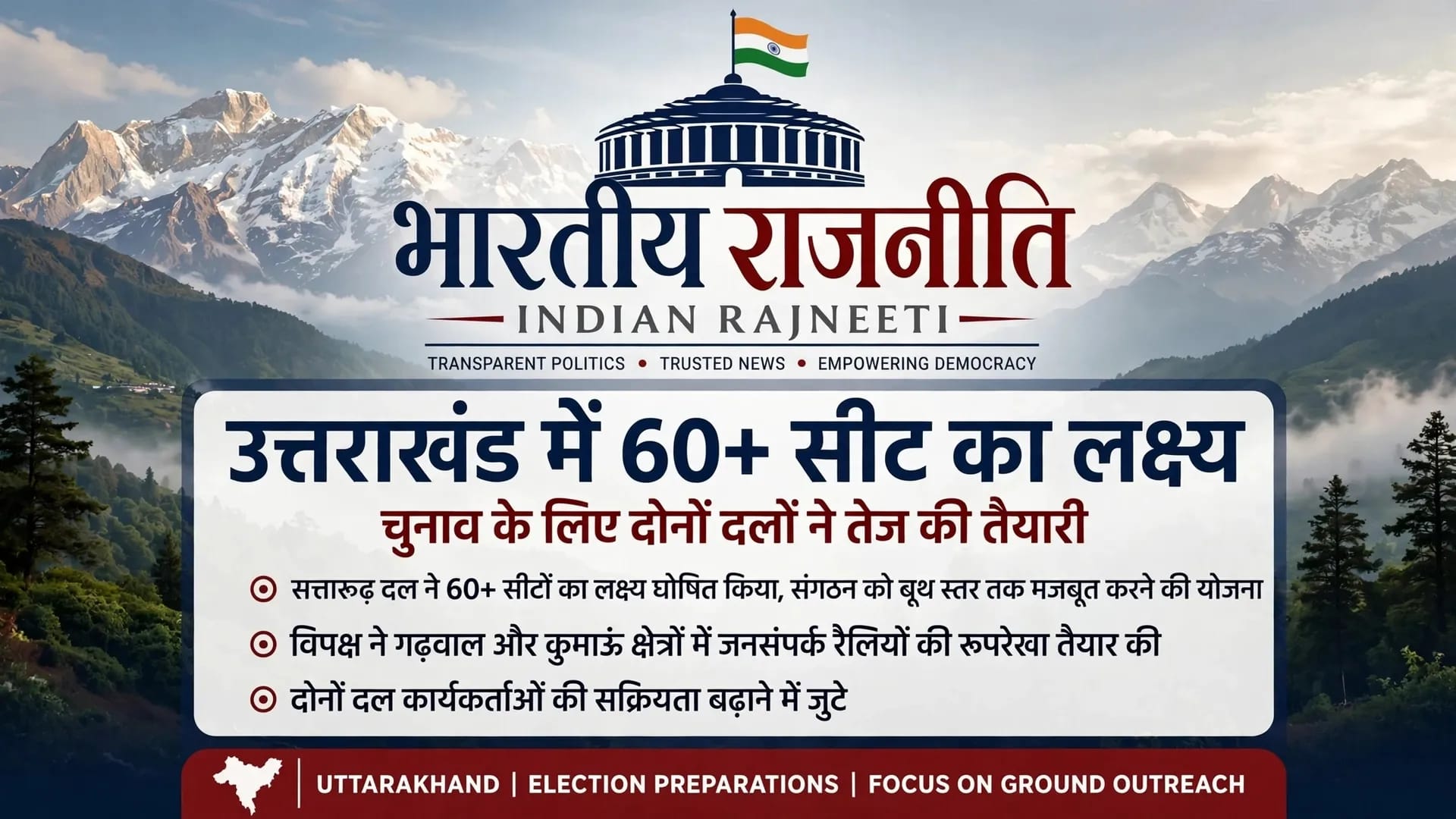
2027 चुनाव के लिए दोनों पार्टियों ने तेज की तैयारी
By Karishma • 4 viewsOur team is here to help with general questions, partnerships, corrections and feedback.


Join the discussion
Comments (0)