Chhattisgarh's Sai Cabinet Pushes Rural Water Reform, Approves ₹40.98 Crore Tribal College Support
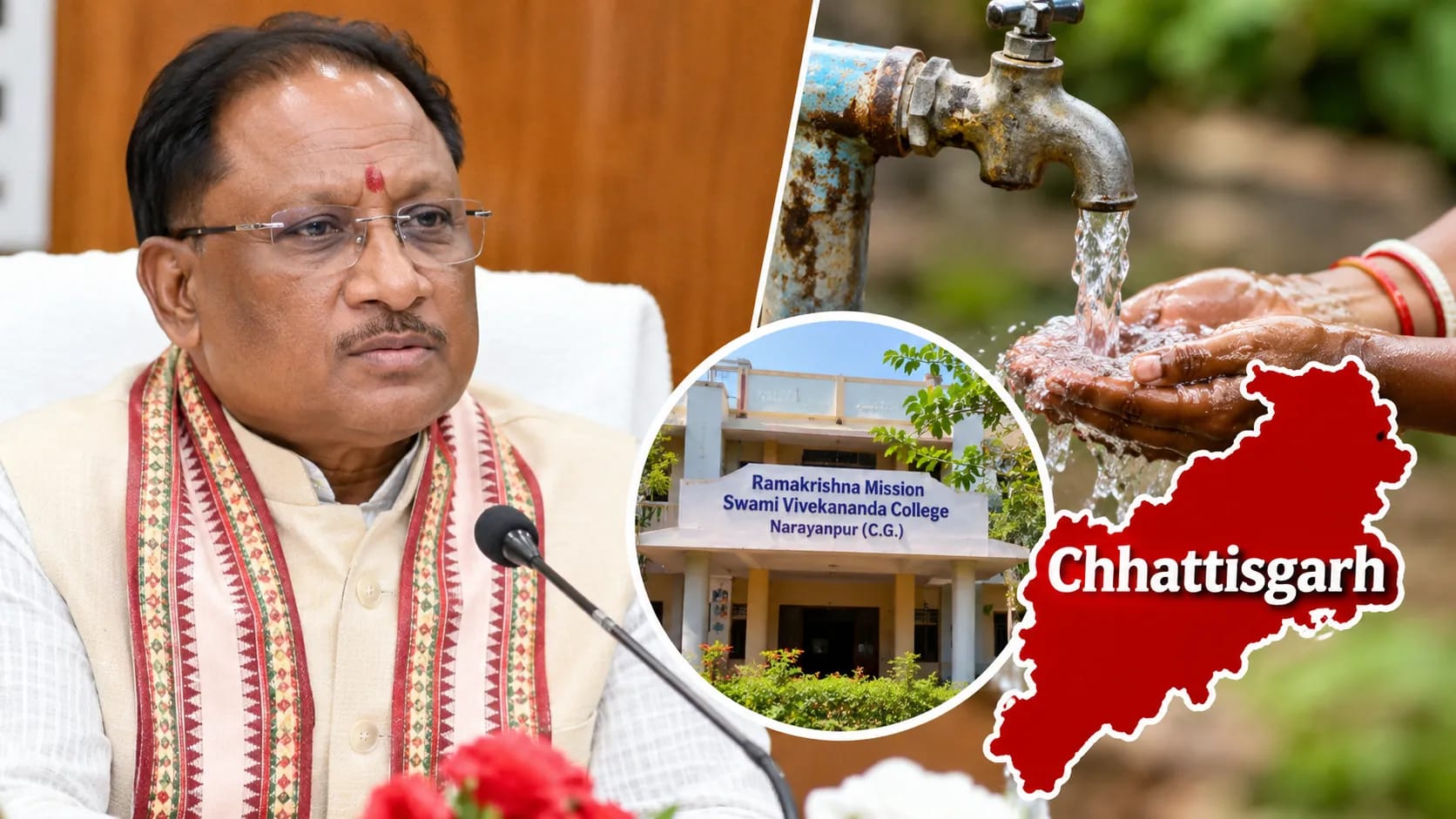
The Chhattisgarh government has announced a fresh set of decisions focused on rural drinking water management and tribal education, placing public welfare and infrastructure development at the centre of the Vishnu Deo Sai-led cabinet's latest policy agenda.
At a cabinet meeting chaired by Chief Minister Vishnu Deo Sai on November 18, the state government approved a new framework for rural tap water supply operations, maintenance and management. The cabinet also cleared financial assistance for a college in Narayanpur that is intended to improve access to higher education for students from remote tribal communities.
The decisions are significant for rural governance because the long-term success of drinking water projects depends not only on infrastructure installation but also on maintenance, funding and the ability of village-level institutions to operate systems consistently.
New rural tap water rules approved
The cabinet approved the draft of the Chhattisgarh Panchayat (Rural Tap Water Supply Operations, Maintenance and Management) Rules, 2026.
The proposed rules are intended to replace the existing 2024 framework and bring rural water management provisions in line with technical, administrative and financial standards associated with the national Jal Jeevan Mission.
Financial support for smaller Gram Panchayats
The cabinet also approved financial assistance under the Mukhyamantri Nal Jal Anudan scheme for Gram Panchayats with populations below 1,000.
Under the reported framework, eligible Gram Panchayats must collect at least 50 per cent of their monthly water charges to qualify for assistance.
This condition places responsibility on local bodies to maintain some revenue collection while receiving government support to operate water schemes.
The cabinet also approved an incentive mechanism for Gram Panchayats collecting more than 75 per cent of their annual water charges. Such local bodies will be eligible for an annual incentive of ₹50,000 under the Mukhyamantri Nal Jal Protsahan Rashi scheme.
What this means politically
For the Sai government, these decisions provide an opportunity to demonstrate a governance agenda focused on essential services and remote-area development.
Rural water supply is a politically important issue because households directly experience the reliability or failure of infrastructure. Similarly, education in tribal and geographically isolated regions remains a major development challenge.
What happens next?
The key question is whether these cabinet decisions lead to sustained improvement in rural water systems and education access, particularly in communities that have historically faced infrastructure challenges.
Chhattisgarh's latest cabinet decisions are therefore more than administrative approvals. They represent a policy test for rural service delivery, local governance and tribal development under the current state government.




Join the discussion
Comments (0)