Manipur Assembly Elections 2027: Why NRC Before Census Has Become a Major Political Issue | Indian Rajneeti
BREAKING
Uttar Pradesh Politics Heats Up as Yogi Adityanath Targets 115 Key Seats Ahead of 2027 Assembly Polls • Rajasthan Civic Polls 2026: Voting Begins as BJP Faces Rebel Challenge • Yogi Adityanath Targets 2027 UP Elections, Says BJP Will Return With a Grand Majority
Manipur Assembly Elections 2027: Why NRC Before Census Has Become a Major Political Issue
Haripriya 22 Sept 2026 9 min read 333 views
Census Deferred in Manipur Amid NRC Demand
The Centre on September 1, 2026, decided to defer the Census exercise in Manipur following a high-level meeting chaired by Union Home Minister Amit Shah.
The meeting was attended by Manipur Governor Ajay Kumar Bhalla, Chief Minister Yumnam Khemchand Singh, Union Home Secretary Govind Mohan and other senior officials. According to the government, the meeting considered the demand from sections of the population that the Census should be conducted only after implementation or updation of the National Register of Citizens.
The Manipur High Court also directed that the Census operation remain deferred until further orders while hearing petitions concerning the exercise. The next hearing was scheduled for October 12, 2026, according to All India Radio's report on the proceedings.
Maharashtra's decision to declare 265 talukas drought-affected has triggered questions from both ruling alliance leaders and the Opposition. While some areas represented by Mahayuti leaders have been excluded, the MVA has questioned the transparency of the assessment process.
The development has brought the NRC debate back to the centre of political discussion in the state.
Why Are Groups Demanding an NRC Before the Census?
The demand is driven by several overlapping concerns involving citizenship, migration, demographic change and political representation.
Civil society organisations in the Imphal Valley and sections of the Naga-inhabited hill areas have argued that an NRC should be updated before new population figures are recorded through the Census.
Their concern is that migration from neighbouring Myanmar and other demographic changes could affect future population data. These groups want citizenship records to be verified before the Census so that, according to their argument, population figures reflect the population they consider eligible to be counted as citizens.
These are political and civil-society concerns; allegations concerning illegal immigration or demographic change are contested and should not be treated as established facts without independent verification.
The 1951 NRC Baseline Debate
One of the most important aspects of the Manipur NRC debate is the proposed 1951 baseline.
Groups demanding an NRC have called for the 1951 records to be used as the basis for updating the register.
The issue gained further political significance after Manipur Home Minister Govindas Konthoujam said in the Assembly that the state government intends to use 1951 as the base year for updating the NRC. The state government has also acknowledged that it cannot carry out such an exercise on its own and would require approval from the Centre.
The proposed baseline differs from the approach used in Assam's NRC process, making the Manipur proposal particularly sensitive.
The choice of 1951 is also contested because the India-Myanmar border has historically been home to communities with cross-border ethnic and familial connections.
Why Migration From Myanmar Is Part of the Debate
The NRC debate is also connected to developments along the India-Myanmar border.
Following the 2021 military coup in Myanmar, violence in parts of the neighbouring country led people to cross into India. Some of those arriving in Manipur belonged to Chin and related communities with ethnic and familial links to Kuki-Zomi communities.
The Manipur government and organisations supporting the NRC have raised concerns about migration, new settlements, land and demographic changes.
Kuki-Zo organisations, however, have disputed the manner in which these concerns are framed and have argued that Indian citizens from the Kuki-Zo community should not be conflated with people who may have recently crossed the international border.
The issue therefore intersects with the wider ethnic tensions that have affected Manipur since 2023.
Kuki-Zo Groups Oppose NRC Before Census
The NRC demand has faced strong opposition from Kuki-Zo organisations.
The Kuki-Zo Council (KZC) has opposed conducting an NRC before the Census, describing the proposal as premature and unjustified.
The council has argued that NRC is a national exercise and that a state government or individual community should not unilaterally conduct a separate NRC. It has also argued that the Census should provide reliable demographic data before any NRC or delimitation process is considered.
The Kuki-Zo position reflects concerns that a historical documentation cut-off could have consequences for communities whose members have longstanding connections across the India-Myanmar border.
Thus, the NRC debate has become closely connected with the competing political and demographic concerns of different communities in Manipur.
Congress and BJP Have Both Supported the NRC Demand
One notable feature of the current debate is that the BJP and Congress have broadly supported the demand for an NRC before the Census, although their wider political positions in Manipur differ.
Former Manipur Chief Minister and Manipur Congress president Okram Ibobi Singh supported the demand for an NRC before the Census in August.
This put the Congress position broadly alongside the demand being raised by BJP leaders and civil society organisations seeking an NRC before the Census.
The convergence is significant because BJP and Congress are otherwise competing political forces in Manipur.
However, support for an NRC before the Census should not be interpreted as meaning that the two parties have identical positions on all issues related to Manipur's conflict, governance or future political arrangements.
Why Delimitation Is Central to the Debate
The NRC issue is also linked to delimitation of Assembly constituencies.
Manipur has 60 Assembly seats, with the current structure divided between 40 valley seats and 20 hill seats.
The current political map is based on an older delimitation exercise using historical Census data. A new Census could eventually provide demographic data relevant to a future delimitation exercise.
Sections of the valley-based political establishment have expressed concern that changes in population distribution could alter the existing balance of Assembly constituencies.
The Indian Express has reported that concerns over the possibility of changes to the 40:20 valley-hill distribution are one reason NRC, Census and delimitation have become politically interconnected in Manipur.
The issue is particularly sensitive because representation is closely tied to the state's existing ethnic and geographical divisions.
Why Was Earlier Delimitation Deferred?
The delimitation issue has a longer history.
A national delimitation exercise based on the 2001 Census was carried out between 2002 and 2008, but Manipur, along with Assam, Arunachal Pradesh and Nagaland, was excluded after the Centre deferred the process in 2008.
Security concerns and questions surrounding the reliability of the 2001 Census data in parts of the Northeast were among the factors involved.
As a result, the next Census has acquired additional political importance in Manipur because population data could eventually influence future delimitation.
NRC Is Not Yet Implemented in Manipur
It is important to distinguish between a demand for an NRC and an actual NRC exercise.
Manipur does not currently have a newly implemented NRC based on the proposed 1951 baseline.
Under Section 14A of the Citizenship Act, the power to compulsorily register citizens and maintain the National Register of Indian Citizens rests with the Central government. The Indian Express has reported that there is no legal requirement that an NRC must necessarily be conducted simultaneously across the entire country, meaning the Centre could, in principle, notify a specific exercise for a particular state or region.
However, such an exercise would require a formal decision and process from the Central government.
The Manipur government therefore cannot simply implement a state-specific NRC independently.
Centre's Other Options on Demographic Concerns
The NRC is not the only mechanism being discussed in relation to demographic concerns.
The Centre has also established a High-Level Committee on Demographic Change, announced in May 2026, to examine demographic changes associated with illegal immigration and other factors and recommend policy, legislative and administrative measures.
Other mechanisms that have been discussed include border management, verification of electoral rolls, biometric registration of migrants and identification of foreigners who may be illegally present.
These mechanisms are separate from an NRC and should not be treated as equivalent processes.
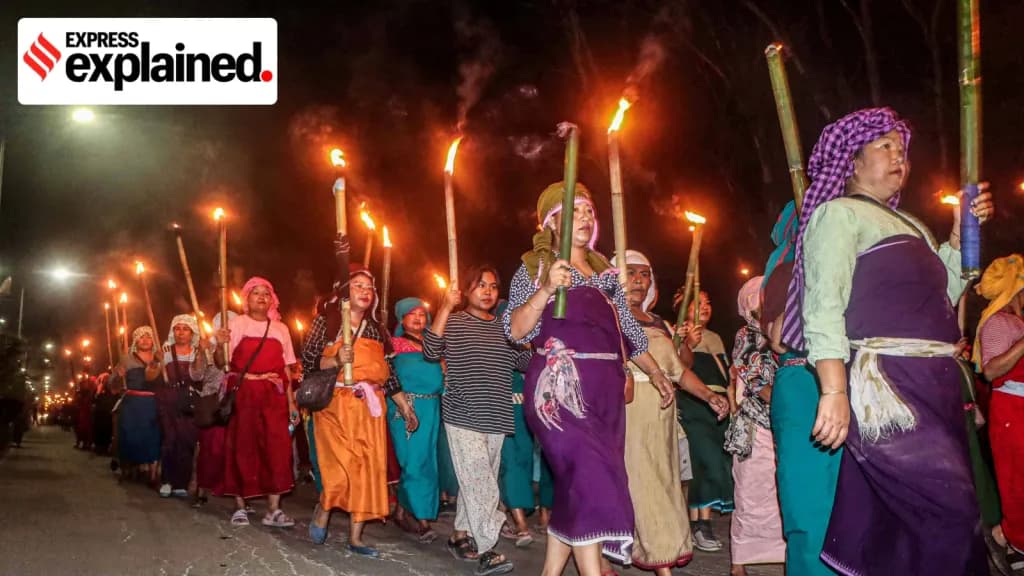
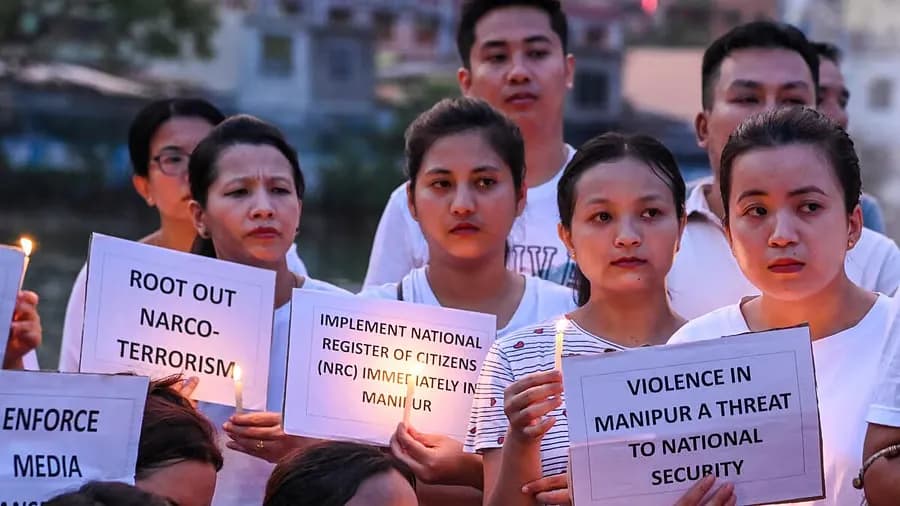
Protests Intensify Around NRC Demand
The NRC issue has generated public mobilisation in Manipur.
In June, civil society organisations organised a public rally in Imphal demanding that the 1951 NRC be updated before the Census. Fourteen civil society organisations participated in the rally.
On September 1, a 24-hour shutdown called over the NRC demand disrupted normal life in several valley districts, including Imphal East, Imphal West, Thoubal, Bishnupur and Kakching.
The protest continued despite the Centre's decision to defer the Census, with organisers saying they wanted a formal order and further action on the NRC demand.
These developments show that the Census deferment has not ended the political debate over the NRC.
The NRC debate comes as Manipur prepares for its next Assembly election.
The 2027 election is expected to be influenced by several major issues, including:
Citizenship and migration concerns
NRC and the proposed 1951 baseline
Census and future delimitation
Ethnic relations
Security and restoration of normalcy
Rehabilitation and displacement
Governance and administration
Relations between valley and hill communities
Political alliances and candidate selection
The NRC issue is therefore part of a wider political debate rather than an isolated administrative question.
Political Positions Remain Divided
The current positions can be broadly summarised as follows:
Issue Position/Development
Census in Manipur Deferred by the Centre
NRC demand Sections of civil society and political leaders want it before Census
Proposed NRC baseline 1951
BJP position Leaders have supported NRC-before-Census demand
Congress position Manipur Congress president Okram Ibobi Singh has supported NRC before Census
Kuki-Zo Council Opposes NRC before Census
Delimitation Closely linked to future Census data
Current Assembly 60 seats
Valley-Hill seat structure 40:20 under the existing arrangement
NRC implementation No new state-specific NRC has yet been implemented
Election Manipur Assembly Election 2027
Official election schedule Not yet announced
What Happens Next?
Several developments will be important in the coming months.
First, the Centre's decision on whether and how to proceed with an NRC process in Manipur will be closely watched.
Second, the question of the 1951 baseline is likely to remain contentious because different communities have different views about its implications.
Third, the Census timetable will remain important because population data could eventually feed into future delimitation discussions.
Fourth, the Kuki-Zo opposition to an NRC before the Census means the issue is likely to remain contested across communities.
Finally, political parties (opens in a new tab) are expected to make their positions on the NRC, Census, delimitation and the wider ethnic conflict part of their preparations for the 2027 Assembly election.
Conclusion
The NRC debate in Manipur has become closely connected with the state's upcoming Census, future delimitation and the political environment ahead of the 2027 Assembly election.
The Centre's decision to defer the Census followed sustained demands from sections of civil society for an NRC exercise first. The BJP and Manipur Congress leadership have broadly supported the demand, while the Kuki-Zo Council has opposed an NRC before the Census and argued that demographic data should be established first.
The proposed 1951 baseline adds another layer to the debate, particularly because of Manipur's complex history, its border with Myanmar and the continuing sensitivities between different communities.
At present, the key issue is not an already completed NRC but the question of whether, when and under what framework an NRC could be conducted in Manipur. The outcome of that debate could have implications for the Census, future delimitation and the political discourse surrounding the 2027 Assembly election.
Source: The Indian Express, All India Radio/News On AIR, India Today and other reports cited above. This article has been independently rewritten and consolidated for IndianRajneeti.
“The demand to update the National Register of Citizens (NRC) before conducting the Census has become a major political issue in Manipur ahead of the 2027 Assembly election. The Centre deferred the Census exercise in the state after discussions over the NRC demand, while Kuki-Zo organisations have opposed conducting an NRC before the Census. The debate is closely linked to concerns over migration, demographic change, citizenship documentation and the future delimitation of Assembly constituencies.”
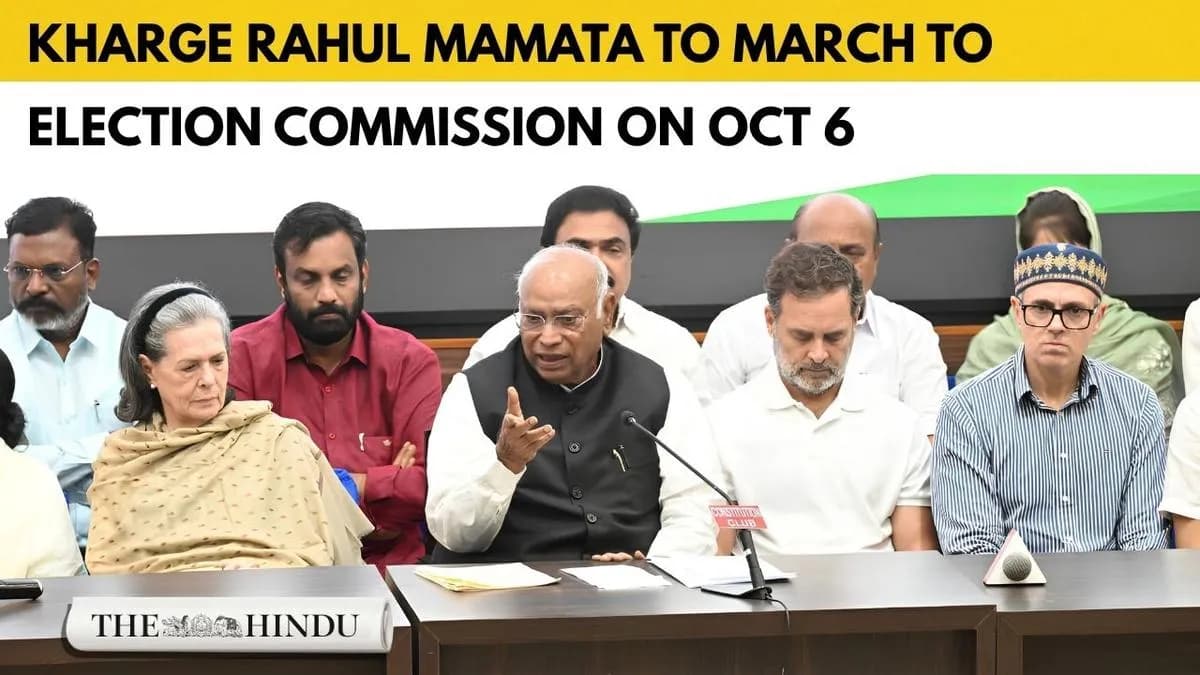
The INDIA bloc has announced a nationwide campaign over concerns related to the Election Commission and electoral processes. The Opposition plans protests, a march to the Election Commission headquarters, and a legal challenge to provisions of the Chief Election Commissioner Act, 2023.
Discussions between Chief Minister C. Joseph Vijay's Tamilaga Vettri Kazhagam (TVK) and the Pattali Makkal Katchi (PMK) have intensified, with reports suggesting alliance talks and possible Cabinet representation. However, no official announcement has been made by either party.
With the Uttar Pradesh Assembly election approaching in 2027, the Samajwadi Party and Congress are working to strengthen their alliance after their improved performance in the 2024 Lok Sabha elections. Political observers believe the opposition has an important opportunity, but unity and effective seat-sharing will be crucial.