Nagaland Political Storm! Kachari Community Challenges Neiphiu Rio's Migrant Remark, Demands Recognition of Indigenous Identity
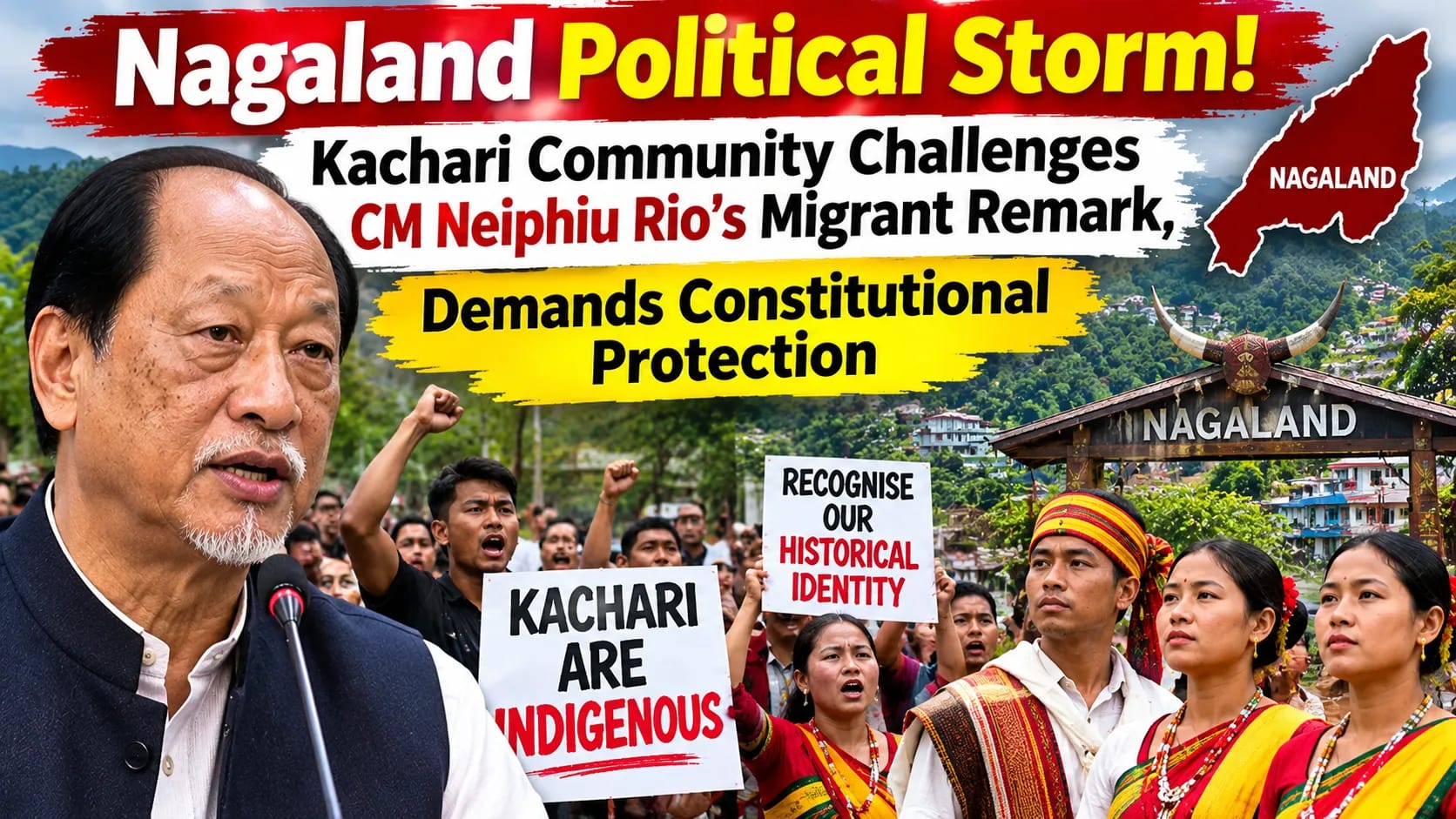
Nagaland has witnessed a fresh political controversy after organisations representing the Kachari community objected to a reported statement by Chief Minister Neiphiu Rio describing Kacharis as migrants in the state.
The controversy has attracted attention across the Northeast because it involves questions of historical identity, indigenous recognition and the rights of communities that have longstanding connections with the region.
The Dimasa Students' Union (DSU) and other community organisations have strongly challenged the reported description, arguing that Kacharis cannot simply be categorised as outsiders in Dimapur.
Why Is Dimapur at the Centre of the political Dispute?
The Kachari community has a significant historical connection with Dimapur, which served as the capital of the erstwhile Dimasa Kachari Kingdom.
Community representatives have pointed to historical traditions, archaeological remains and ancestral settlements to support their position.
The Dimasa Students' Union issued a statement on November 2, describing the reported remark as historically inaccurate and factually untenable.
The organisation also urged the Chief Minister to clarify his reported statement and exercise greater sensitivity when discussing the identity of indigenous communities.
The All Assam Tribal Students' Union also criticised the reported description, maintaining that Kacharis have deep historical roots in the Dimapur region.
Demand for Recognition and Constitutional Protection
The controversy has developed beyond a disagreement over political language.
Community organisations want their historical identity, ancestral connections and constitutional interests to receive proper recognition.
They have appealed to the Nagaland government and the Centre to safeguard the community's rights.
Political Implications for Neiphiu Rio
For the Neiphiu Rio government, the controversy creates a sensitive political conflict.
Nagaland's political stability depends partly on maintaining trust and cooperation among different communities.
Statements concerning identity and belonging can have wider consequences, particularly when communities believe their history is being overlooked.
The government may need to provide clarification and engage with community representatives to prevent the dispute from escalating.
What Happens Next?
The immediate focus will be on whether the Chief Minister responds to the organisations' objections and whether discussions take place with community representatives.
A constructive dialogue could help address concerns without allowing the controversy to become a wider inter-community confrontation.
Conclusion
The Kachari controversy highlights the importance of recognising historical identities and respecting the concerns of indigenous communities.
For Dimapur and Nagaland, the challenge is to protect peaceful coexistence while ensuring that every community's historical connection and constitutional interests receive fair consideration.






Join the discussion
Comments (0)