Neha Bora Controversy: Gorakhpur Remarks, Jantar Mantar Detention and the Free Speech Debate
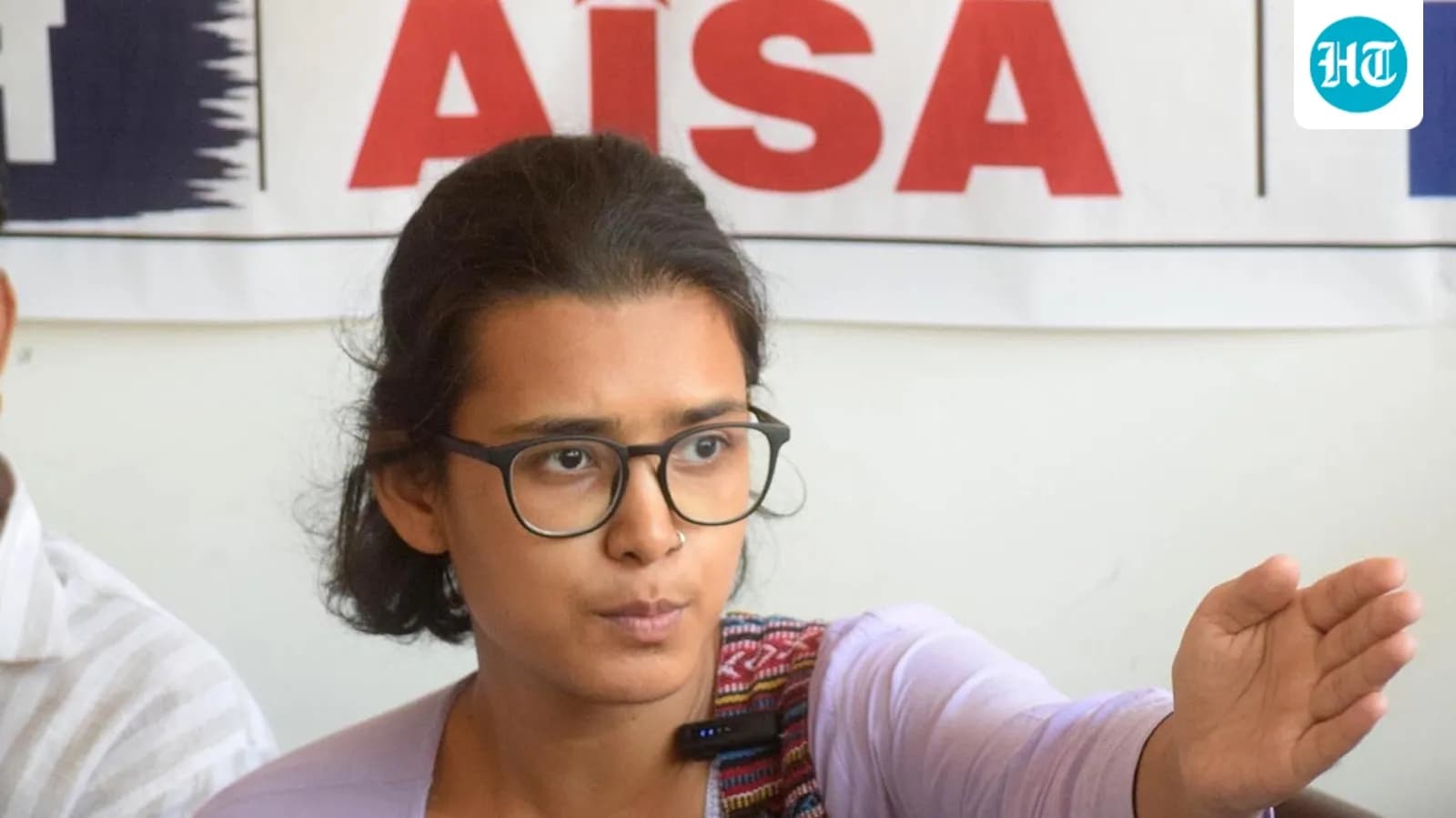
The political controversy involving AISA national president Neha Bora has continued to attract attention weeks after remarks she made during a political gathering in Gorakhpur triggered complaints against her.
What began with a confrontation over Bora’s criticism of Uttar Pradesh Chief Minister Yogi Adityanath has since become part of a wider political debate involving protests, the Election Commission, student activism and freedom of expression.
Bora, a PhD scholar at Jawaharlal Nehru University and national president of the All India Students’ Association, criticised Adityanath during a Gen-Z gathering in Gorakhpur in September 2026. Her remarks drew objections from political supporters of the Chief Minister and resulted in complaints seeking police action.
The controversy has not remained limited to Uttar Pradesh. In early October, Bora was also among activists detained during demonstrations in Delhi demanding action against Chief Election Commissioner Gyanesh Kumar. Recent reporting shows that the detention has kept her in the centre of a broader political confrontation over protest and dissent.
Gorakhpur Remarks Trigger Political Dispute
The initial controversy emerged after Bora addressed a Gen-Z Mahajutan in Gorakhpur on September 14.
During the event, she sharply criticised Yogi Adityanath and accused his government of failing on issues including unemployment, paper leaks, minority rights and demolitions carried out under the administration.
Her remarks prompted complaints in Gorakhpur. BJP-linked functionaries and others demanded action, while political figures criticised the language used against the Chief Minister.
The complaints were reported at multiple police stations, turning a political speech into a legal and political controversy.
The source article argues that criticism of a public official falls within the broader constitutional framework of free speech, subject to restrictions prescribed by law. That is an interpretation presented by the source and should be understood separately from any eventual legal determination in the matter.
Political Criticism and the Limits of Free Speech
The controversy raises an important question in Indian politics: how far can political criticism go before it crosses into legally actionable speech?
The Constitution protects freedom of speech and expression under Article 19(1)(a), while Article 19(2) permits reasonable restrictions in specified circumstances.
Political leaders, activists and public figures routinely criticise governments and elected representatives. At the same time, accusations involving criminal conduct or statements that may fall within the scope of defamation or other offences can raise separate legal questions.
The Neha Bora controversy therefore sits at the intersection of political speech and legal scrutiny.
Whether a particular statement constitutes protected criticism or violates applicable law depends on its exact content, context and the relevant legal provisions.
The Debate Around Yogi Adityanath
Bora’s criticism also reflects the long-running political contest surrounding Yogi Adityanath.
Supporters of the Uttar Pradesh Chief Minister have frequently defended his political rhetoric and governance record, while opposition activists have criticised his government over law and order, demolitions, minority issues and political expression.
The Frontline source placed Bora’s comments within this larger political context and referred to previous statements associated with Adityanath’s political career. However, references to past cases or political rhetoric must not be treated as proof of criminal wrongdoing unless established by a court.
This distinction is important in reporting the controversy.
Political criticism can involve strong language, but factual claims about criminal conduct require evidence and appropriate attribution.
The Controversy Moves Beyond Gorakhpur
The issue gained a new dimension when Bora later participated in demonstrations in Delhi.
On October 3, 2026, she was among several protesters detained near Jantar Mantar during a demonstration demanding the resignation of Chief Election Commissioner Gyanesh Kumar, according to recent reporting.
The protest involved several opposition and civil-society figures, including Yogendra Yadav. Police action against demonstrators brought renewed attention to questions surrounding protest rights and restrictions on demonstrations.
For Bora, the Delhi detention meant that the political controversy surrounding her was no longer confined to the Gorakhpur remarks.
AISA and Student Politics
Bora’s position as national president of AISA also places her within India’s wider student political movement.
AISA has traditionally been associated with left-wing student politics and has been active around issues involving education, civil liberties, employment and political rights.
Bora has continued to participate in political demonstrations beyond university campuses.
Recent reporting from Kolkata also shows Bora continuing to speak publicly about what she described as pressure on secular and democratic voices in educational institutions. These are political allegations made by Bora and should be attributed as such.
Why the Controversy Matters
The controversy has significance beyond one political speech.
It raises questions about how governments, political parties and activists respond to sharp criticism.
For opposition activists, strong criticism of those in power is part of democratic political debate. For political parties supporting governments, they may argue that criticism should remain within legal and factual boundaries.
The balance between these positions is often tested during periods of intense political mobilisation.
The issue is particularly relevant in Uttar Pradesh, where political competition ahead of the 2027 Assembly election is already becoming more active.
The 2027 Political Context
The timing of the Gorakhpur controversy is also politically significant because Uttar Pradesh is moving towards another Assembly election.
The BJP remains the governing political force in the State, while opposition parties are preparing strategies for the next electoral contest.
Student organisations, opposition groups and civil-society activists are also likely to remain active on issues such as employment, education, voter rights and government accountability.
Bora’s public interventions therefore form part of a wider political environment in which competing groups are increasingly using public meetings, protests and digital platforms to communicate with voters and supporters.
Allegations Must Remain Allegations
The controversy also demonstrates why political reporting requires careful attribution.
Claims made by Bora against the Uttar Pradesh government should be reported as her allegations or political criticism, not as independently established facts unless supported by evidence.
Similarly, allegations made against Bora by political opponents should not automatically be treated as proven wrongdoing.
Any criminal complaint, police inquiry or legal proceeding must be distinguished from a conviction or judicial finding.
This distinction is particularly important in politically charged stories where competing sides may use strong language.
From Gorakhpur to Delhi
The sequence of events has transformed the Bora controversy into a broader political story.
The initial Gorakhpur remarks triggered complaints and demands for action. Bora subsequently remained active in political protests, including the demonstrations in Delhi over the Election Commission.
Her detention during those protests brought her back into national political attention and widened the discussion around her activism.
The developments show how a local political controversy can quickly become part of a larger national debate when the person involved is already active in political movements.
The Larger Free Speech Question
At its core, the controversy is about the difficult boundary between political criticism and legally restricted speech.
India’s democratic system allows strong disagreement with governments and public officials. At the same time, the Constitution and criminal and civil laws place certain limits on speech.
Determining where those limits apply requires examining the exact words used, their context and the applicable legal provisions rather than relying solely on political claims from either side.
For now, the Neha Bora controversy remains both a political dispute and a wider debate about protest, dissent and political expression.
With Bora continuing to participate in demonstrations and Uttar Pradesh entering an increasingly active pre-election period, the issue is likely to remain part of the broader political conversation.
Join the discussion
Comments (0)