Sikkim Electoral Politics Under Spotlight! ECI's Voter Revision Drive Raises Fresh Questions Over Inclusion and Transparency
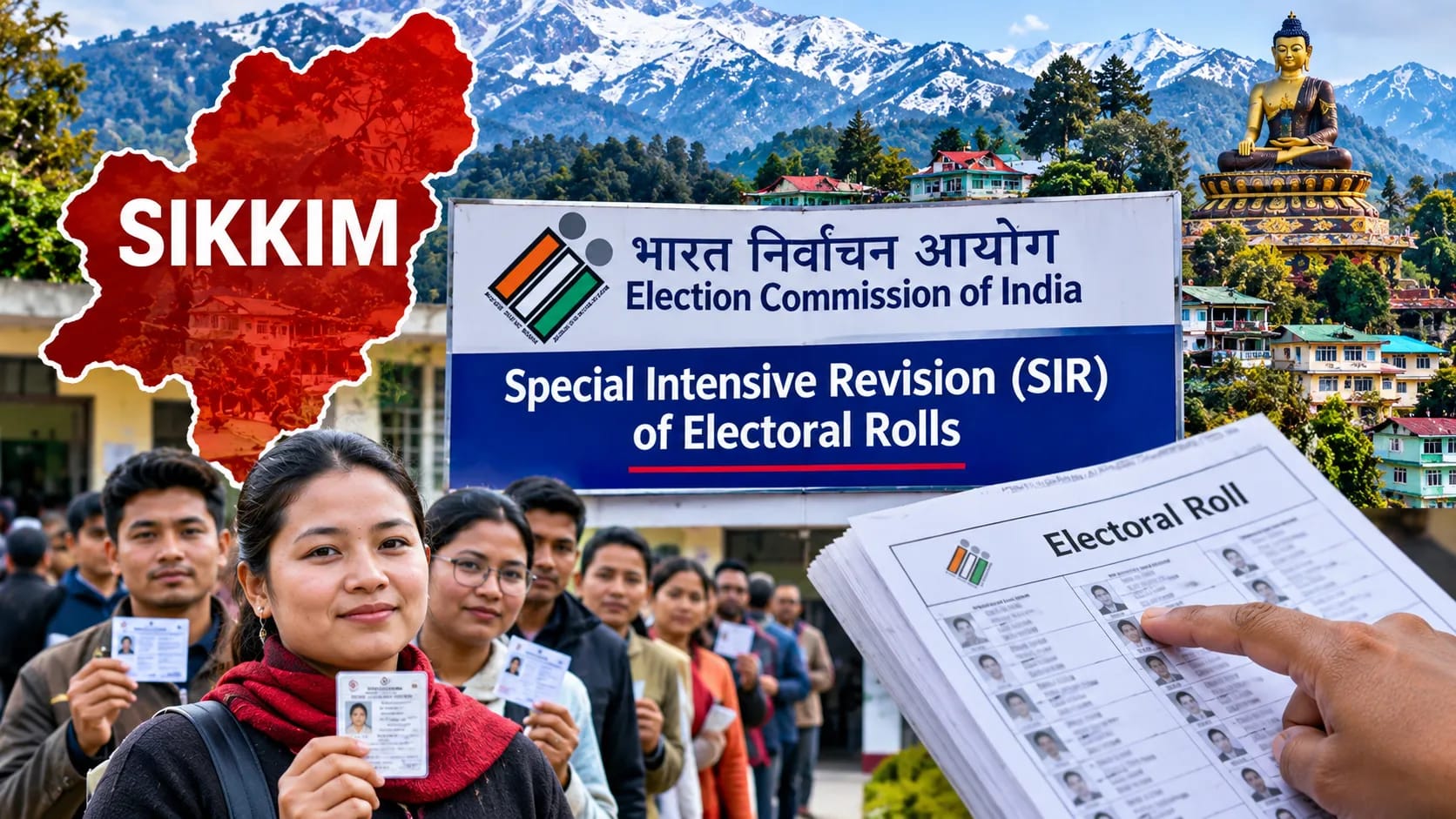
Sikkim's electoral revision attracts political attention
Sikkim's electoral administration has completed an important phase of its 2026 Special Intensive Revision of electoral rolls.
The exercise was conducted under the directions of the Election Commission of India to update voter records and ensure that eligible citizens are included in the electoral database.
The final electoral roll was published on 6 September 2026, marking the completion of the revision process.
What do the official figures reveal?
The Office of the Chief Electoral Officer, Sikkim, published detailed figures explaining the outcome of the revision exercise.
According to the official announcement:
Before the revision, Sikkim had 4,71,018 registered electors.
A total of 1,24,519 notices were issued under unmapped and logical discrepancy categories.
During the claims and objections period, 2,052 applications for new inclusion were received.
A total of 16,809 names were deleted following the prescribed processes.
A total of 1,982 electors were added.
The final electoral roll contained 4,18,467 electors.
These figures indicate a net reduction of 14,827 electors, representing a 3.42% decrease from the earlier electorate.
Election Commission launches a further enrolment drive
Following the publication of the final electoral roll, the Chief Electoral Officer's office announced a special drive beginning on 1 October 2026.
The initiative is aimed at eligible people whose names were not included during the SIR exercise, as well as young and first-time voters.
The authorities have encouraged eligible citizens to approach their respective Electoral Registration Officers for inclusion through the continuous updation process.
Why is voter inclusion politically important?
Electoral registration is one of the foundations of democratic participation.
A person may have political opinions, follow election campaigns and participate in public discussions, but without valid electoral registration, they cannot exercise their voting rights.
For Sikkim, ensuring that eligible citizens are properly registered is important for maintaining public confidence in the electoral system.
Political parties also have a responsibility to encourage voter awareness and help citizens understand the prescribed registration procedures.
What happens next?
The continuous enrolment process will remain important for ensuring that eligible citizens are not left out of the electoral system.
The Election Commission's challenge is to maintain accurate voter records while making registration accessible to every eligible resident.
For political parties, the next priority should be strengthening voter awareness rather than turning routine electoral administration into unnecessary political confrontation.
Sikkim's 2026 electoral exercise demonstrates that updating voter lists is not simply an administrative responsibility; it is an essential part of protecting democratic participation.



Join the discussion
Comments (0)