
Tripura's Voter Revision Schedule Shifts Again – ECI Pushes Electoral Exercise Amid Local Poll Preparations
Introduction
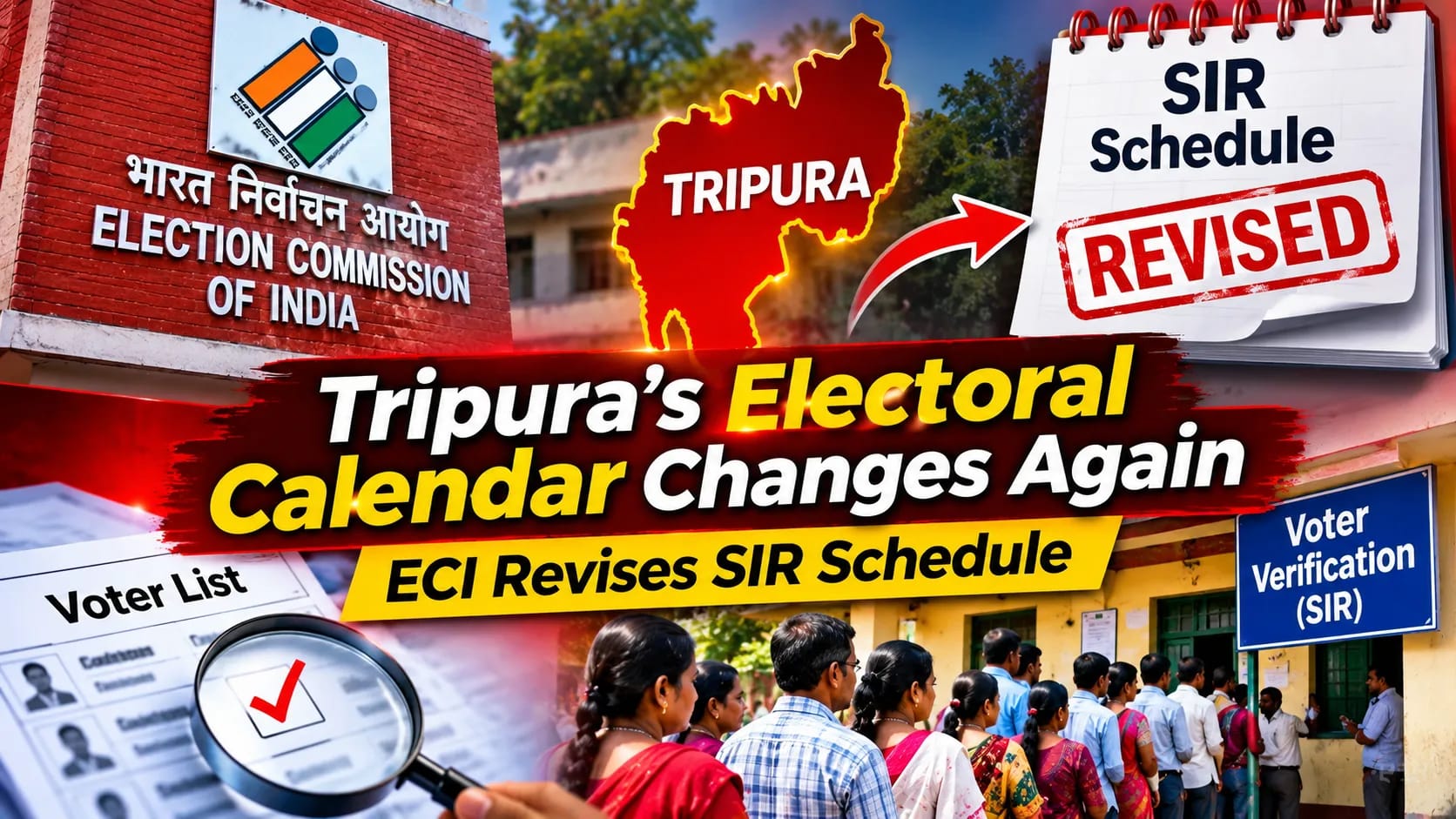
Tripura's electoral calendar has witnessed another significant change as the Election Commission of India (ECI) approved a revised schedule for the Special Intensive Revision of electoral rolls.
The latest decision, communicated on October 29, 2026, follows a request from the Chief Electoral Officer of Tripura to defer the exercise because of the state's upcoming urban local body elections.
The decision is politically and administratively important because electoral-roll revision requires extensive coordination between election officials, Booth Level Officers (BLOs), political representatives and voters.
Why Has the Schedule Changed Again?
The latest postponement follows concerns about overlapping election-related responsibilities.
Tripura's election machinery sought additional time to avoid a clash between the electoral revision exercise and the upcoming urban local body polls.
The Election Commission approved the request and issued a revised timetable.
This is particularly significant because an earlier schedule had already been modified.
The earlier timetable had provided for house-to-house verification from November 6 to December 5, 2026.
What Is the New ECI Schedule?
The revised timeline changes the key stages of the SIR exercise.
Electoral activity & Latest revised schedule
Preparation, training and printing : December 15–24, 2026
House-to-house BLO visits : December 26, 2026–January 25, 2027
Polling-station rationalisation : By January 27, 2027
Draft electoral roll : February 1, 2027
Claims and objections : February 1–March 2, 2027
Disposal of claims and objections : By April 1, 2027
Final electoral roll : April 7, 2027
The qualifying date remains : January 1, 2027.
Why Is the Revision Politically Sensitive?
Electoral-roll revision is not merely an administrative exercise.
In a politically competitive state such as Tripura, voter registration and electoral transparency can attract attention from different political parties.
The revised timetable has several implications:
For political parties: They will need to adjust their voter-verification and organisational activities according to the new dates.
For election officials: Additional coordination will be necessary to manage election duties and the subsequent SIR exercise.
For voters: Citizens will need to check their registration details when the draft electoral roll is published.
For electoral transparency: Proper verification and accessible objection procedures will be essential to maintaining confidence in the process.
Conclusion
For political parties, the coming months will require greater organisational attention. For voters, the priority should be verifying their registration details and using the official correction mechanisms.
Ultimately, the credibility of the exercise will depend on transparency, accurate verification and the protection of every eligible citizen's right to participate in elections.

Join the discussion
Comments (0)