Andaman and Nicobar Islands Politics
Andaman and Nicobar Islands, led by Chief Minister Not Applicable. Track the latest political developments, policy decisions, and electoral dynamics shaping Andaman and Nicobar Islands.
Current vs. Opposition
Not Applicable
Chief Minister, Andaman and Nicobar Islands
Not Applicable
Opposition Leader — Not Applicable, Andaman and Nicobar Islands Assembly
History & Achievements

History
Andaman and Nicobar Islands is a Union Territory without a Legislative Assembly. It is administered by a Lieutenant Governor appointed by the President of India. The territory has one Lok Sabha constituency and participates in India's parliamentary democratic system through elections to the Lok Sabha. The islands have an important place in India's freedom struggle. During British rule, Cellular Jail in Port Blair was used to imprison Indian freedom fighters and political prisoners. Today, the Cellular Jail is a National Memorial and an important symbol of India's independence movement. After Independence, the administration focused on developing infrastructure, transportation, education, healthcare, communication, tourism and public services across geographically dispersed islands. The territory's strategic location in the Bay of Bengal has also made it important for India's maritime security and defence.
Achievements
Andaman and Nicobar Islands has made significant progress in infrastructure development, maritime connectivity, tourism, digital connectivity, healthcare, education, fisheries, environmental conservation and strategic infrastructure. Government programmes have increasingly focused on improving the quality of life for island residents while also developing the territory's economic and tourism potential. 1. Maritime Connectivity and Port Infrastructure The territory has continued to strengthen its network of jetties, ports, shipping facilities and inter-island transport services. These facilities are important because many communities depend on sea transport for movement of passengers, essential commodities and economic activities. Several port and shipping infrastructure projects are being developed to improve connectivity between the islands and the mainland. 2. Tourism Development Tourism is one of the major economic opportunities for Andaman and Nicobar Islands. The administration has promoted eco-tourism, adventure tourism, cruise tourism, heritage tourism, cultural tourism and scuba diving. New tourism concepts including bird watching, caravan tourism, luxury tents, astro-tourism and houseboat tourism are also being promoted. 3. World-Class Natural Tourism The islands are known for their beaches, coral reefs, tropical forests and marine biodiversity. Destinations such as Swaraj Dweep, Shaheed Dweep, Baratang, Cellular Jail and Great Nicobar provide opportunities for tourism, water sports, nature exploration and heritage tourism. 4. Freedom Struggle Heritage The Cellular Jail has become one of India's most important freedom-fighter memorials. The historic site preserves the memory of Indian revolutionaries and political prisoners who were imprisoned during British rule. It has become an important destination for historical and educational tourism. 5. Digital Connectivity The commissioning of the Chennai–Andaman and Nicobar Islands submarine optical fibre cable significantly improved high-speed internet connectivity in the territory. Better digital connectivity has supported education, businesses, tourism, telecommunications and e-governance services. 6. Healthcare Development Healthcare infrastructure has expanded through improvements in hospitals, medical facilities and health services. The development of medical education and healthcare facilities in Port Blair has reduced the need for residents to depend entirely on mainland institutions for treatment and medical education. 7. Education and Skill Development The territory has continued to improve school infrastructure, higher education, technical education and skill-development opportunities. Better digital connectivity has also created opportunities for online learning and access to educational resources. 8. Fisheries and Blue Economy Fisheries remain an important source of livelihood for island communities. In 2026, the Centre approved a ₹199.24 crore Smart and Integrated Fishing Harbour at Mayabunder, with modern landing and berthing facilities, technology-enabled systems, improved fish handling and digital traceability. 9. Roads and Local Infrastructure Development programmes have focused on improving rural roads, public transport, drinking-water supply, electricity infrastructure, ports, schools and other public facilities. These improvements are particularly important because communities are spread across numerous islands. 10. Renewable Energy and Green Development The islands have undertaken initiatives to increase renewable-energy use and improve energy infrastructure. Solar power projects have been introduced, while newer development plans also consider renewable energy as part of long-term infrastructure expansion. 11. Environmental Conservation Andaman and Nicobar Islands contains extensive forests, coral reefs, mangroves and marine ecosystems. Environmental protection remains an important part of development planning, particularly because the islands contain ecologically sensitive areas and communities with distinctive cultural traditions. 12. Disaster Management Because the islands are vulnerable to earthquakes, tsunamis, cyclones and other natural hazards, the administration has developed disaster-management and early-warning systems. These include monitoring equipment, weather stations, emergency-operation facilities and communication systems designed to improve preparedness and response. 13. Strategic and Defence Importance The territory's location in the Bay of Bengal gives it major strategic importance for India's maritime security. Infrastructure development in the islands supports India's ability to monitor important maritime routes and strengthen its presence in the eastern Indian Ocean and the wider Indo-Pacific region. 14. Great Nicobar Development The Great Nicobar Project is planned as a major strategic and economic development initiative. Its components include an International Container Transshipment Terminal, a greenfield international airport, a power plant and an integrated township. The project is intended to improve connectivity, trade, employment and strategic infrastructure while operating within an environmental and tribal-protection framework. 15. Employment and Economic Opportunities Tourism, fisheries, maritime activities, construction, transport and local enterprises provide important employment opportunities. The government's island-development approach also aims to create new livelihoods through tourism, blue-economy activities and infrastructure development. 16. E-Governance Digital systems have increasingly been introduced for public services. For example, online ship-ticket booking and other technology-based administrative services have made government and transport services more accessible and transparent for residents. 17. Cleanliness and Civic Services Urban civic infrastructure and waste-management services have also improved. In January 2026, the Union government highlighted that the Sri Vijaya Puram Municipal Council had achieved waste collection coverage of about 98% of households, reflecting progress in urban sanitation. 18. Better Air Connectivity Expansion and improvement of airport infrastructure has supported tourism and passenger connectivity. Better air links are particularly important for an island territory where travel by sea can take considerably longer. 19. Cultural and Tribal Heritage Protection The territory is home to indigenous communities with distinctive cultural traditions. Development planning increasingly incorporates measures intended to protect tribal communities, their land and their cultural heritage, particularly in sensitive areas such as Great Nicobar. 20. Future Economic Potential With its strategic location close to major international shipping routes, natural tourism resources, marine economy and growing infrastructure, Andaman and Nicobar Islands has significant potential to develop as a tourism, maritime, logistics, fisheries and strategic hub while maintaining environmental safeguards.
Andaman and Nicobar Islands News
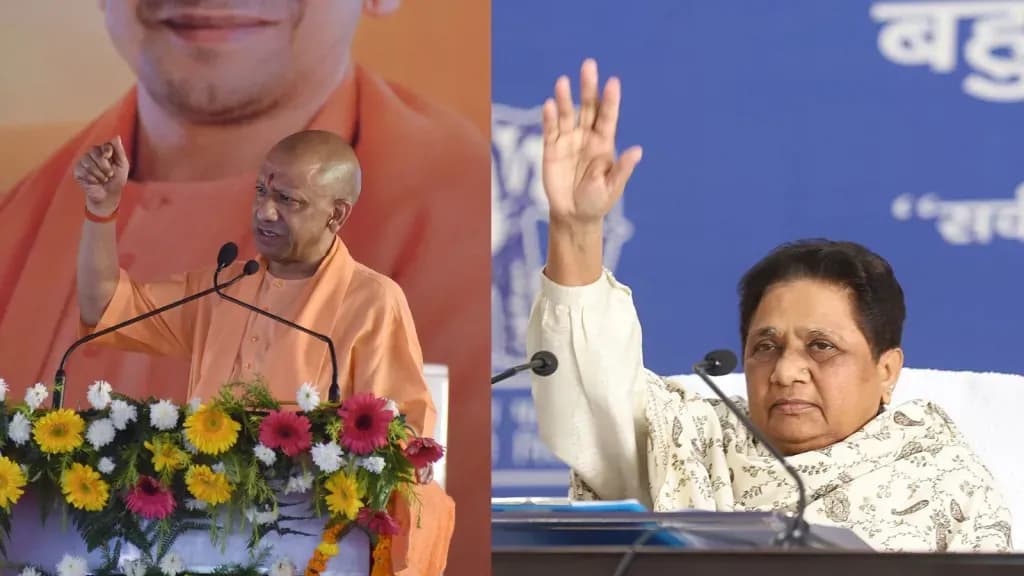
Uttar Pradesh Politics: Rajya Sabha Elections Put BJP, SP and BSP Equations in Focus Ahead of 2027
The Rajya Sabha contest brings Political Parties and their Assembly strength into focus ahead of the 2027 Elections. The BSP's parliamentary representation and SP-Congress coordination are important issues in Uttar Pradesh Politics, alongside wider Governance discussions. The Rajya Sabha election is separate from the Assembly polls, while its political developments will be closely followed by parties preparing for the Lok Sabha and state-level political contests.
By Haripriya • 155 views