₹62,370 Crore Fertiliser Subsidy Sparks Fresh Budget Debate! Centre's 64% Spending Jump Raises Questions Over Fiscal Priorities
Introduction: A Major Subsidy Decision Puts Budget Priorities in Focus
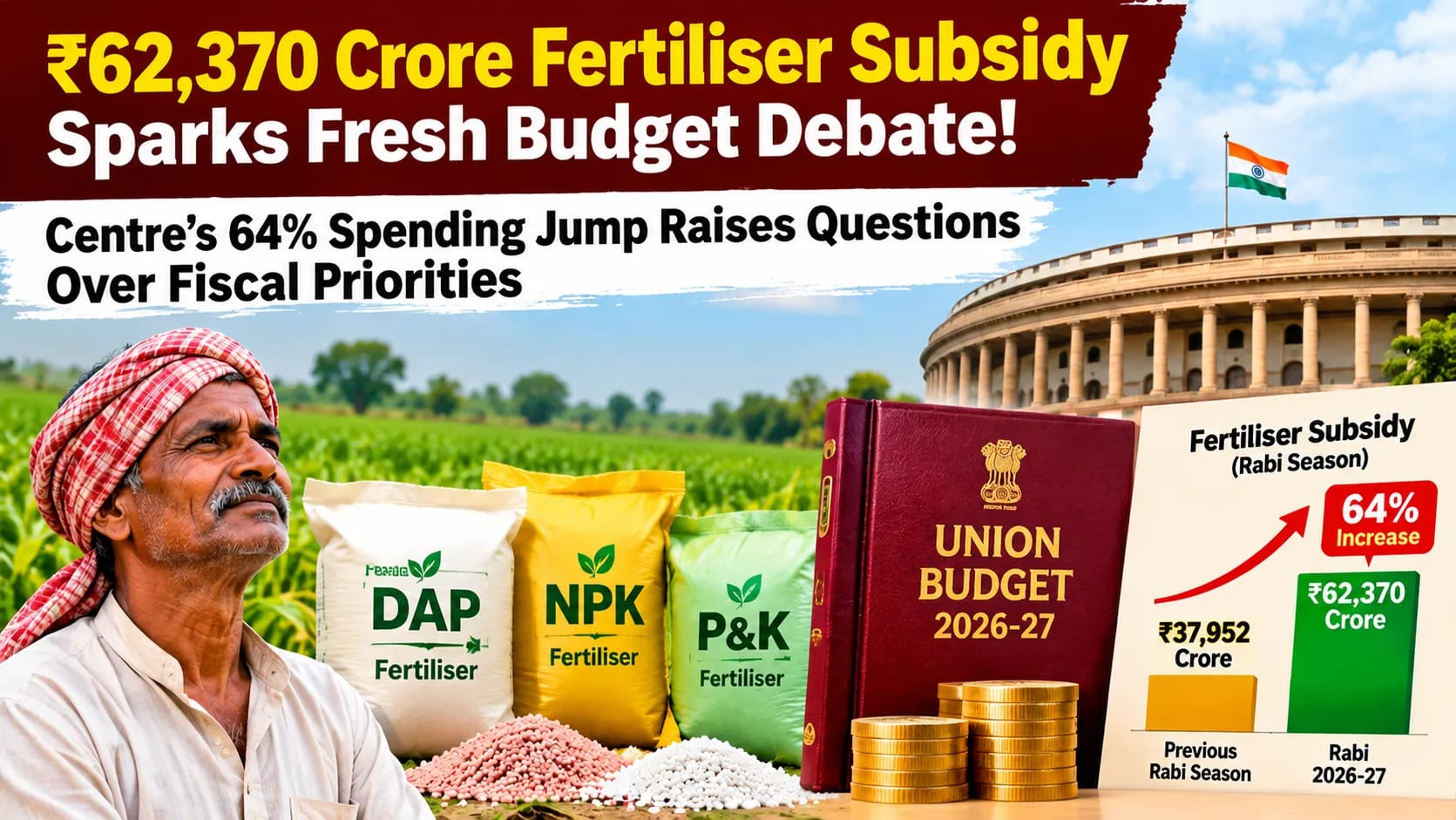
India's agricultural economy has once again become central to the national budget debate. On November 11, 2026, the Union Cabinet approved an estimated ₹62,370.02 crore subsidy for phosphatic and potassic (P&K) fertilisers for the Rabi 2026-27 season.
The announcement represents an increase of approximately ₹24,417.73 crore compared with the ₹37,952.29 crore allocated for the previous Rabi season.
The 64% increase has placed agricultural subsidies, government expenditure and fiscal management under renewed public attention.
Why Has the Fertiliser Subsidy Increased?
The government's decision comes amid changing international fertiliser prices and disruptions in global supply chains.
India depends partly on imported fertiliser products and raw materials. International price fluctuations can increase the financial burden on fertiliser manufacturers and importers.
Under the Nutrient Based Subsidy (NBS) scheme, the government provides financial support to manufacturers and importers of eligible fertilisers. This helps maintain affordable prices for farmers.
The latest approval covers 28 grades of P&K fertilisers, including Di-Ammonium Phosphate (DAP) and NPKS grades.
The approved subsidy period runs from October 1, 2026, to March 31, 2027.
The Political Debate: Farmer Protection Versus Fiscal Pressure
The announcement raises an important policy question: how should the government balance agricultural support with fiscal discipline?
For the government, the subsidy is a measure intended to protect farmers from international price volatility. Affordable fertilisers are essential for maintaining agricultural productivity and controlling cultivation costs.
However, a substantial increase in subsidy requirements also places additional pressure on public expenditure.
The Union Budget 2026-27 had estimated the overall fertiliser subsidy requirement at approximately ₹1.71 lakh crore. The latest increase in the Rabi P&K subsidy makes the management of the annual subsidy provision an important subject of financial scrutiny.
The Bigger Budget Question
The latest decision highlights the relationship between international market conditions and India's domestic fiscal priorities.
A government may initially estimate expenditure based on expected prices, but global disruptions can change the financial requirements during the financial year.
This raises questions about budget flexibility, supplementary expenditure and the management of other development priorities.
Conclusion
The central question is how India can maintain affordable agricultural inputs while ensuring that public spending remains sustainable, transparent and effective.
The fertiliser subsidy debate is now about more than farming costs. It is also about the balance between rural welfare and responsible public finance.


Join the discussion
Comments (0)