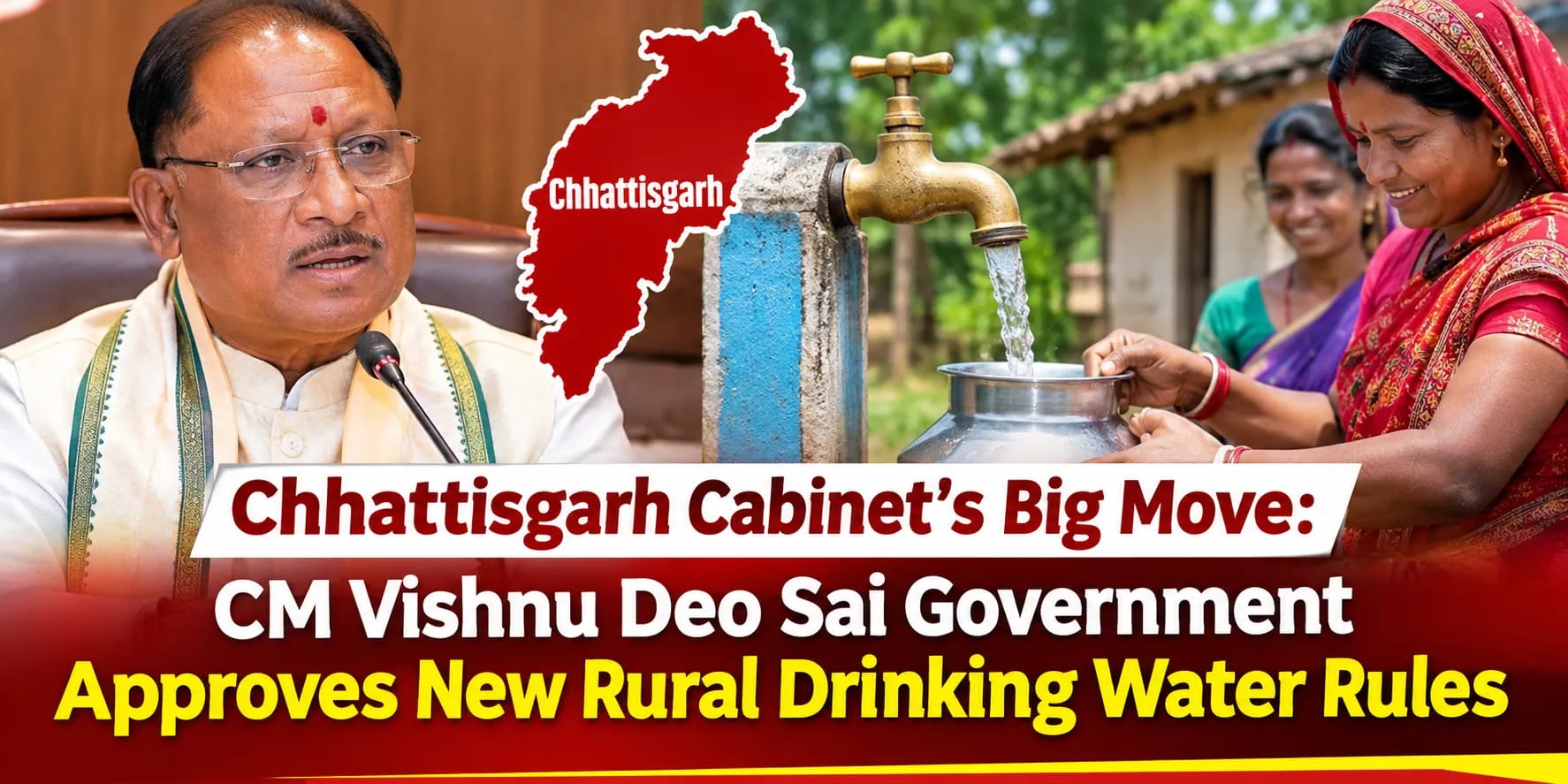
Chhattisgarh Cabinet's Big Move: Vishnu Deo Sai Government Approves New Rural Drinking Water Rules
Introduction: A Major Policy Decision in Chhattisgarh
The Chhattisgarh government has taken an important policy decision concerning rural drinking water supply. On November 18, 2026, the state cabinet, chaired by Chief Minister Vishnu Deo Sai, approved the draft Chhattisgarh Panchayat (Rural Tap Water Supply Operation, Maintenance and Management) Rules, 2026.
The decision aims to strengthen the operation and maintenance of rural tap water schemes and ensure regular access to quality drinking water for households.
The new framework will replace the existing 2024 rules and align the state's rural water management system with national standards under the Jal Jeevan Mission.
What Has the Cabinet Approved?
The new rules introduce 19 technical, administrative and financial parameters recommended by the Centre.
A major focus is on making Gram Panchayats more responsible for maintaining village drinking water infrastructure.
Under the proposed framework, Gram Panchayats with populations below 1,000 can receive financial assistance through the Mukhyamantri Nal Jal Anudan scheme, subject to collecting at least 50% of monthly water charges.
The framework also introduces performance-based incentives.
Panchayats collecting more than 75% of annual water charges will receive an incentive of ₹50,000.
These provisions are intended to encourage better financial management and improve the sustainability of rural water supply schemes.
Political Significance for the Vishnu Deo Sai Government
The decision gives the BJP-led government an opportunity to highlight its rural development and public-service delivery agenda.
Drinking water is a major public concern, particularly in villages where maintaining pipelines, water connections and supply infrastructure can be challenging.
However, the success of the new framework will depend on implementation at the grassroots level.
Gram Panchayats will need adequate administrative capacity, transparent financial management and regular monitoring.
What Happens Next?
The focus will now be on implementation of the approved framework and the responsibilities assigned to local bodies.
The government's performance will ultimately be judged by whether rural households receive reliable drinking water and whether existing infrastructure remains functional.
Conclusion
The new rural drinking water framework represents an important administrative decision by the Vishnu Deo Sai government.
But the real political test will begin when the rules translate into visible improvements in village-level water supply.
For Chhattisgarh's rural population, reliable drinking water will matter far more than government announcements.



Join the discussion
Comments (0)