ECI Tightens Election Neutrality Rules! Retired Government Officials Face Fresh Political Restrictions Ahead of 2027 Assembly Polls
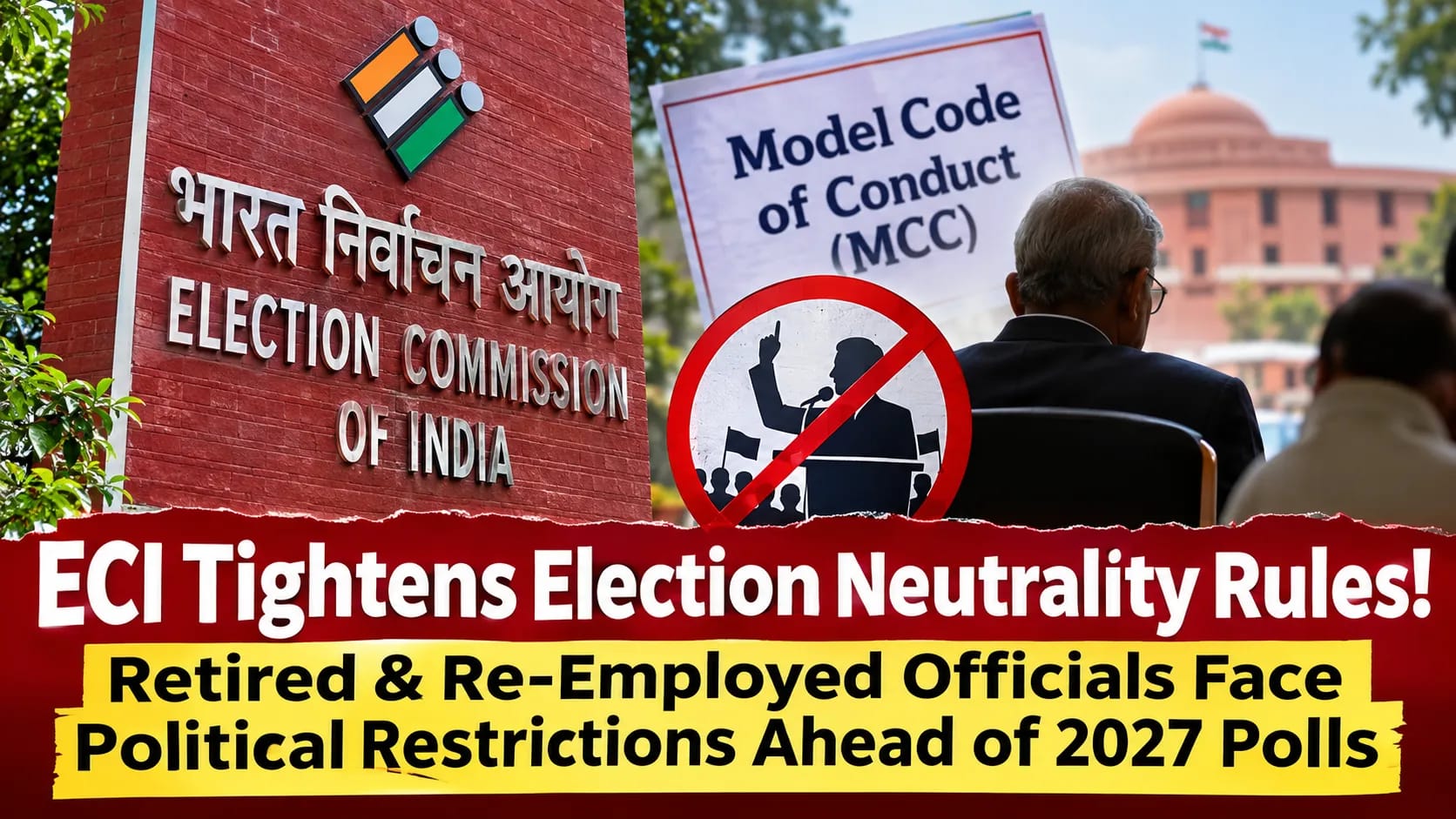
ECI's Fresh Directive Puts Retired Officials Under Election Watch
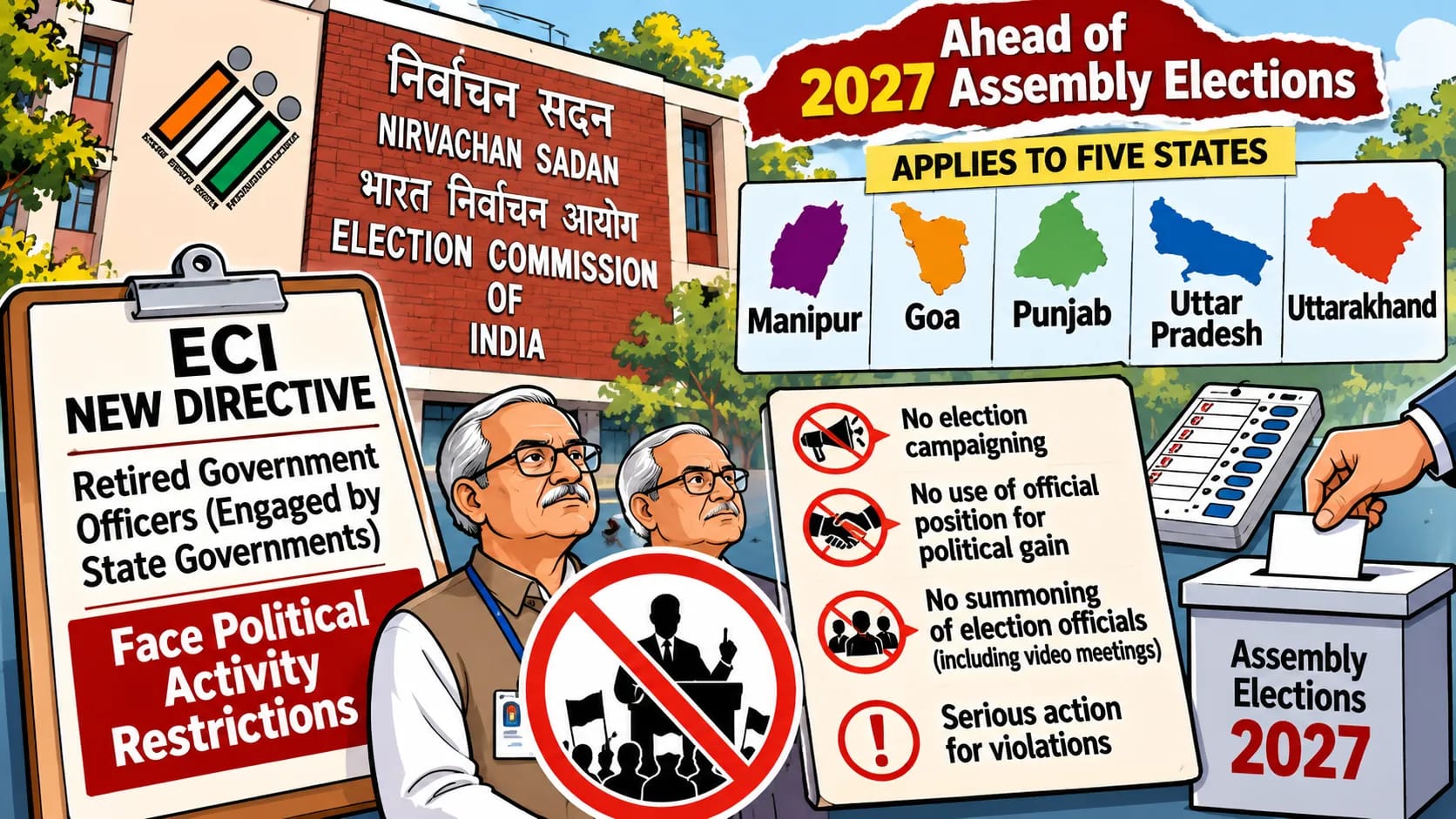
India's election administration has received an important regulatory reminder ahead of the 2027 Assembly elections. The Election Commission of India (ECI) has extended political neutrality restrictions to retired government officials who continue working with state governments in various capacities.
The November 10, 2026, development has placed the conduct of re-employed bureaucrats and retired government employees under renewed scrutiny. The Commission has made it clear that retirement from government service should not automatically create an exemption from political neutrality requirements when an individual continues to perform government-related responsibilities during the Model Code of Conduct (MCC) period.
Five States Face the New Neutrality Framework
The Commission communicated its directions to the Chief Secretaries and Chief Electoral Officers of five states:
Goa
Manipur
Punjab
Uttar Pradesh
Uttarakhand
These states are preparing for Assembly elections expected in 2027.
The timing is politically important. As election preparations gather momentum, the functioning of government departments, election machinery and administrative authorities becomes increasingly sensitive.
The Commission's intervention seeks to ensure that individuals engaged by state governments after retirement follow the same standards of political neutrality applicable to serving government employees during the MCC period.
According to reporting on the ECI communication, the Commission identified an existing gap: there were no specific guidelines or rules adequately addressing the political neutrality and conduct of retired officials engaged or re-employed by state governments in different capacities.
What Exactly Has the Election Commission Changed?
The central feature of the directive is the extension of restrictions applicable to serving government employees to retired government officials who remain attached to, engaged by, employed by or re-employed by state or Union Territory governments.
The restrictions include:
1. No participation in election campaigning
Covered officials must not participate in election campaigns or canvassing in support of political parties or candidates.
2. No political favouritism
They must not lend their names, official positions, authority or influence to assist one political party, candidate or group over another.
3. Restrictions on meetings with election officers
The Commission has specifically directed that these officials must not summon election-related officers from constituencies or districts where elections have been announced for official discussions or meetings.
4. Restrictions on video conferences
They must also not hold video conferences or meetings with such election-related officers in violation of the Commission's directions.
5. Serious consequences for violations
The ECI has warned that any omission or commission contrary to its directions will be viewed seriously.
Why Is This Decision Politically Significant?
The political importance of the directive goes beyond the status of retired government employees.
In India's electoral system, administrative neutrality is a crucial condition for credible elections. Government machinery is expected to function impartially, regardless of which party holds power.
However, retired officials sometimes continue to occupy influential positions through contractual appointments, advisory roles, special assignments or other government engagements.
A Wider Message for State Governments
The Commission's decision also sends a message to state administrations that the rules governing election neutrality cannot be avoided simply by changing an employee's service status.
A government cannot assume that an individual falls outside the neutrality framework merely because that person has retired from regular service.
The ECI has also reiterated that the MCC provisions cover organisations, committees, corporations and commissions funded wholly or partly by the government, along with their employees.
This broader approach matters because government functions are not always carried out exclusively through permanent civil servants.
What Happens Next?
The immediate responsibility now rests with the five state governments.
The directions must be communicated to the concerned departments, institutions and individuals to ensure compliance. Administrative authorities will need to identify officials covered by the order and make sure that they understand the restrictions.
The Election Commission will also remain responsible for addressing complaints and monitoring compliance within its constitutional and legal framework.
The broader political significance will become clearer as the 2027 Assembly elections approach and the MCC comes into operation in the respective states.
Conclusion
The ECI has delivered its warning. The real test will be whether every concerned authority follows it in letter and spirit.

Join the discussion
Comments (0)