
Jharkhand Recruitment Row Explodes Again: JPSC-JSSC Aspirants Prepare Statewide Agitation, Hazaribag Mahapanchayat on November 22
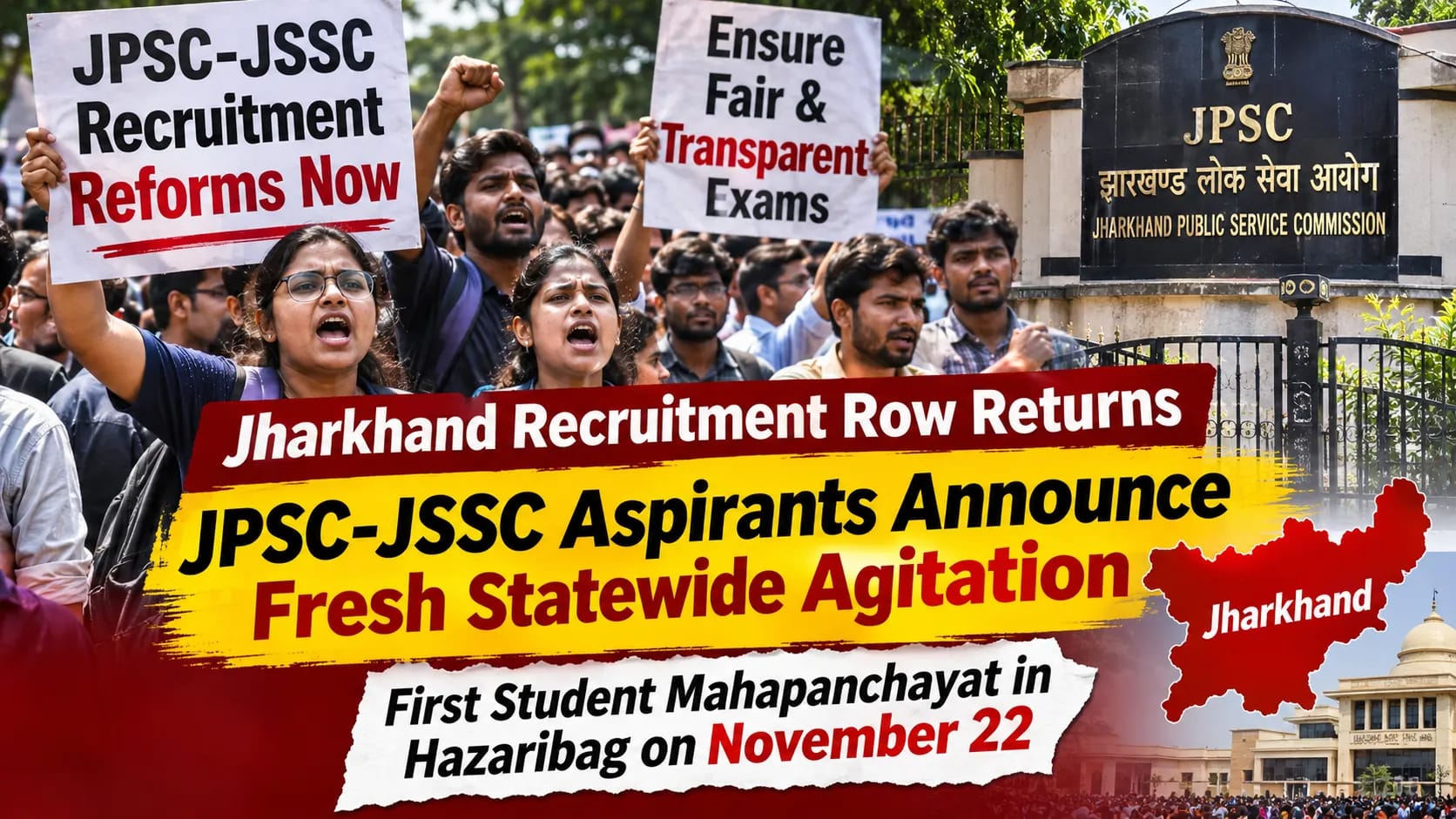
Jharkhand's recruitment controversy returns to the political spotlight
Jharkhand is once again witnessing renewed tension over government recruitment examinations, as job aspirants prepare to launch fresh agitation over recruitment reforms and alleged irregularities linked to the state's examination system.
The renewed mobilisation of JPSC and JSSC aspirants signals that the recruitment issue remains politically sensitive in the state. For thousands of young candidates preparing for government jobs, examination transparency, timely recruitment and fairness in the selection process remain major concerns.
The first planned student mahapanchayat is expected to take place in Hazaribag on November 22, where aspirants are likely to discuss their next course of action and organise further mobilisation.
November 22 Hazaribag Mahapanchayat becomes the focal point
The planned mahapanchayat in Hazaribag is expected to bring together recruitment aspirants who are dissatisfied with various aspects of the examination and recruitment process.
Candidates are reportedly preparing to raise their demands collectively, with recruitment reforms and alleged irregularities expected to remain central issues.
The gathering may also provide a platform for students to discuss a coordinated strategy for future protests, including the possibility of demonstrations in additional districts.
Why recruitment examinations remain a politically sensitive issue
Government employment has enormous significance in Jharkhand, where many young people spend years preparing for competitive examinations.
Recruitment controversies can quickly turn into major political issues because they directly affect students' career plans, family expectations and financial circumstances.
Candidates invest time, money and years of preparation in examinations conducted for government positions. When questions arise regarding transparency, delays, examination rules or alleged irregularities, frustration can spread rapidly among aspirants.
The JPSC and JSSC recruitment systems are therefore closely watched by students, opposition parties and the state government.
Recruitment reforms and alleged irregularities at the centre of student anger
The proposed protest is reportedly being driven by concerns surrounding recruitment examination reforms and alleged irregularities.
However, individual allegations must be examined against official records, court orders and statements from the concerned recruitment authorities before they can be treated as established facts.
The aspirants' movement is expected to focus on demands for greater transparency, accountability and confidence in the examination process.
Political pressure could increase on the state government
Recruitment protests have the potential to become a significant political challenge because they involve a large section of young voters.
Opposition parties may use the renewed agitation to question the government's employment commitments, recruitment policies and handling of examination-related complaints.
The ruling establishment, meanwhile, could face pressure to respond publicly and demonstrate that recruitment processes are being conducted fairly.
If the protest expands beyond Hazaribag, the issue could move from a student mobilisation into a broader statewide political confrontation.
What the government may need to address
The renewed agitation places the recruitment system under public scrutiny.
A constructive response could involve:
Clear communication about examination rules and recruitment schedules.
Timely updates for candidates on pending recruitment processes.
Transparent handling of complaints and grievances.
Official clarification regarding allegations raised by aspirants.
Dialogue with student representatives.
Reliable public information about examination reforms.
What happens next?
November 22 is expected to be an important date for the movement.
The Hazaribag mahapanchayat could determine whether the recruitment agitation remains limited to a local gathering or evolves into a coordinated statewide campaign.
The key developments to watch will be the participation of aspirants, the demands announced during the meeting, any response from JPSC or JSSC authorities, and the state government's reaction.
If no meaningful response emerges and aspirants continue to mobilise, the recruitment issue could once again dominate Jharkhand's political conversation.
Conclusion
For the government, the challenge is not only managing a protest but also maintaining public confidence in the recruitment system. For aspirants, the movement represents a demand for transparent examinations, fair opportunities and accountability.
The coming days will reveal whether this renewed mobilisation becomes a major statewide student movement or leads to dialogue and resolution.




Join the discussion
Comments (0)