Manipur Erupts in Fresh Political Protests: Thousands Rally Against Government, Demand Accountability and End to Conflict
Introduction
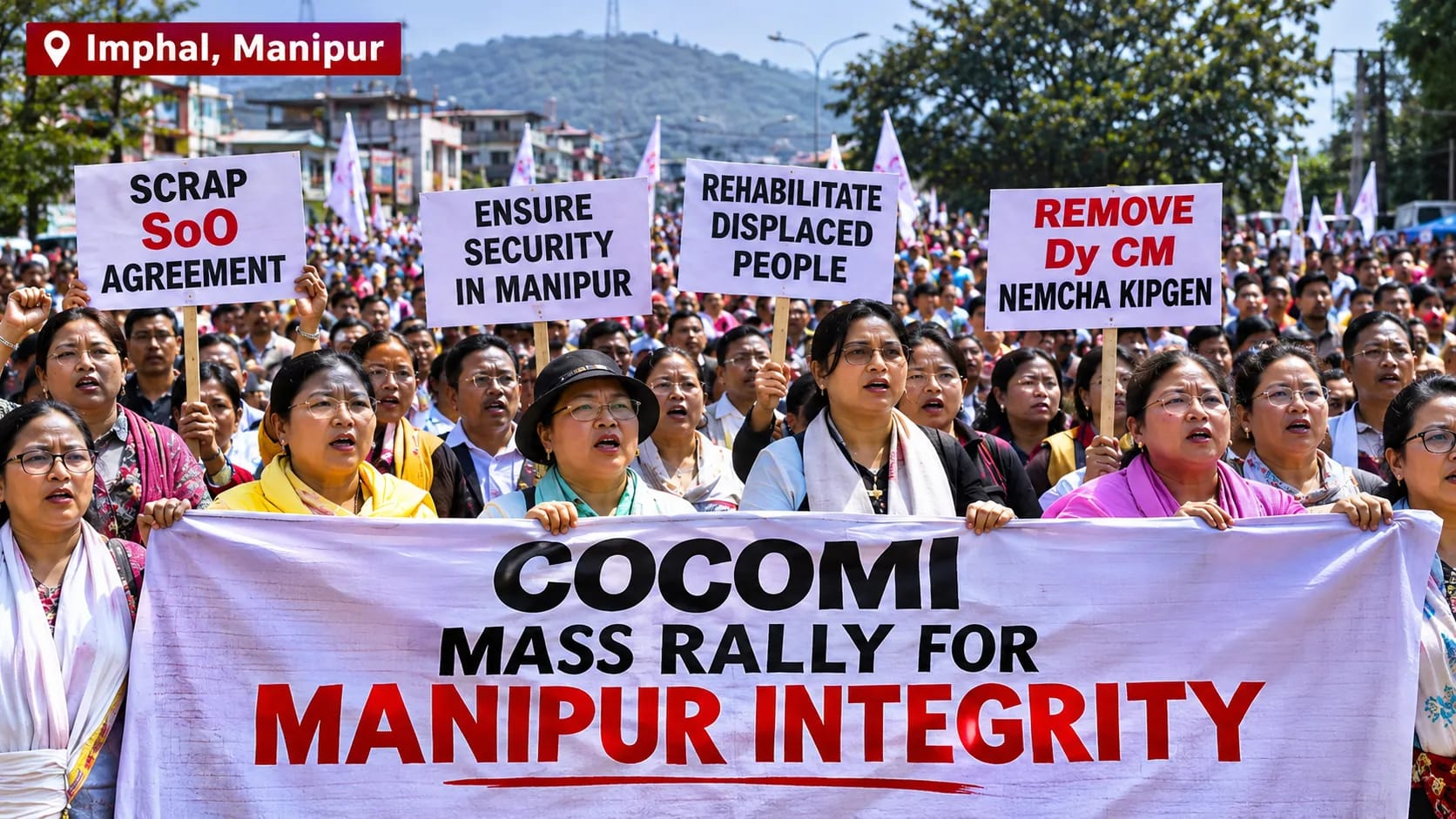
Manipur witnessed another significant political mobilisation on October 31, as different organisations organised rallies in Imphal and other parts of the state, raising questions about security, political accountability and the future of the state's peace process.
The demonstrations are particularly significant because they reflect continuing dissatisfaction among sections of the population over the government's handling of the prolonged ethnic conflict.
What happened during the October 31 protest?
The political rally was jointly organised by several organisations, including:
Joint Tribes Council.
Foothills Naga Coordination Committee.
Naga People Union Imphal.
Naga Humanitarian Aid Committee Manipur.
Manipur Naga Youth Organisation.
The United Naga Council also endorsed the mobilisation.
The procession began at Tiddim Ground in Kwakeithel and proceeded through several parts of Imphal before concluding at THAU Ground.
The organisers raised demands concerning the Suspension of Operations (SoO) agreement, rehabilitation of internally displaced people, security and political accountability.
One particularly significant demand concerned Deputy Chief Minister Nemcha Kipgen. Protest organisers called for her removal and said the government should resign if it was unwilling or unable to address their demand.
A second rally highlights the other side of Manipur's crisis
Another demonstration took place in Kangpokpi, organised by the Committee on Tribal Unity (CoTU).
This rally focused on the safe release of two abducted Kuki youths.
The simultaneous demonstrations demonstrate that the security and political concerns of different communities remain distinct and cannot be treated as one unified political position.
The Telegraph reported that Chief Minister Yumnam Khemchand Singh emphasised that Manipur has 36 communities and cannot be governed by prioritising only one community's interests.
Political reactions and implications
The protests put pressure on the BJP-led state government to demonstrate that it can address security concerns and restore confidence.
However, the demands made by COCOMI and other organisations should not automatically be treated as the position of every political party or every community.
The immediate political questions are:
Will the state government formally respond to the protesters' resolutions?
Will the Centre review the security and peace arrangements?
Will displaced families receive a credible rehabilitation pathway?
Will representatives of the affected communities participate in further political dialogue?
What happens next?
The next important development will be the response from the state government and the Union government to the demands submitted by the organisers.
The political situation will also depend on whether further dialogue takes place between the government, community representatives and civil society organisations.
Join the discussion
Comments (0)