Manipur Political Tensions Escalate: Kuki Inpi Rejects UNC Allegations, Renews Separate Administration Demand
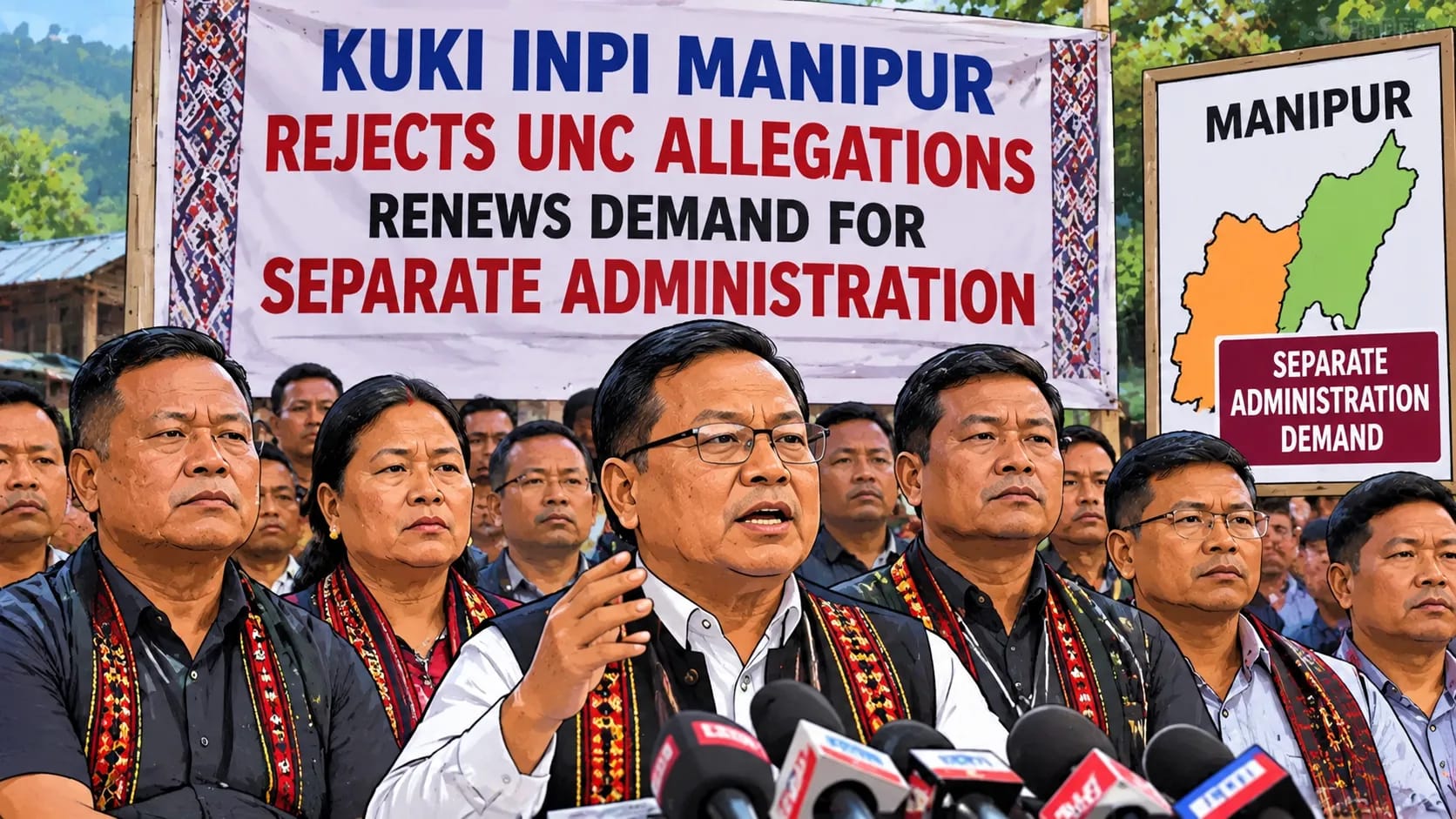
Fresh Political Disagreement Adds to Manipur's Tensions
Manipur's already sensitive political situation has witnessed another development following a statement by Kuki Inpi Manipur (KIM), which rejected allegations made by the United Naga Council (UNC).
In a statement reported on November 18, the Kuki organisation objected to remarks by UNC president Ng. Lorho concerning the Kuki zo community and the Government of India.
KIM argued that the statements made in connection with the burial ceremony of six Liangmai civilians should not be used to make broad allegations against an entire community.
The organisation expressed condolences to the families of the deceased but strongly opposed what it described as an exclusive territorial narrative.
Kuki Inpi Rejects UNC President's Allegations
The latest controversy emerged after remarks attributed to the UNC president regarding the circumstances surrounding the deaths of six Liangmai civilians.
Kuki Inpi Manipur criticised the allegations and said that the tragedy should be approached through an impartial investigation rather than being used to make generalisations about an entire community.
Separate Administration Demand Renewed
Alongside rejecting the UNC allegations, Kuki Inpi Manipur renewed its long-standing demand for a separate administration for the Kuki people.
The organisation argued that recurring violence, displacement and unresolved political grievances have exposed the limitations of the existing administrative arrangement.
It called upon the Central Government to initiate meaningful political dialogue towards a settlement supported by constitutional, legislative and administrative safeguards.
Five Demands Placed Before the Centre
Kuki Inpi Manipur also highlighted several demands in its statement.
These include:
1. Independent investigations: Time-bound and impartial investigations into civilian killings, irrespective of the community or armed organisation involved.
2. Accountability: Action against armed organisations found responsible for attacks on civilians.
3. Review of armed group activities: Examination of the presence and activities of NSCN(IM) camps in Manipur.
4. Protection and rehabilitation: Safeguarding Kuki ancestral lands and ensuring the safe return and rehabilitation of displaced Kuki families.
5. Political dialogue: Initiating meaningful discussions towards a separate administration with appropriate constitutional safeguards.
What Happens Next?
The immediate focus will be on the response of the Central Government and other political stakeholders to the renewed demand for a separate administration.
Further developments may include political representations, discussions between community organisations and demands for independent investigations.
Whether the latest controversy leads to constructive dialogue or further disagreements will depend on the responses of the organisations and authorities involved.

Join the discussion
Comments (0)